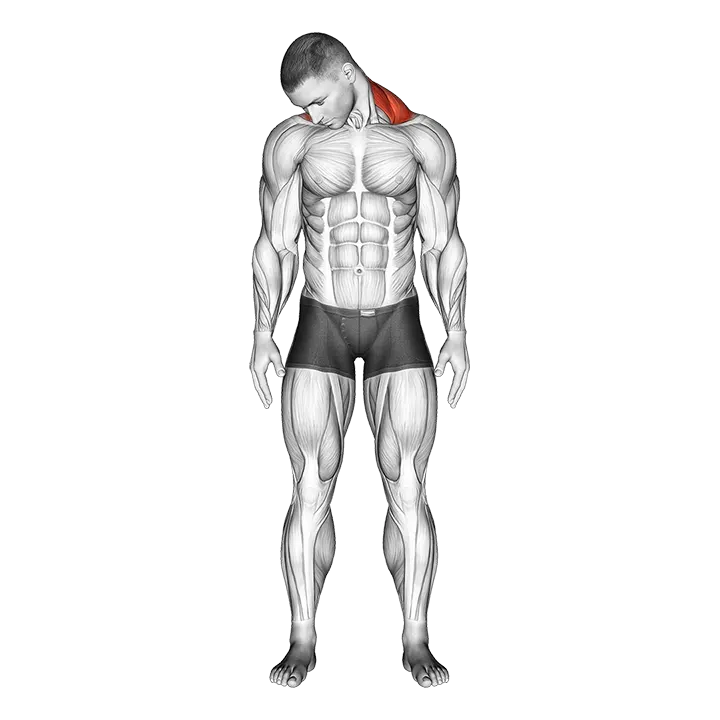
Diagonal Flexion Neck Stretch
- Zielmuskel
- —
- Equipment
- Body weight
- Körperregion
- Neck
- Typ
- Stretching
The diagonal flexion neck stretch is a body-weight mobility move that gently lengthens the muscles along the side and back of the neck and upper shoulder — the upper trapezius, levator scapulae, and scalenes. By tilting your head diagonally forward, it eases tightness from desk work, poor posture, or training, and helps restore comfortable neck range of motion.
Diagonal Flexion Neck Stretch: So führst du sie aus
- 1Sit or stand tall with a long spine, shoulders relaxed and pulled down away from your ears.
- 2Let your right arm hang or rest at your side to anchor the shoulder you want to stretch.
- 3Slowly drop your chin toward your chest, then rotate your head slightly so it angles down toward your left armpit (a diagonal forward tilt).
- 4Place your left hand lightly on the back of your head and let its weight — not force — deepen the stretch.
- 5Hold the position for 20–30 seconds, breathing slowly and keeping your shoulders down.
- 6Feel a gentle pull along the back-right side of your neck and into the upper shoulder.
- 7Release by slowly lifting your head back to a neutral, upright position.
- 8Repeat on the opposite side, angling your head down toward your right armpit.
Technik-Tipps
- Let gravity and the light weight of your hand do the work — never yank or pull hard on your head.
- Keep both shoulders pressed down throughout; let the opposite shoulder lift and you lose most of the stretch.
- Breathe slowly and relax into the position rather than forcing depth on the first second.
- Move into and out of the stretch slowly to keep the neck muscles calm and avoid strain.
Häufige Fehler
- Pulling forcefully on the back of the head, which can overstretch the neck and irritate the cervical spine.
- Hunching the shoulders up toward the ears, which slackens the target muscles and cancels the stretch.
- Holding your breath and tensing, which makes the muscles guard instead of releasing.
- Bouncing or jerking the head to go deeper instead of holding a steady, static position.
Häufig gestellte Fragen
What muscles does the diagonal flexion neck stretch work?
It stretches the muscles along the back and side of the neck and upper shoulder — mainly the upper trapezius, levator scapulae, and scalenes — by combining a forward chin tilt with a slight rotation.
How long should I hold the stretch?
Hold each side for about 20–30 seconds and repeat 2–3 times per side. Keep the stretch gentle and steady rather than pushing into pain.
Is this stretch good for neck tension from desk work?
Yes. It targets the upper trapezius and levator scapulae, which commonly tighten from prolonged sitting and screen time, so it works well as a quick desk break.
Where should I feel this stretch?
You should feel a gentle pull along the back and side of your neck, angling down toward the top of the shoulder blade. Sharp pain or tingling means you are pushing too hard — ease off.







