
Dumbbell Seated Upright Alternate Squeeze Press
- Synergistenmuskeln
- Deltoid Lateral, Serratus Anterior, Triceps Brachii
- Equipment
- Dumbbell
- Körperregion
- Chest
- Typ
- Strength

The dumbbell seated upright alternate squeeze press is a strength exercise that targets the front deltoids along with the upper chest (pectoralis major, clavicular head) and lower/mid chest (sternal head). Performed seated and upright while squeezing two dumbbells together and pressing them one arm at a time, it keeps constant inward tension on the chest, with the side delts, serratus, and triceps assisting throughout.
Dumbbell Seated Upright Alternate Squeeze Press: So führst du sie aus
- 1Sit upright on a bench or seat with your feet flat on the floor and your back tall and braced.
- 2Hold a dumbbell in each hand and bring them together in front of your upper chest, palms facing each other so the inner ends of the dumbbells press against one another.
- 3Squeeze the dumbbells firmly together and keep that inward pressure constant for the entire set.
- 4Keeping the dumbbells touching, press one dumbbell upward and slightly inward until that arm is nearly extended, without losing contact between the weights.
- 5Lower that dumbbell under control back to your upper chest, maintaining the squeeze the whole way down.
- 6Press the opposite dumbbell up in the same controlled manner, alternating arms while the weights stay pressed together.
- 7Continue alternating for your target reps, then lower both dumbbells to your thighs to finish.
Technik-Tipps
- Drive the squeeze from your chest, not just your hands — the constant inward pressure is what keeps tension on the pecs.
- Use lighter dumbbells than a standard press; the squeeze and the single-arm path make this far more demanding than the weight suggests.
- Keep your wrists straight and stacked over your forearms so the pressing arm stays strong and the dumbbells don't drift apart.
- Brace your core and keep your torso upright so you press with your shoulders and chest rather than rocking or leaning back.
Häufige Fehler
- Letting the dumbbells separate during the press, which releases the inward squeeze and removes the chest tension that defines this exercise.
- Going too heavy, which forces the weights apart and turns the movement into a sloppy shoulder press instead of a controlled squeeze press.
- Leaning the torso back to heave the dumbbell up, which shifts load off the front delts and chest and strains the lower back.
- Rushing the alternating tempo, which sacrifices control and lets one arm slack off while the other works.
Häufig gestellte Fragen
What muscles does the dumbbell seated upright alternate squeeze press work?
It primarily targets the front deltoids and the chest — both the upper chest (pectoralis major, clavicular head) and the lower/mid chest (sternal head). The side delts, serratus, and triceps assist as synergists.
Why do you squeeze the dumbbells together?
Pressing the dumbbells inward against each other keeps constant tension on the chest throughout the set. That continuous squeeze is what makes this variation emphasize the pecs more than a regular overhead or shoulder press.
How heavy should the dumbbells be?
Lighter than your usual press. The squeeze and the alternating single-arm path make the movement much harder, so choose a weight you can keep pressed together with strict control for all your reps.
Is this exercise good for beginners?
Yes, with light dumbbells. The seated, upright position is stable and the slow squeeze teaches good chest tension, but beginners should master keeping the weights together before adding load.
How many sets and reps should I do?
For most lifters, 3 sets of 10 to 15 reps per arm works well. Higher reps with lighter weight suit this squeeze-focused movement and help you keep the dumbbells pressed together throughout.
Ähnliche Übungen
 Dumbbell Flat Around the WorldChest, Shoulders
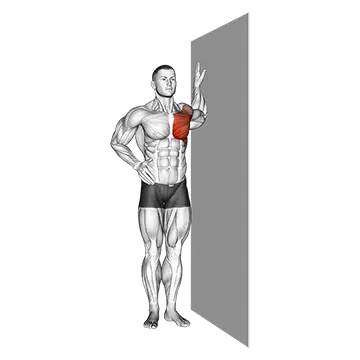 Bent Arm Chest StretchChest
 Bent-over Row - Back (WRONG-RIGHT)Back
 Biceps Curl - Arms Body (WRONG-RIGHT)Upper Arms
 Cable Shoulder Internal RotationShoulders
 Chest and Front of Shoulder StretchChest
 Chest Fly - Arms (WRONG-RIGHT)Chest
 Chest Out Hands Behind (Hold)Chest