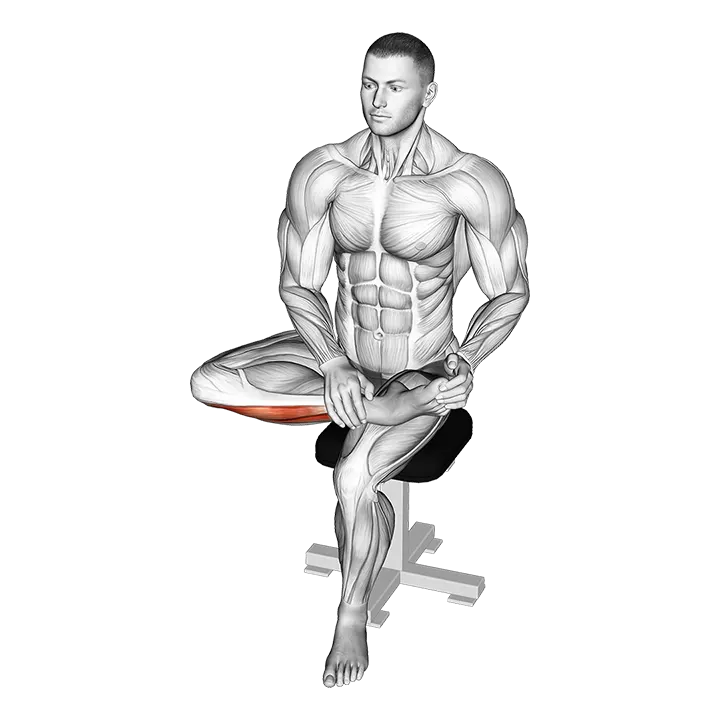
Seated Toe Extensor Stretch
- Zielmuskel
- —
- Equipment
- Body weight
- Körperregion
- Calves
- Typ
- Stretching
The seated toe extensor stretch targets the extensor muscles along the top of the foot and front of the lower leg, which are often neglected in standard calf and ankle work. Performed seated with no equipment, it helps relieve tightness across the top of the foot and can improve ankle mobility and overall lower-leg balance.
Seated Toe Extensor Stretch: So führst du sie aus
- 1Sit on a sturdy chair or bench with your feet flat on the floor, hips at roughly a 90-degree angle.
- 2Shift your weight slightly to one side and slide the foot of the working leg back so the toes are tucked under and resting on the floor, with the top of the foot facing down.
- 3Keep your heel raised slightly off the floor so the stretch loads the extensor muscles and tendons across the top of the foot.
- 4Gently press down through your toes into the floor, allowing the top of the foot to flatten toward the ground.
- 5Hold the stretched position for 20–30 seconds, breathing steadily and letting the tension across the top of the foot release gradually.
- 6Ease off the stretch, return your foot to a flat position, and rest for a few seconds.
- 7Repeat on the same foot for the desired number of holds, then switch to the other foot.
Technik-Tipps
- Let gravity and body weight do the work — you rarely need to add any additional downward pressure to feel this stretch effectively.
- Keep your knee pointing straight down toward the floor rather than splaying outward, so the stretch stays centered on the extensor muscles rather than shifting to the ankle ligaments.
- If the stretch feels too intense on your toes, reduce how far you tuck them under by supporting more weight through your hands on the chair.
- Breathe continuously and avoid holding your breath — exhaling during the hold helps the muscles relax into the stretch.
Häufige Fehler
- Forcing the foot into full plantarflexion too quickly, which can strain the ankle joint or toe joints rather than producing a safe, gradual stretch.
- Letting the knee drift outward, which rotates the load onto the outer ankle ligaments instead of targeting the toe extensors across the top of the foot.
- Bouncing or pulsing through the stretch rather than holding a steady position — this activates a stretch reflex that works against the intended lengthening.
- Neglecting the other foot by stretching only one side, which can leave a flexibility imbalance between legs.
- Performing the stretch on a hard floor without any padding under the toes, which can cause discomfort and encourage shortened holds.
Häufig gestellte Fragen
What does the seated toe extensor stretch target?
It primarily targets the extensor digitorum longus and extensor hallucis longus — the muscles and tendons that run along the top of the foot and shin. These muscles lift the toes and dorsiflex the ankle, and they can become tight from prolonged sitting, running, or wearing shoes with a tight toe box.
Is this stretch good for beginners?
Yes. It requires no equipment, uses only body weight, and the intensity is easy to control by adjusting how much weight you shift onto the working foot. Most people can perform it safely on the first attempt.
When should I do this stretch?
It works best as part of a post-workout cooldown or standalone flexibility session when the muscles are already warm. Avoid forcing this stretch on cold muscles first thing in the morning without some light movement beforehand.
Can this stretch help with foot or shin pain?
Regularly stretching the toe extensors may help reduce tightness that contributes to discomfort across the top of the foot or the front of the shin. However, if you are experiencing persistent or sharp pain, consult a healthcare professional before using stretching as a remedy.
How long and how often should I hold this stretch?
Aim for 2–3 holds of 20–30 seconds per foot. Performing this daily or after any activity that loads the calves and feet — such as running, cycling, or long periods of standing — is reasonable and generally well tolerated.







