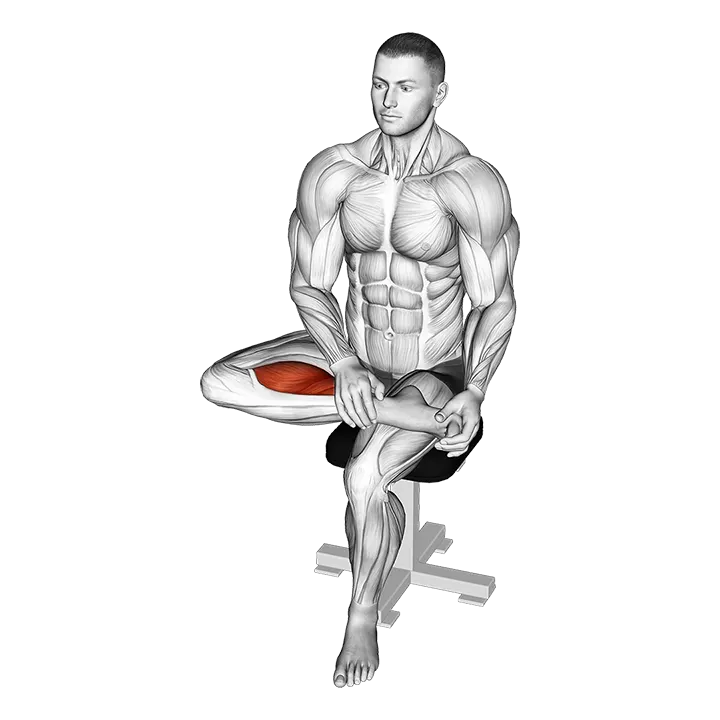
Seated Toe Flexor Stretch
- Zielmuskel
- —
- Equipment
- Body weight
- Körperregion
- Calves
- Typ
- Stretching
Seated Toe Flexor Stretch is a seated bodyweight stretching exercise that targets the toe flexor muscles along the underside of the foot and toes — the muscles responsible for curling the toes downward. It is an effective way to relieve tightness in the lower leg and foot, improve toe mobility, and support calf and foot recovery after activity.
Seated Toe Flexor Stretch: So führst du sie aus
- 1Sit upright on a bench or sturdy chair with your feet flat on the floor and your spine tall.
- 2Cross one ankle over the opposite knee so the bottom of your foot faces upward and is accessible with your hands.
- 3Wrap your fingers around the top of your toes on the raised foot.
- 4Gently pull all of your toes back toward your shin, creating a stretch along the sole of your foot and the underside of your toes.
- 5Hold the stretch for 20–30 seconds, breathing steadily and allowing the toe flexors to release gradually.
- 6Release the toes slowly back to their natural position.
- 7Repeat on the same foot for the desired number of holds, then switch feet and perform the same stretch on the other side.
Technik-Tipps
- Apply gentle, steady pressure when pulling the toes back — the stretch should feel like mild tension, never sharp pain.
- Keep your grip on the toes rather than the foot itself so the stretch is directed at the toe flexors specifically.
- Breathe slowly and deliberately during the hold; exhaling as you deepen the stretch helps the muscles relax into the position.
- For a deeper stretch, simultaneously press the heel away from you while pulling the toes back, which also lengthens the plantar fascia.
- If crossing the ankle is uncomfortable, rest the foot on the floor and use the opposite hand to lift and bend the toes back while keeping the heel grounded.
Häufige Fehler
- Pulling the toes too aggressively: Forcing the stretch beyond a comfortable range can strain the small joints and tendons of the toes rather than gently lengthening the flexor muscles.
- Holding the breath: Breath-holding increases muscle tension throughout the body, which works against the relaxation needed for an effective stretch.
- Releasing the stretch too quickly: Letting the toes snap back rather than returning them slowly can cause micro-irritation in the tendons along the sole of the foot.
- Neglecting the other foot: Skipping the non-dominant foot leads to asymmetrical flexibility and may allow tightness on one side to persist and contribute to gait imbalances.
- Rounding the spine while reaching: Slouching forward to reach the foot reduces the effectiveness of the position and can place unnecessary stress on the lower back.
Häufig gestellte Fragen
What muscles does the Seated Toe Flexor Stretch target?
The stretch primarily targets the toe flexor muscles — including the flexor digitorum longus, flexor hallucis longus, and the small intrinsic muscles on the underside of the foot — which run along the sole and are responsible for curling the toes downward. It also provides a secondary stretch to the plantar fascia.
Is the Seated Toe Flexor Stretch good for plantar fasciitis?
Stretching the toe flexors and plantar fascia is frequently recommended as part of plantar fasciitis management, as it can reduce morning tightness and improve tissue extensibility. If you have a diagnosed condition, confirm with a physiotherapist or podiatrist that this stretch is appropriate for your stage of recovery before adding it to your routine.
How long should I hold the Seated Toe Flexor Stretch?
Aim for holds of 20–30 seconds per set, performing 2–3 sets on each foot. For general flexibility maintenance, once daily is sufficient; for recovery from tightness or a lower-leg activity, two sessions per day — morning and evening — can be beneficial.
When is the best time to do the Seated Toe Flexor Stretch?
This stretch is most effective after a workout or activity when the muscles are warm, but it can also be performed in the morning to counteract overnight stiffness in the foot. Avoid forcing a cold stretch aggressively; if done first thing in the morning, ease into the position gradually.
Can the Seated Toe Flexor Stretch help with tight calves?
While the primary target is the toe flexors and plantar fascia, the stretch can complement a calf flexibility routine by releasing the distal end of muscles that connect to or run near the calf complex, such as the flexor digitorum longus. For direct calf tightness, pair this stretch with a standing or seated calf stretch.







