Seitstütze (gebeugte Knie)
- Synergistenmuskeln
- Adductor Brevis, Adductor Longus, Gluteus Maximus, Gluteus Medius, Iliopsoas, Sartorius
- Equipment
- Body weight
- Körperregion
- Thighs
- Typ
- Strength
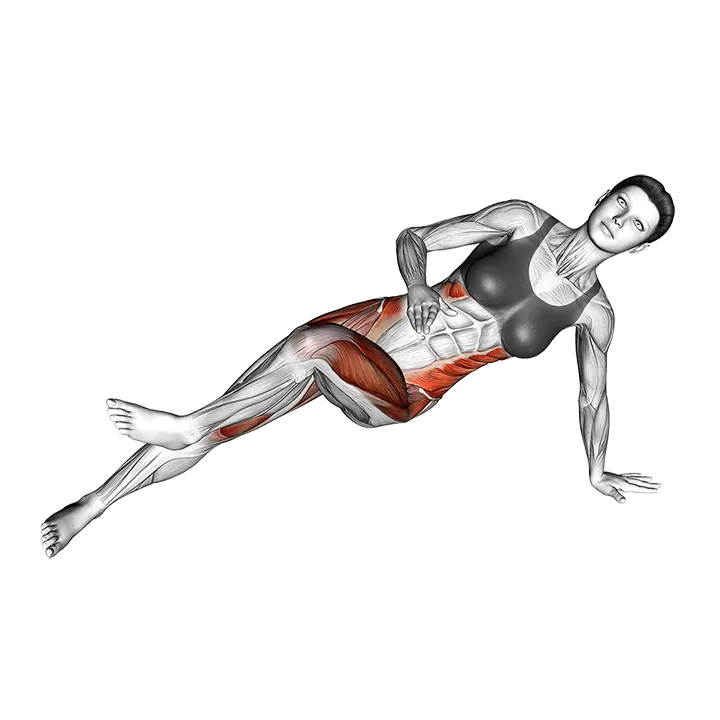
Die Seitstütze mit gebeugten Knien ist eine Übung für die seitliche Bauchmuskulatur, die die schrägen Bauchmuskeln (Obliquus), Quadrizeps und Tractus iliotibialis (Fascia lata) beansprucht, mit Unterstützung durch Gluteus maximus, Gluteus medius, Iliopsoas, Sartorius und Adduktoren. Sie wird liegend auf der Seite mit gebeugten Knien und gestützt auf dem Unterarm ausgeführt. Sie stärkt die seitliche Rumpfstabilität und die Hüftstabilität. Die Variation mit gebeugten Knien ist ideal für Anfänger, die sich zur vollständigen Seitstütze mit ausgestreckten Beinen hinarbeiten.
Seitstütze (gebeugte Knie): So führst du sie aus
- 1Leg dich seitlich auf den Boden, mit gebeugten Knien bei ungefähr 90° und den Beinen übereinander gestapelt.
- 2Positioniere deinen unteren Unterarm auf dem Boden direkt unter deiner Schulter, mit dem Ellbogen im 90°-Winkel. Ruhe deine obere Hand auf deiner Hüfte oder strecke sie zur Decke.
- 3Spanne deinen Rumpf an und drücke deine Gesäßmuskeln zusammen, bevor du hebst.
- 4Drücke durch deinen Unterarm und die Seite deines unteren Knies, um deine Hüfte vom Boden zu heben, bis dein Körper eine gerade Linie von deinen Knien zu deinen Schultern bildet.
- 5Halte deine Hüfte waagerecht – lasse sie nicht zum Boden sinken und nicht nach oben durchdrücken.
- 6Halte deinen Kopf neutral, deinen Nacken mit deiner Wirbelsäule ausgerichtet und deine Atmung während der gesamten Haltung konstant.
- 7Senke deine Hüfte kontrolliert zum Boden ab, um eine Wiederholung zu beenden, oder halte die obere Position für die vorgegebene Zeit.
- 8Absolviere alle Wiederholungen oder die vollständige Haltung auf einer Seite, dann wechsle und wiederhole auf der anderen Seite.
Technik-Tipps
- Stapele deine Knie und Füße präzise übereinander, um deine Hüfte gerade zu halten und Rotation zu vermeiden.
- Drücke deinen unteren Ellbogen fest in den Boden und ziehe deine Schulter weg von deinem Ohr, um das Schultergelenk stabil zu halten.
- Drücke deine Gesäßmuskeln aktiv in der obersten Position zusammen, um eine neutrale Hüftposition zu halten und den Gluteus medius zu aktivieren.
- Atme kontinuierlich – atme aus beim Heben und ein beim Senken, um das Atemanhalten unter Spannung zu vermeiden.
- Wenn deine untere Schulter schmerzt, verlagere dein Körpergewicht leicht nach vorne über den Unterarm, um es zu entlasten.
Häufige Fehler
- Deine Hüfte zum Boden sinken lassen, was die seitliche Linie zusammenbrechen lässt und die Spannung aus den schrägen Bauchmuskeln und Hüftstabilisatoren nimmt.
- Die Hüften zu hoch nach oben drücken, was die Arbeit von den Zielmuskeln wegverlagert und den unteren Rücken belastet.
- Den Rumpf zum Boden hin rollen, anstatt seitlich gestapelt zu bleiben, was die Haltung in eine Front-Plank-Position verwandelt und die schrägen Bauchmuskeln aus der seitlichen Linie nimmt.
- Den stützenden Ellbogen zu weit vor oder hinter der Schulter platzieren, was das Gelenk destabilisiert und die Kraftübertragung reduziert.
- Während des ganzen Satzes den Atem anhalten, was den intraabdominalen Druck erhöht und begrenzt, wie lange du die richtige Form halten kannst.
Häufig gestellte Fragen
Welche Muskeln trainiert die Seitstütze mit gebeugten Knien?
Die primären Muskeln sind die schrägen Bauchmuskeln (Obliquus), Quadrizeps und Tractus iliotibialis. Der Gluteus maximus, Gluteus medius, Iliopsoas, Sartorius, Adductor brevis und Adductor longus wirken alle als Synergisten, um die Hüfte zu stabilisieren und die Seitplank-Position zu halten.
Wie unterscheidet sich die Variante mit gebeugten Knien von der regulären Seitstütze?
Das Beugen der Knie verkürzt den Hebelarm von deiner Stützfläche zu deinen Hüften, was die Übung erheblich leichter macht. Dies reduziert die Belastung deiner seitlichen Bauchmuskulatur und deiner Hüftstabilisatoren und macht sie zum richtigen Ausgangspunkt für Anfänger, bevor du zur Seitstütze mit ausgestreckten Beinen voranschreitest.
Wie lange sollte ich die Seitstützposition halten?
Anfänger können mit 10–20 Sekunden Haltung für 2–3 Sätze pro Seite beginnen. Mit verbesserter Stabilität arbeite auf 30–60 Sekunden Haltung hin, oder wechsle zu zeitgesteuerten Wiederholungen, bei denen du deine Hüfte in einem kontrollierten Rhythmus senkst und hebst.
Sollte ich das in meinen Hüften oder in der Taille spüren?
Beides. Du solltest deine schrägen Bauchmuskeln (an der Taille) isometrisch arbeiten spüren, um zu verhindern, dass sich deine Wirbelsäule seitlich biegt, während dein Gluteus medius und Tractus iliotibialis (an der Hüfte) aktivieren, um die Hüften erhoben und waagerecht zu halten. Wenn du es hauptsächlich in der Schulter spürst, überprüfe, dass dein Ellbogen direkt unter dem Gelenk liegt.
Kann ich die Seitstütze mit gebeugten Knien jeden Tag machen?
Da es sich um eine isometrische Übung mit niedriger Belastung handelt, vertragen viele Menschen tägliches Training gut. Allerdings sind 3–4 Trainingseinheiten pro Woche mit Ruhetagen dazwischen ein solider Ausgangspunkt, besonders wenn deine schrägen Bauchmuskeln und deine Hüfte sich noch an den neuen Reiz anpassen.