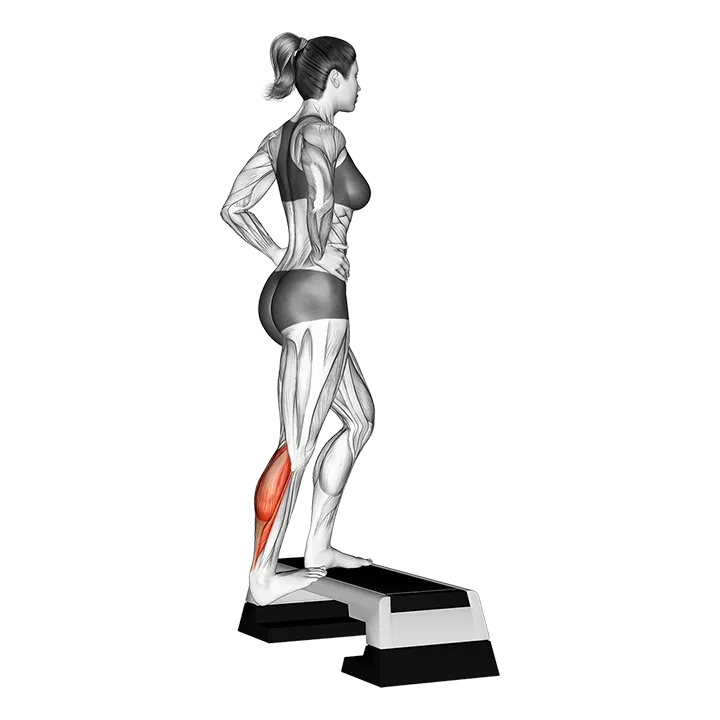
Single Heel Drop Calf Stretch
- Zielmuskel
- —
- Equipment
- Body weight
- Körperregion
- Calves
- Typ
- Stretching
The single heel drop calf stretch is a bodyweight flexibility exercise that targets the calf muscles — primarily the gastrocnemius and, when the knee is slightly bent, the deeper soleus. By hanging one heel off a step or elevated surface and letting gravity pull it downward, you achieve a deep, controlled stretch through the entire lower leg. It is a staple for runners, cyclists, and anyone dealing with calf tightness or Achilles discomfort.
Single Heel Drop Calf Stretch: So führst du sie aus
- 1Stand on a step, curb, or raised platform with the balls of both feet on the edge and your heels hanging free off the back.
- 2Shift your weight onto one foot, placing the other foot lightly behind your working ankle for balance support if needed.
- 3Hold a wall, railing, or doorframe with one or both hands to keep yourself steady throughout the stretch.
- 4Slowly lower the heel of your working foot downward as far as comfortable, allowing gravity to deepen the stretch through your calf.
- 5Keep your working knee straight to emphasize the gastrocnemius (the larger, outer calf muscle).
- 6Hold the bottom position for 20–30 seconds, breathing steadily and relaxing into the stretch rather than forcing it.
- 7To target the deeper soleus, slightly bend the knee of the working leg and hold the lowered-heel position for another 20–30 seconds.
- 8Raise your heel back to the starting position, then switch feet and repeat on the other side.
Technik-Tipps
- Keep the movement slow and deliberate — ease the heel down gradually rather than dropping it all at once, to avoid straining the Achilles tendon.
- Distribute your weight evenly across the ball of your foot so you are not rolling inward or outward on the platform edge.
- Relax your foot and ankle throughout the stretch; actively pointing or flexing the toes counteracts the stretch you are trying to achieve.
- Perform this stretch after a warm-up or workout when the calf muscles are already warm — stretching cold tissue increases the risk of a pull.
- Do both variations back-to-back (straight knee, then slightly bent knee) to make sure you address both the gastrocnemius and the soleus in one session.
Häufige Fehler
- Dropping the heel too fast — an abrupt drop puts sudden strain on the Achilles tendon and can trigger a cramp or minor tear; always lower slowly and with control.
- Holding the stretch for too short a time — spending only 5–10 seconds at the end range provides little flexibility benefit; aim for a minimum of 20 seconds per hold.
- Skipping the bent-knee variation — always doing the stretch with a locked knee means the soleus never gets a full stretch, leaving calf tightness partially unaddressed.
- Gripping the support too tightly and pulling yourself into the stretch — the platform and gravity do the work; pulling with your arms distorts your posture and reduces effectiveness.
- Letting the foot roll to the outside edge of the platform — supinating shifts the load away from the calf and onto the ankle ligaments, increasing sprain risk.
Häufig gestellte Fragen
What muscles does the single heel drop calf stretch work?
It primarily stretches the gastrocnemius (the large two-headed calf muscle visible from the back of the leg) and, when the knee is slightly bent, the soleus (the flatter muscle that lies beneath the gastrocnemius). The Achilles tendon connecting these muscles to the heel also benefits from the elongation.
How long should I hold a heel drop calf stretch?
Hold each position for 20–30 seconds, which is the minimum needed to produce lasting changes in muscle length. Complete two to three holds per side, performing the stretch at least once daily for best results.
Can I do the single heel drop calf stretch to help plantar fasciitis?
Yes — tight calf muscles increase tension on the plantar fascia, so regularly stretching the gastrocnemius and soleus is a common first-line recommendation for plantar fasciitis relief. Consult a healthcare professional if pain is severe or persistent.
Is it normal to feel the stretch in my Achilles tendon as well?
Some mild sensation along the Achilles is normal because the tendon is attached to the muscles being stretched. However, sharp or intense pain in the tendon is a warning sign — reduce the range of motion and stop if it persists.
Should I do this stretch before or after a run?
After your run (or any other warm-up activity) is ideal. Static stretching of cold muscles offers limited benefit and may increase injury risk. Post-run, your calves are warm and pliable, making this the best time for deep, sustained calf stretching.







