
Sitting Bent Over Back Stretch
- Zielmuskel
- Erector Spinae
- Synergistenmuskeln
- Latissimus Dorsi, Teres Major
- Equipment
- Body weight
- Körperregion
- Back
- Typ
- Stretching
The sitting bent over back stretch is a seated flexibility exercise that deeply elongates the erector spinae along the full length of the spine, while also releasing tension in the latissimus dorsi and teres major. Performed without any equipment, it is an accessible and effective way to decompress the back and improve spinal mobility after training or prolonged sitting.
Sitting Bent Over Back Stretch: So führst du sie aus
- 1Sit upright on the floor with your legs extended straight in front of you and your feet together.
- 2Flex your feet so your toes point toward the ceiling, creating a stable base.
- 3Inhale to lengthen your spine, then exhale as you hinge forward from the hips, reaching both hands toward your feet.
- 4Allow your head to drop naturally and your upper back to round, letting the erector spinae, latissimus dorsi, and teres major fully release.
- 5Walk your hands as far along your legs as is comfortable without straining, then rest them lightly on your shins, ankles, or feet.
- 6Hold the stretched position for 20–45 seconds, breathing slowly and deeply to encourage the muscles to relax further with each exhale.
- 7To deepen the stretch gently, exhale and reach a little further forward — never force or bounce.
- 8To exit, engage your core and slowly roll up through the spine one vertebra at a time until you are seated upright again.
Technik-Tipps
- Breathe slowly throughout the hold — inhale to lengthen the spine and exhale to sink a little deeper into the stretch.
- Aim to hold each repetition for at least 20–30 seconds to allow the erector spinae and latissimus dorsi time to release; shorter holds do not produce meaningful flexibility gains.
- Keep the movement passive and gravity-assisted — avoid pulling hard on your feet or using momentum, as forced overstretching can irritate spinal structures.
- If hamstring tightness prevents a forward lean, sit on a folded towel to tilt the pelvis forward and reduce tension in the legs so the back can stretch freely.
Häufige Fehler
- Rounding only the lower back instead of hinging from the hips first, which concentrates stress at the lumbar spine rather than distributing the stretch evenly along the erector spinae.
- Forcing the stretch by pulling aggressively on the feet, which can overload the spinal ligaments and discs and cause injury rather than relief.
- Holding the breath during the hold, which keeps the back muscles contracted and prevents the erector spinae, latissimus dorsi, and teres major from fully relaxing.
- Bouncing or pulsing to reach further, which triggers a protective stretch reflex that actually tightens the muscles you are trying to lengthen.
- Letting the knees bend to reach further forward, which reduces the stretch on the back and shifts it primarily to the hamstrings instead.
Häufig gestellte Fragen
How long should I hold the sitting bent over back stretch?
Hold each stretch for 20–45 seconds. This duration allows the erector spinae and synergist muscles (latissimus dorsi, teres major) to relax past their initial stretch reflex. Perform 2–3 holds per session for best results.
Is the sitting bent over back stretch better before or after a workout?
It is best performed after a workout or activity as part of a cool-down. Static stretching before exercise can temporarily reduce muscle strength and stability. Post-workout, the muscles are warm and pliable, making the stretch safer and more effective.
Who benefits most from this stretch?
Anyone who experiences tightness in the erector spinae or upper back benefits, including people who sit at a desk for long periods, athletes who perform a lot of pulling or rowing movements (which load the latissimus dorsi and teres major), and those returning from lower-back fatigue.
What are good alternatives to the sitting bent over back stretch?
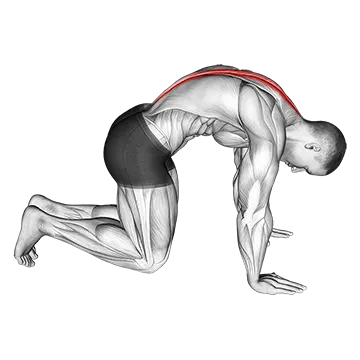

The child's pose targets similar muscles with less hamstring involvement. The cat-cow stretch mobilises the spine dynamically. A standing forward fold offers the same erector spinae release for those who find sitting on the floor uncomfortable.
Can I do this stretch if I have lower back pain?
Mild tightness and everyday fatigue often respond well to gentle back stretching, but if you have an acute disc injury, sciatica, or pain that radiates down the leg, consult a healthcare professional before adding spinal flexion stretches to your routine.