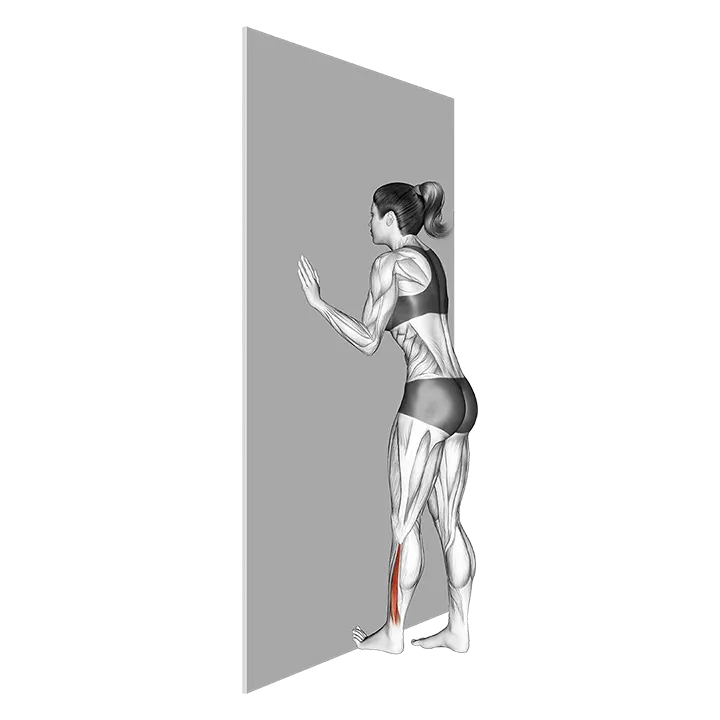
Standing Toe Flexor Stretch
- Zielmuskel
- —
- Equipment
- Body weight
- Körperregion
- Calves
- Typ
- Stretching
The Standing Toe Flexor Stretch is a bodyweight flexibility exercise that targets the toe flexor muscles — primarily the flexor digitorum longus, flexor digitorum brevis, and flexor hallucis longus — along the underside of the foot and lower leg. It is performed by extending the toes upward or placing them against a surface while standing, which lengthens the muscles that curl the toes and supports the plantar arch. It is a practical mobility drill for relieving tightness in the foot, reducing plantar discomfort, and improving toe extension range of motion.
Standing Toe Flexor Stretch: So führst du sie aus
- 1Stand barefoot on a flat surface near a wall or chair that you can use for balance if needed.
- 2Shift your weight onto one foot and bring the opposite foot slightly forward.
- 3Curl the toes of the forward foot upward so that only the tips of the toes contact the floor, with the top of the toes pressing gently against the ground.
- 4Alternatively, place the ball of the foot flat on the floor and pull all toes back toward your shin, pressing them against the floor or a low wall to increase the extension.
- 5Keeping the foot relaxed, slowly shift your body weight forward until you feel a stretch along the sole of the foot and the underside of the toes.
- 6Hold this position for 20–30 seconds, breathing steadily and allowing the toe flexors to release gradually with each exhale.
- 7Release the position by lifting the foot and returning it to neutral.
- 8Repeat on the opposite foot, completing 2–3 rounds per side.
Technik-Tipps
- Keep the ankle relaxed rather than tensing the whole foot — isolating the toe extension allows the stretch to reach the toe flexors specifically rather than dispersing tension throughout the foot.
- Move into the stretch slowly and progressively. The plantar surface of the foot contains many small structures, so easing in gently helps you find the target sensation without aggravating the arch.
- Use a wall or chair back for balance when first learning the movement. Removing the balance demand lets you focus entirely on the sensation in the toe flexors and control the degree of stretch more precisely.
- Extend all toes simultaneously rather than one at a time to stretch the full width of the toe flexor group evenly across the forefoot.
Häufige Fehler
- Rushing past the end range — quickly pressing the toes down and releasing does not give the muscle time to lengthen. Hold each position for at least 20 seconds to allow the nervous system to permit a meaningful stretch.
- Tensing the entire foot — gripping with the arch or ankle while stretching the toes creates competing muscular tension that limits how deeply the toe flexors can lengthen. Let the rest of the foot stay passive.
- Stretching over thick socks or shoes — cushioned footwear reduces contact feedback and limits how far the toes can extend into the stretch. Performing the stretch barefoot gives better sensory accuracy and a fuller range.
- Bearing too much weight on the toes immediately — placing full body weight on curled toes at the start can cause discomfort rather than a productive stretch. Begin lightly and add load gradually as the tissues warm up.
Häufig gestellte Fragen
What muscles does the Standing Toe Flexor Stretch target?
The stretch primarily targets the toe flexor muscles: the flexor digitorum longus and flexor digitorum brevis (which curl the lesser toes), and the flexor hallucis longus (which curls the big toe). These muscles run along the plantar surface of the foot and up the lower leg. Extending the toes while bearing weight lengthens all of these structures simultaneously.
Is the Standing Toe Flexor Stretch helpful for plantar fasciitis?
Stretching the toe flexors can complement plantar fasciitis management because these muscles share the plantar surface with the plantar fascia and can contribute to tightness in that area. However, the toe flexor stretch is not a substitute for a plantar fascia stretch or a calf stretch, both of which address different structures. If you have plantar fasciitis, include all three stretches and consult a clinician if symptoms persist.
How often should I do the Standing Toe Flexor Stretch?
Daily stretching of the toe flexors is generally safe and beneficial, particularly for people who wear shoes with a narrow toe box, stand for long hours, or experience recurring foot tightness. Two to three rounds per side held for 20–30 seconds is a practical starting point. You can perform the stretch as part of a morning routine, after a walk or run, or before bed.
Can I do this stretch if I have tight or stiff toes?
Yes, and it is particularly useful in that situation. Start with minimal weight on the toes and hold at a point where you feel mild tension rather than sharp discomfort. Toe extension range of motion typically improves steadily with consistent daily practice. If one or more toes resist extension noticeably, move into the stretch at whatever range is comfortable and allow the range to grow gradually over time.
Is this stretch the same as a plantar fascia stretch?
They target overlapping but distinct structures. A plantar fascia stretch specifically loads the thick fibrous band running from the heel to the ball of the foot, often by pulling the toes back with the hand. The Standing Toe Flexor Stretch loads the muscular toe flexors by extending the toes under partial body weight. Both are useful for foot flexibility, and they are often combined in the same routine.







