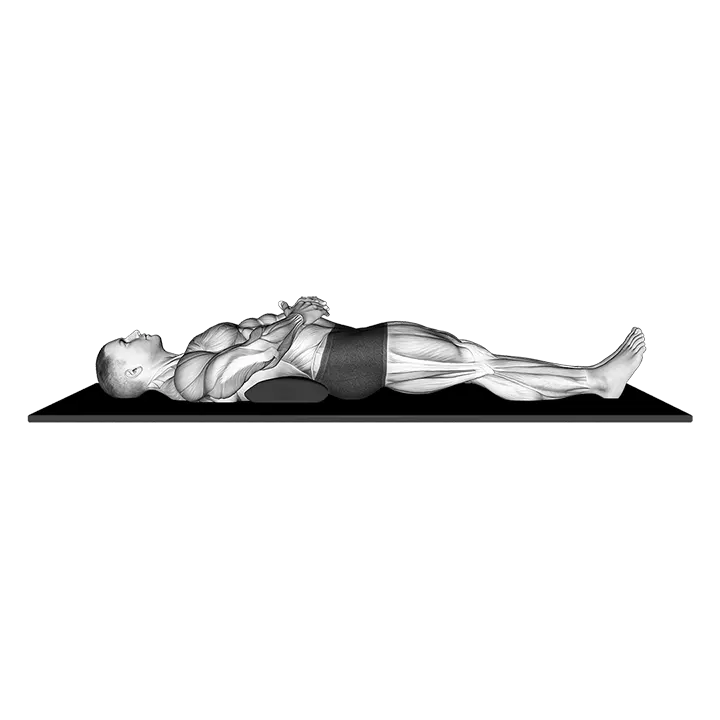
Static Position Lying Back with Pad
- Zielmuskel
- —
- Equipment
- Body weight
- Typ
- Stretching
The static position lying back with pad is a passive stretching exercise in which you lie on the floor with a pad placed beneath the thoracic or lumbar spine to gently decompress the back and open the chest. The sustained hold encourages the spine to relax into a supported extension, making it a practical tool for relieving back tension and countering the effects of prolonged sitting.
Static Position Lying Back with Pad: So führst du sie aus
- 1Place a foam roller, rolled towel, or yoga block on the floor in the area where you intend to lie.
- 2Sit on the floor in front of the pad and slowly lower yourself backward so the pad rests beneath your mid or lower back, depending on where you need relief.
- 3Extend both legs long on the floor or bend your knees and plant your feet hip-width apart for a more stable base.
- 4Rest your arms out to the sides with palms facing up, or lay them along your torso, whichever feels more comfortable.
- 5Allow gravity to draw your back down toward the floor while the pad creates a gentle arch through the supported segment of your spine.
- 6Breathe slowly and deeply, letting your chest rise and fall naturally with each breath to deepen the passive stretch.
- 7Hold the position for the desired duration, typically 30 seconds to 2 minutes, without forcing any movement.
- 8To exit, draw your knees to your chest, roll gently to one side, and press yourself up to a seated position.
Technik-Tipps
- Position the pad just below the shoulder blades for thoracic relief, or slightly lower toward the waist for lumbar support — experiment to find the most beneficial spot.
- Keep your breathing slow and controlled throughout the hold; each exhale is an opportunity to let the back relax a little further into the pad.
- If the stretch feels too intense, use a softer or thinner pad such as a folded blanket rather than a firm foam roller.
- Avoid forcing your head to the floor — place a small pillow or folded towel under your head if your neck feels strained.
- Move off the pad slowly after each hold to give your spine time to readjust before standing.
Häufige Fehler
- Placing the pad under the lower lumbar spine and immediately forcing extension: aggressive passive extension in the lumbar region can compress the posterior structures and cause discomfort rather than relief.
- Holding the breath or breathing shallowly: restricting airflow prevents the ribcage and surrounding soft tissue from releasing, reducing the effectiveness of the stretch.
- Using a pad that is too thick or rigid for your current flexibility: excessive height concentrates stress on a small spinal segment and can cause pain rather than gentle decompression.
- Ending the hold abruptly and sitting straight up: rising too fast can strain the back; always roll to one side first to exit safely.
- Spending less than 30 seconds in position: passive stretches require sustained time under gentle load to produce tissue lengthening and relaxation — brief holds provide little benefit.
Häufig gestellte Fragen
How long should I hold the static position lying back with pad?
Most practitioners hold the position for 30 seconds to 2 minutes per placement. Shorter holds are appropriate when starting out; you can gradually increase duration as your back becomes comfortable with the stretch.
What type of pad works best for this exercise?
A foam roller provides a firm, well-defined contact point ideal for thoracic extension. A rolled towel or folded blanket offers a gentler surface better suited for those new to the exercise or those with heightened sensitivity in the back.
Where exactly should the pad be positioned under my back?
For thoracic relief, center the pad just below the shoulder blades. If you are targeting the lumbar region, shift it toward the waist. Avoid placing the pad directly under the neck or the tailbone.
Is this exercise safe for people with back pain?
Many people with mild to moderate back tension find passive back extension with a pad helpful, but anyone with a diagnosed spinal condition, herniated disc, or acute pain should consult a healthcare professional before attempting it.
Can I do this exercise every day?
Yes, daily use is generally well tolerated because the exercise is passive and low-load. If you notice increased soreness or discomfort after a session, reduce the duration or switch to a softer pad and allow a rest day before repeating.







