
Bodyweight Single Leg Deadlift against Ball
- Músculo objetivo
- —
- Equipamiento
- Stability ball
- Parte del cuerpo
- Hips
- Tipo
- Strength


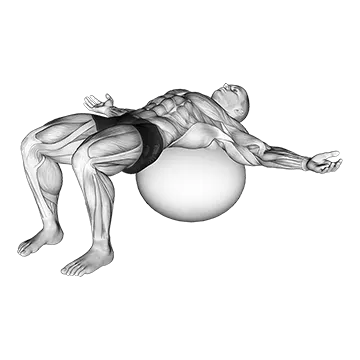

The bodyweight single leg deadlift against ball is a single-leg hip-hinge that builds strength and balance through the hips, hamstrings, and glutes using only your bodyweight. A stability ball pressed against a wall supports your rear leg and steadies the movement, so you can groove the hinge pattern and train one side at a time without external load.
Cómo hacer el Bodyweight Single Leg Deadlift against Ball
- 1Stand facing away from a wall and place a stability ball between the wall and the top of one foot or shin, pressing it gently in place with your rear leg.
- 2Shift your weight onto your standing leg, keeping a soft bend in that knee and your foot planted flat.
- 3Set your spine long and brace your core, pulling your shoulders back so your back stays flat throughout.
- 4Hinge at the hip of your standing leg, sending your hips back and letting your torso tip toward the floor as the rear leg extends and rolls up the ball behind you.
- 5Lower until your torso and rear leg form roughly a straight line and you feel a stretch in the hamstring of your standing leg.
- 6Drive through the heel of your standing leg and squeeze your glute to stand tall, returning the rear leg down the ball under control.
- 7Complete your reps on one side, then switch the ball to the other foot and repeat on the opposite leg.
Consejos de técnica
- Move slowly and own each rep — balance, not speed, is what trains the hips here, so use the ball for light support rather than leaning your weight into it.
- Keep your hips level and square to the wall; resist letting the lifted-leg hip rotate open toward the ceiling.
- Lead the descent with your hips going back, not your chest dropping straight down, to keep tension in the hamstring and glute.
- Fix your gaze on a spot on the floor a few feet ahead to help you stay steady.
- Stand near a wall or rail you can touch for extra balance if you feel unstable.
Errores comunes
- Rounding the lower back as you hinge, which shifts load off the hamstrings and onto the spine and raises injury risk.
- Bending the standing knee too much, turning the movement into a squat instead of a hip hinge so the hamstrings and glutes get less work.
- Letting the rear hip rotate open to the side, which twists the pelvis, breaks the hinge pattern, and reduces glute engagement.
- Pressing hard into the ball and resting your weight on it, which removes the balance demand that makes the exercise effective.
- Bouncing at the bottom or rushing the reps, costing you the control and stability the lift is meant to build.
Preguntas frecuentes
What muscles does the bodyweight single leg deadlift against ball work?
It works the muscles of the hips, primarily the hamstrings and glutes of your standing leg, while your core and lower back work to keep your spine stable through the hinge.
Is the bodyweight single leg deadlift against ball good for beginners?
Yes. The ball and wall give you support and a balance reference, making this a beginner-friendly way to learn the single-leg hinge before progressing to a free-standing or weighted version.
How many sets and reps should I do?
For most lifters, 2–3 sets of 8–12 controlled reps per leg works well. Prioritize a flat back and steady balance over chasing a higher rep count.
What's a good alternative to this exercise?
A free-standing single-leg (Romanian) deadlift removes the ball for more balance challenge, while a two-leg bodyweight hip hinge or glute bridge is an easier regression that still targets the hips and hamstrings.
Where should I feel this exercise?
You should feel a stretch and then a strong contraction in the hamstring and glute of your standing leg. Sharp pain in the lower back means you are likely rounding your spine — reset with a flatter back.