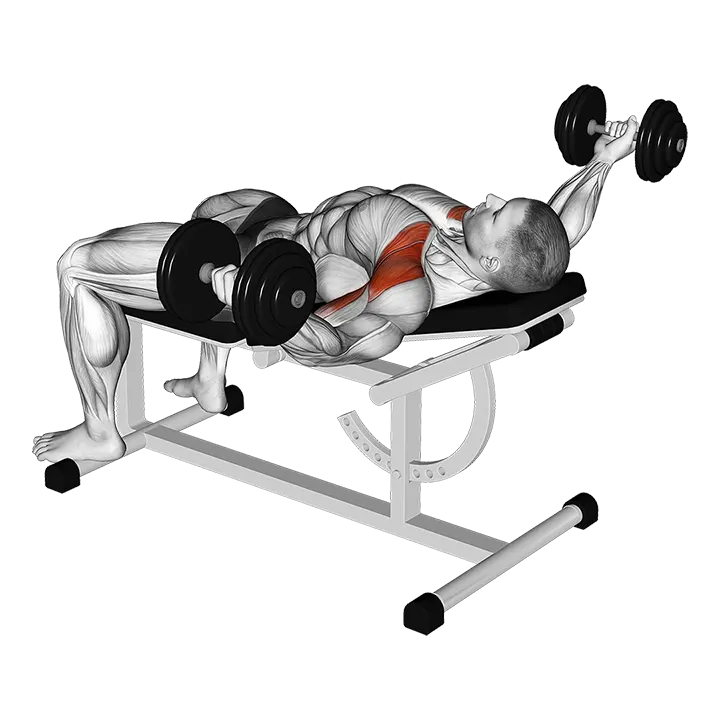
Dumbbell Incline 30 degrees Flye Hold Isometric
- Equipamiento
- Dumbbell
- Parte del cuerpo
- Chest
- Tipo
- Stretching

The dumbbell incline 30-degree flye hold isometric is a static chest stretch that targets the upper, clavicular fibers of the pectoralis major while the anterior deltoids and biceps work to stabilize the arms. Instead of repping out, you hold the bottom, stretched position of the flye under constant tension. It is useful for building positional strength, control, and time-under-tension in the deep range of the chest.
Cómo hacer el Dumbbell Incline 30 degrees Flye Hold Isometric
- 1Set an adjustable bench to a low incline of about 30 degrees and sit back against the pad with a dumbbell in each hand.
- 2Plant your feet flat on the floor, pull your shoulder blades down and back, and press the dumbbells up over your upper chest with a slight bend in your elbows.

- 3Keep that fixed elbow bend and slowly open your arms out to the sides in a wide arc until you feel a deep stretch across your upper chest.
- 4Stop when your upper arms are roughly level with your torso and your hands are out wide, palms facing each other.
- 5Hold this stretched position still, keeping constant tension through your chest and front shoulders without letting the dumbbells drop further.
- 6Breathe steadily and resist the pull of the weights, maintaining the fixed elbow angle for the full hold.
- 7When the set time is up, bring the dumbbells back together over your chest under control, then lower them to your thighs and sit up to finish.
Consejos de técnica
- Keep a soft, fixed bend in your elbows throughout the hold so the work stays in the chest rather than turning into a press.
- Keep your shoulder blades retracted and pinned to the pad to protect the front of your shoulders in the stretched position.
- Start with light dumbbells and short holds, since the bottom position is where the chest is most vulnerable to overstretch.
- Squeeze your chest and front delts actively against the weight rather than hanging passively on the joints.
Errores comunes
- Letting the arms sink too far below torso level, which overstretches the shoulder capsule and risks strain.
- Straightening or pumping the elbows during the hold, which turns the isometric into reps and removes the steady tension.
- Letting the shoulders round forward off the pad, which shifts load onto the shoulder joint instead of the upper chest.
- Using too heavy a load so you can only brace for a second, which sacrifices the controlled time-under-tension that makes the hold work.
- Holding your breath and clenching, which spikes pressure and makes it harder to keep the position stable.
Preguntas frecuentes
What muscles does the dumbbell incline 30-degree flye hold work?
It targets the clavicular (upper) head of the pectoralis major, with the anterior deltoids and biceps brachii working as stabilizers to hold your arms in the stretched flye position.
How long should I hold the isometric position?
Hold the stretched position for about 15 to 30 seconds per set. Use a load light enough to keep your form and elbow angle steady for the whole hold rather than chasing heavier weight.
Why is the bench set to only 30 degrees?
A low 30-degree incline biases the work toward the upper, clavicular fibers of the chest while still letting your front shoulders assist, giving a deep but controllable stretch across the upper chest.
Is this isometric hold good for beginners?
Yes, if you start light. The stretched bottom position is demanding on the shoulders, so begin with very light dumbbells and short holds, keep your shoulder blades pinned back, and progress slowly.
How is this different from a normal dumbbell incline flye?
A normal incline flye moves through reps, opening and closing the arms. This version pauses and holds the stretched bottom position under constant tension, building positional strength and time-under-tension instead of counting reps.