Handboard Open Hand Grip
- Músculo objetivo
- Wrist Flexors
- Equipamiento
- Body weight
- Parte del cuerpo
- Forearms
- Tipo
- Stretching

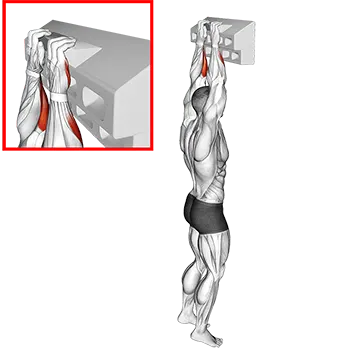



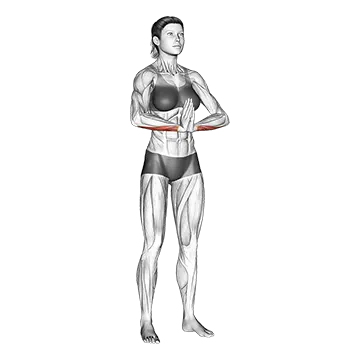
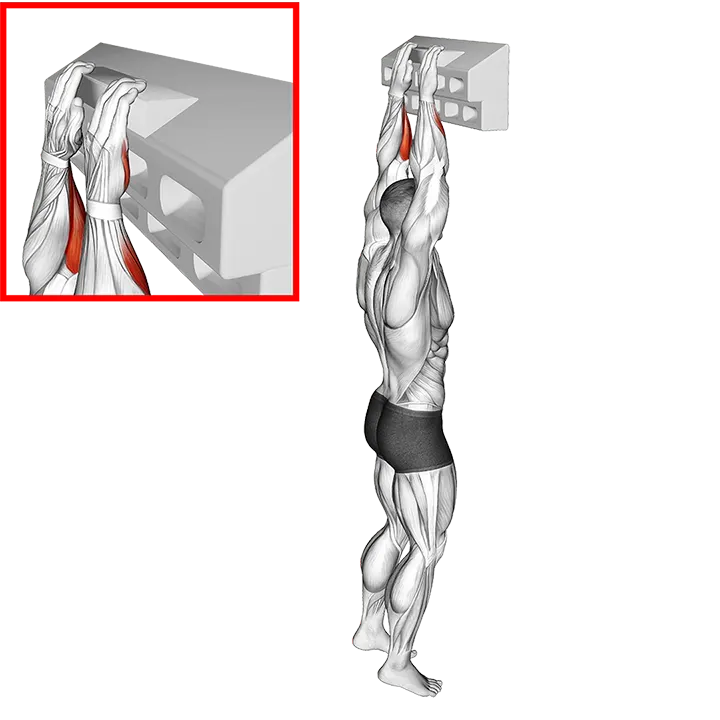
The handboard open hand grip is a bodyweight grip-strength hold that stretches and strengthens the wrist flexors of the forearms. You hang from a hangboard with an open-hand (drag) grip, loading the fingers and forearms isometrically. It builds finger and grip endurance for climbers and develops forearm strength without crimping the fingers.
Cómo hacer el Handboard Open Hand Grip
- 1Set a sturdy hangboard at a height where you can reach the holds with your arms extended overhead and your feet off the floor.
- 2Place your fingers over the edge of a hold using an open-hand grip — fingers laid over the lip with the thumb relaxed and the knuckles only lightly bent, not crimped.
- 3Engage your shoulders by pulling them down and slightly back so you hang from active, not slack, joints.
- 4Lift your feet off the floor and let your bodyweight settle onto your fingers, keeping your arms straight and your wrists in line with your forearms.
- 5Hold the position for a set time (begin with 7–10 seconds), breathing steadily and keeping tension through the fingers and forearms.
- 6Lower your feet back to the floor under control to unload the grip without dropping suddenly.
- 7Rest fully between hangs, then repeat for your planned number of holds.
Consejos de técnica
- Keep an open-hand (drag) position rather than crimping — let the fingers stay relatively straight to load the wrist flexors with less stress on the finger joints.
- Stay actively engaged at the shoulders throughout the hang instead of sagging into a dead, slack hang.
- Start with assisted hangs — keep a foot lightly on a stool or use a resistance band — until your fingers and forearms adapt.
- Stop the hold the moment your grip starts to fail rather than fighting to hang on, which protects the fingers and tendons.
Errores comunes
- Crimping the fingers when the goal is an open-hand grip, which shifts load onto the finger joints and raises injury risk.
- Hanging fully slack with relaxed shoulders, which strains the shoulder joints instead of building active grip strength.
- Holding far too long or to total failure early on, overloading the forearm tendons before they have adapted.
- Dropping off the board suddenly at the end instead of lowering under control, jarring the wrists and fingers.
Preguntas frecuentes
What muscles does the handboard open hand grip work?
It primarily targets the wrist flexors of the forearms, working them isometrically to support your bodyweight through the fingers.
Is the handboard open hand grip good for beginners?
Yes, but start assisted — keep a foot on a stool or use a resistance band, and use short hold times — until your fingers and forearms have adapted to hanging.
How long should I hold each hang?
Begin with hangs of about 7–10 seconds and rest fully between them. Build duration gradually as your grip endurance improves, and stop before your grip fully fails.
What is the difference between an open hand grip and a crimp?
An open-hand (drag) grip keeps the fingers relatively straight with a relaxed thumb, while a crimp sharply bends the finger joints. The open hand loads the wrist flexors with less stress on the finger joints.