
Hyperextension
- Músculo objetivo
- Erector Spinae
- Músculos sinergistas
- Gluteus Maximus, Hamstrings
- Equipamiento
- Body weight
- Parte del cuerpo
- Waist
- Tipo
- Strength





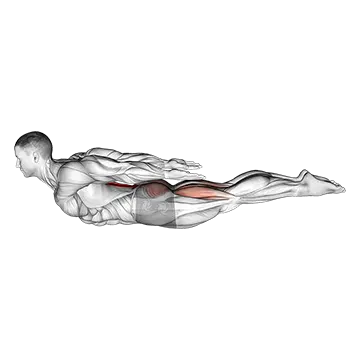
The hyperextension is a bodyweight back-extension exercise that targets the lower-back erector spinae, with the glutes (gluteus maximus) and hamstrings assisting. Performed on a hyperextension or Roman chair bench, it builds posterior-chain strength and endurance and is a low-impact way to train the lower back without added load.
Cómo hacer el Hyperextension
- 1Set the bench so the top pad sits just below your hip crease, letting your hips bend freely over the edge.
- 2Lie face down with your thighs on the pad, hook your ankles under the foot rollers, and keep your legs straight.
- 3Cross your arms over your chest or place your fingertips lightly by your temples, and brace your core.
- 4Hinge at the hips and lower your torso toward the floor under control until you feel a stretch in your hamstrings and lower back.
- 5Keep a neutral spine and stop lowering before your back rounds.
- 6Squeeze your glutes and extend your hips to raise your torso back up until it is in a straight line with your legs.
- 7Stop at this neutral, in-line position rather than arching past it.
- 8Move at a controlled tempo, then lower for your next rep.
Consejos de técnica
- Drive the movement from your hips and glutes, not by cranking your lower back, to keep tension on the erector spinae.
- Exhale as you raise your torso and inhale as you lower, keeping your core braced throughout.
- Use a slow, controlled tempo and pause briefly at the top to build lower-back endurance.
- Add reps or a brief top hold before adding load — bodyweight is plenty for most lifters at first.
Errores comunes
- Overextending and hyper-arching at the top, which compresses the lower spine and risks injury.
- Swinging or using momentum to throw the torso up, which removes tension from the target muscles and strains the back.
- Rounding the lower back at the bottom instead of keeping a neutral spine, loading the discs unsafely.
- Setting the pad too high above the hips, which blocks a clean hip hinge and shifts the bend into the lumbar spine.
- Yanking on the head or neck with the hands instead of letting the hips do the work.
Preguntas frecuentes
What muscles does the hyperextension work?
It primarily works the lower-back erector spinae, with the glutes (gluteus maximus) and hamstrings assisting as you extend your hips.
How far should I lower in a hyperextension?
Lower until you feel a stretch in your hamstrings and lower back while keeping a neutral spine, then stop before your back rounds. At the top, raise only until your torso is in line with your legs — do not arch past it.
Is the hyperextension good for beginners?
Yes. It is a bodyweight movement, so you can learn the hip hinge and build lower-back strength without added load. Focus on controlled tempo and a neutral spine before progressing.
How many sets and reps should I do?
Because it is bodyweight and endurance-focused, 2–4 sets of 10–15 controlled reps is a sensible default. Add reps or a short top hold before adding any external load.
Are hyperextensions safe for your lower back?
Done with a neutral spine and controlled tempo they are a safe way to train the lower back. The main risk is overextending past neutral or rounding at the bottom, so avoid both and keep the movement smooth.