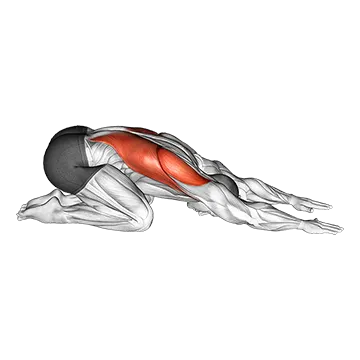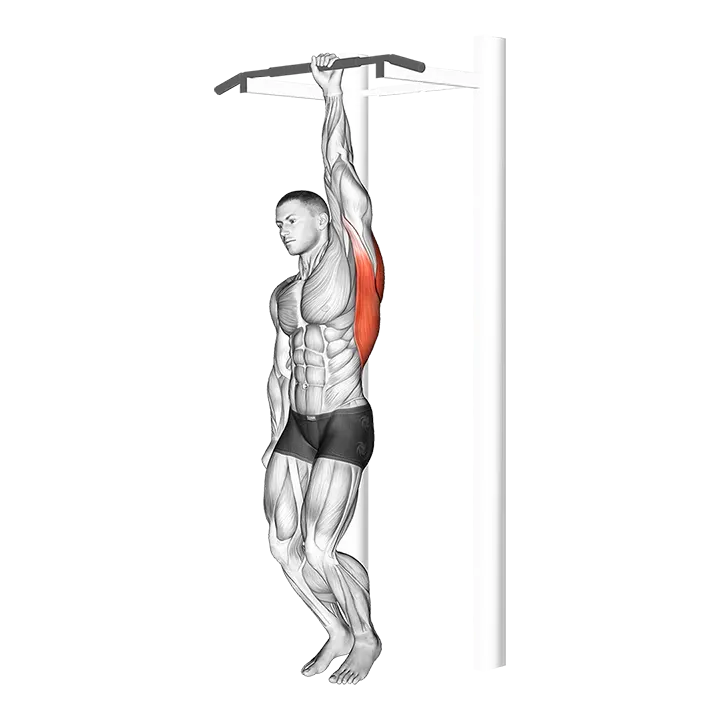
One Handed Hang
- Músculo objetivo
- Latissimus Dorsi, Teres Major
- Equipamiento
- Body weight
- Parte del cuerpo
- Back
- Tipo
- Strength
The one handed hang is a bodyweight exercise where you suspend your full bodyweight from a pull-up bar using a single hand, directly loading the latissimus dorsi and teres major of the working arm. It builds unilateral grip strength, shoulder stability, and lat endurance, and serves as an essential prerequisite for one-arm pull-up training.
Cómo hacer el One Handed Hang
- 1Stand beneath a pull-up bar and grip it with your dominant hand using a full, closed grip — thumb wrapped around the bar and the bar seated in the base of your palm, not your fingers.
- 2Step or jump up so your working arm is fully extended overhead and your body hangs freely with feet off the floor.
- 3Keep your shoulder actively engaged by depressing and packing the shoulder blade downward — avoid letting the shoulder passively shrug up toward your ear.
- 4Brace your core lightly, keep your hips square under the bar, and resist any swinging — a slow, natural rotation of the whole body is normal and does not need to be fought.
- 5Breathe steadily and hold the position for the target duration, maintaining an active shoulder and a firm grip throughout.
- 6To finish, reach up with your free hand or lower your feet back to the floor in a controlled manner — avoid dropping suddenly from the bar.
Consejos de técnica
- Focus on actively pulling your shoulder blade down and into your back pocket rather than letting your shoulder ride up passively — this protects the shoulder joint and keeps the lat engaged.
- Build hang duration gradually: start with 5–10 second holds on each arm and add only a few seconds per session to allow the tendons, ligaments, and grip to adapt safely.
- Chalk or gymnastics grips can help manage friction, but prioritize building raw grip strength over relying on aids long term.
- Use your free arm to hold your wrist or rest it lightly on the bar to spot yourself and bail safely if your grip begins to fail.
- Condition your wrists and fingers with dedicated flexor stretches and towel hangs before progressing to full one-handed hangs — this joint is under significant load and needs time to adapt.
Errores comunes
- Letting the shoulder shrug passively upward into the ear, which impinges the joint and removes the lat from the movement — always actively depress the shoulder blade.
- Gripping with the fingers instead of the base of the palm, which reduces grip efficiency and places excessive stress on the tendons of the hand and forearm.
- Jumping straight to max-duration hangs without a progressive build-up, which increases the risk of wrist, finger, or shoulder tendon injuries.
- Swinging or kipping during the hold, which offloads tension from the target muscles and reduces the training stimulus.
- Dropping suddenly from the bar when fatigued rather than lowering in a controlled manner, which risks wrist sprains or falls.
Preguntas frecuentes
What muscles does the one handed hang work?
The one handed hang primarily targets the latissimus dorsi and teres major of the working arm, which must support your entire bodyweight. Your grip is loaded hard as well, since one hand has to hold you on the bar.
How long should I be able to hang with one hand?
Beginners should aim for 10–15 second holds with good shoulder position. A solid foundation of 20–30 seconds per arm is generally recommended before adding progression toward one-arm pull-up training.
Is the one handed hang safe for my shoulder?
It is safe when performed with an active, depressed shoulder — meaning you consciously pull the shoulder blade down rather than letting the shoulder shrug up. Passive hanging with a shrugged shoulder puts harmful stress on the rotator cuff and should be avoided.
How do I progress from a two-handed hang to a one handed hang?
Start with a two-handed dead hang to build base grip and lat endurance. Then shift progressively more weight to one arm by sliding your hands closer together, using a towel wrapped around the bar for one hand, or lightly resting one hand on top of the other wrist before attempting a full unassisted one handed hang.
How often should I train the one handed hang?
Two to three sessions per week with at least one rest day between sessions is typical. Because tendons and ligaments adapt more slowly than muscle, keep weekly volume low at first and increase hang duration or sets gradually over several weeks.