
Side Bridge
- Músculo objetivo
- Obliques
- Músculos sinergistas
- Adductor Brevis, Adductor Longus, Gluteus Medius, Gracilis, Iliopsoas, Levator Scapulae, Pectineous, Serratus Anterior, Tensor Fasciae Latae
- Equipamiento
- Body weight
- Parte del cuerpo
- Waist
- Tipo
- Strength
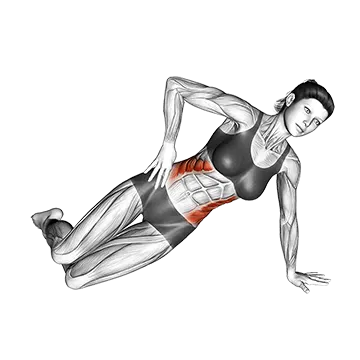
The side bridge is a body-weight core exercise that targets the obliques as the primary mover, with support from the hip abductors, adductors, hip flexors, serratus anterior, and tensor fasciae latae. Performed on one forearm and the outer edge of one foot, it builds lateral core stability and is a reliable low-impact option for strengthening the waist without spinal flexion.
Cómo hacer el Side Bridge
- 1Lie on your side on a firm surface with your legs stacked and your bottom forearm on the ground, elbow directly beneath your shoulder.
- 2Stack your feet so the outer edge of your bottom foot is the only part of your lower body in contact with the floor.
- 3Engage your core and lift your hips off the ground until your body forms a straight line from head to feet.
- 4Keep your top hand resting on your hip or extended toward the ceiling to help with balance.
- 5Hold the position, breathing steadily, without letting your hips sag toward the floor or rotate forward or backward.
- 6Lower your hips back to the floor with control to end the set.
- 7Complete all reps or hold time on one side, then switch and repeat on the other side.
Consejos de técnica
- Stack your elbow directly under your shoulder before lifting — misalignment shifts stress to the shoulder joint.
- Keep your body in a single plane: imagine you are pressed between two walls and cannot let your hips drift forward or backward.
- Drive the bottom forearm into the floor throughout the hold to maintain shoulder stability and activate the serratus anterior.
- Squeeze your glutes and brace your obliques simultaneously; this keeps the hips elevated and reduces lower-back compensation.
- If the full position is too difficult, bend your knees and rest on your lower knee instead of your foot to reduce load while maintaining correct spinal alignment.
Errores comunes
- Letting the hips sag toward the floor, which removes tension from the obliques and puts stress on the lumbar spine.
- Rotating the torso toward the ceiling or floor instead of staying perpendicular to the ground, which shifts load away from the lateral core.
- Placing the elbow in front of or behind the shoulder, which creates instability in the shoulder joint and makes the hold harder to sustain.
- Holding the breath during the hold, which increases internal pressure and limits the duration you can maintain proper form.
- Rushing through both sides without equal time, creating a strength imbalance between the left and right obliques.
Preguntas frecuentes
What muscles does the side bridge work?
The side bridge primarily works the obliques. The adductor brevis, adductor longus, gluteus medius, gracilis, iliopsoas, levator scapulae, pectineus, serratus anterior, and tensor fasciae latae all assist in maintaining the position.
How long should I hold a side bridge?
Beginners typically start with 10–20 second holds and progress to 30–60 seconds per side as core endurance improves. Focus on maintaining a straight body line rather than simply accumulating time with poor form.
What is the difference between a side bridge and a side plank?
The terms are used interchangeably. Both describe the same exercise: supporting your body on one forearm and the outer edge of one foot while holding the hips elevated in a straight line.
Can I do the side bridge if I have lower back pain?
The side bridge is often included in rehabilitation programs for lower back pain because it builds lateral core stability without requiring spinal flexion. However, consult a healthcare provider before adding any exercise if you have an existing back condition.
How do I make the side bridge harder?
You can increase difficulty by raising your top leg, extending your top arm overhead, adding a hip dip (lowering and raising the hips during the hold), or placing your supporting foot on an elevated surface.