
Side Bridge Hip Abduction
- Músculo objetivo
- Obliques
- Músculos sinergistas
- Adductor Brevis, Adductor Longus, Adductor Magnus, Gluteus Medius, Pectineous, Tensor Fasciae Latae
- Equipamiento
- Body weight
- Parte del cuerpo
- Hips
- Tipo
- Strength


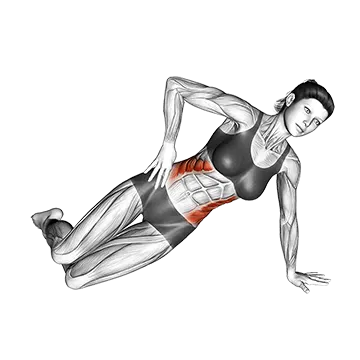

The side bridge hip abduction combines a side plank hold with a top-leg raise, targeting the obliques as the primary stabilizer while engaging the gluteus medius, tensor fasciae latae, and adductor group throughout the movement. Performed using only body weight, it builds lateral core stability and hip abductor strength at the same time, making it useful for injury prevention and functional hip control.
Cómo hacer el Side Bridge Hip Abduction
- 1Lie on your side on the floor with your legs stacked and your body in a straight line from head to feet.
- 2Place your bottom forearm on the floor with your elbow directly beneath your shoulder and your forearm perpendicular to your body.
- 3Press through your forearm and the outer edge of your bottom foot to lift your hips off the floor, forming a straight line through your ankles, hips, and shoulders.
- 4Brace your core and squeeze your obliques to hold the side bridge position steady before beginning the leg raise.
- 5Keeping your top leg straight and your foot flexed, raise it toward the ceiling until it reaches roughly 30–45 degrees above the bottom leg.
- 6Pause briefly at the top, maintaining hip alignment and avoiding any rotation in the pelvis or torso.
- 7Lower your top leg back down to meet the bottom leg in a controlled manner.
- 8Complete all reps on one side, then switch sides and repeat.
Consejos de técnica
- Keep your hips stacked directly on top of each other throughout the set — let the obliques do the work of preventing your top hip from rolling forward or backward.
- Drive your bottom elbow into the floor actively rather than passively resting on it; this helps lock in shoulder stability.
- Flex your top foot and think about pushing the heel away from you as you raise the leg, which better activates the hip abductors.
- If you cannot maintain a neutral spine in the full side bridge position, drop your bottom knee to the floor to shorten the lever until you build enough lateral core strength.
Errores comunes
- Letting the hips sag toward the floor, which reduces the oblique load and places stress on the lumbar spine.
- Rotating the pelvis so the top hip drops forward or rolls backward during the leg raise, which shifts stress away from the target muscles and can strain the lower back.
- Raising the top leg too high by hinging at the waist rather than abducting at the hip, reducing tension on the gluteus medius and tensor fasciae latae.
- Holding the breath or losing core tension mid-set, which destabilizes the bridge position and reduces muscle activation.
- Rushing through the repetitions instead of controlling both the lift and the lower, which removes the eccentric load and limits results.
Preguntas frecuentes
What is the difference between a side bridge hip abduction and a regular side plank?
A side plank is an isometric hold where you simply maintain the bridged position. The side bridge hip abduction adds a dynamic top-leg raise to that hold, layering hip abductor work — especially from the gluteus medius and tensor fasciae latae — on top of the lateral core challenge.
How many reps and sets should I do for side bridge hip abduction?
Two to three sets of 10–15 controlled reps per side is a good starting point for most people. Because the obliques are also sustaining an isometric contraction during each rep, keep the pace slow and prioritize form over volume.
Can beginners do this exercise?
Yes, with a modification. If you cannot hold a full side bridge, drop your bottom knee to the floor. This shortens the lever and makes the lateral core demand manageable while you still get the benefit of the hip abduction movement.
Why do my hips rotate when I raise my top leg?
Hip rotation during the leg raise usually means the hip flexors are compensating for a weak gluteus medius. Focus on keeping the movement purely in the hip joint — abducting the leg straight up and to the side — rather than letting the pelvis tilt to create the appearance of height.
What muscles does the side bridge hip abduction work?
The obliques are the primary target, stabilizing the torso in the side bridge position. The gluteus medius, tensor fasciae latae, and pectineous drive and control the leg raise, while the adductor group (adductor brevis, adductor longus, adductor magnus) assists with controlling the return of the leg.