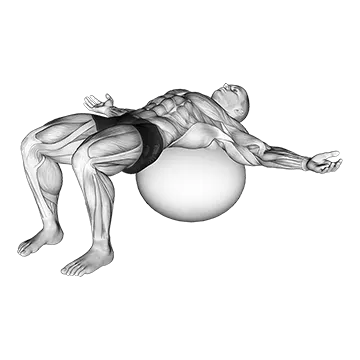
Reverse Hyperextension (auf dem Stabilitätsball)
- Zielmuskel
- Erector Spinae, Gluteus Maximus
- Synergistenmuskeln
- Hamstrings
- Equipment
- Stability ball
- Körperregion
- Thighs
- Typ
- Strength


Die Reverse Hyperextension auf dem Stabilitätsball ist eine Übung für die hintere Muskelkette, die primär den Erektor spinae (Rückenstrecker) und den Gluteus maximus (großen Gesäßmuskel) beansprucht, während die Hamstrings (Oberschenkelbeuger) während der gesamten Bewegung als Synergisten fungieren. Bei dieser Übung liegst du mit dem Gesicht nach unten über dem Stabilitätsball, während deine Beine frei hängen. Sie trainiert die Hüftstreckung durch einen kontrollierten Bewegungsradius und ist eine zugängliche, gelenkschonende Möglichkeit, um deine Lendenwirbelsäule und Gesäßmuskeln zu stärken, ohne die Wirbelsäule zu belasten.
Reverse Hyperextension (auf dem Stabilitätsball): So führst du sie aus
- 1Platziere einen Stabilitätsball auf dem Boden und positioniere dich mit dem Gesicht nach unten darauf, so dass deine Hüften und dein unterer Bauch auf der Mitte des Balls liegen.
- 2Gehe mit deinen Händen vorwärts, bis der Ball unter deiner Hüfte sitzt und dein Oberkörper fast parallel zum Boden ist, wobei deine Hände schulterbreit flach auf dem Boden stehen.
- 3Strecke deine Arme aus und drücke fest durch deine Handflächen, um deinen Oberkörper zu stabilisieren und zu verhindern, dass der Ball wegrollen kann.
- 4Lasse beide Beine nach unten hängen, wobei deine Füße hüftbreit auseinander sind und deine Zehen leicht den Boden berühren – dies ist deine Ausgangsposition.
- 5Spanne deinen Rumpf an, aktiviere deine Gesäßmuskeln und hebe langsam beide Beine gemeinsam an, bis sie parallel zum Boden sind und sich in einer Linie mit deinem Oberkörper befinden.
- 6Halte eine Sekunde in der oberen Position an und konzentriere dich auf die Kontraktion in deinen Gesäßmuskeln und deinem unteren Rücken, ohne die Lendenwirbelsäule übermäßig zu überstrecken.
- 7Senke deine Beine langsam und kontrolliert wieder ab, bis deine Zehen leicht den Boden berühren.
- 8Spanne deinen Rumpf vor jeder neuen Wiederholung erneut an und halte die Bewegung während des gesamten Satzes flüssig und bewusst.
Technik-Tipps
- Vermeide eine Überstreckung in der oberen Position – hebe deine Beine nur bis parallel zum Boden, damit der Rückenstrecker und die Gesäußmuskeln ohne Kompression der Lendenwirbelsäule arbeiten.
- Spanne deinen Rumpf während jeder Wiederholung an; ein nicht angestraffter Kern verlagert übermäßigen Stress auf den unteren Rücken, statt die Last auf die gesamte hintere Muskelkette zu verteilen.
- Verwende ein langsames, bewusstes Tempo – zwei Sekunden heben, eine Sekunde halten, zwei bis drei Sekunden senken – um die Zeit unter Spannung zu maximieren und Schwung zu reduzieren.
- Halte den Ball stabil, indem du fest durch deine Hände drückst; wenn der Ball wegrollen sollte, verlierst du deine Stützposition und reduzierst die Effektivität der Bewegung.
- Beginne nur mit Körpergewicht, bis du alle Wiederholungen mit kontrollierter Form ausführen kannst, bevor du Gewichte an den Knöcheln oder zusätzlichen Widerstand hinzufügst.
Häufige Fehler
- Die Beine weit über die Waagerechte hinaus heben – eine Überstreckung der Lendenwirbelsäule in der oberen Position komprimiert die Wirbelgelenke und verlagert den Stress weg von den Gesäßmuskeln auf die passiven Strukturen des unteren Rückens.
- Schwung nutzen, um die Beine nach oben zu werfen – eine ruckartige, schwungbetriebene Wiederholung reduziert die Zeit unter Spannung für den Rückenstrecker und den großen Gesäußmuskel und erhöht das Verletzungsrisiko.
- Lasse deine Hüften nicht nach vorne vom Ball rutschen – der Verlust der Hüftposition auf dem Ball verändert den Hebelarm, reduziert die Last auf die Zielmuskulatur und destabilisiert die Übung.
- Den Atem während des Satzes anzuhalten – das Versäumen, normal zu atmen, erhöht den intraabdominalen Druck unnötig und kann zu Schwindel führen; atme aus, während du die Beine hebst, und atme ein, während du sie senkst.
- Den Ball unter der Brust statt unter der Hüfte zu platzieren – eine zu hohe Ballposition verkürzt den effektiven Bewegungsradius der Hüftstreckung und reduziert die Aktivierung der Gesäß- und Rückenstreckermuskulatur.
Häufig gestellte Fragen
Welche Muskeln beansprucht die Reverse Hyperextension auf dem Stabilitätsball?
Sie beansprucht primär den Erektor spinae (Rückenstrecker) und den Gluteus maximus (großen Gesäußmuskel), während die Hamstrings (Oberschenkelbeuger) als Synergisten zur Unterstützung der Hüftstreckung während der gesamten Bewegung fungieren.
Ist die Reverse Hyperextension auf dem Stabilitätsball gut für Rückenschmerzen?
Sie kann dir dabei helfen, den Rückenstrecker und die umliegenden Muskeln der hinteren Kette zu stärken, die deine Wirbelsäule unterstützen. Aber wenn du bereits unter Rückenverletzungen leidest, solltest du einen Fachmann konsultieren, bevor du diese Übung in dein Training aufnimmst.
Wie verhindere ich, dass der Stabilitätsball während der Reverse Hyperextension wegrollen kann?
Drücke fest mit beiden Handflächen auf den Boden, um deinen Oberkörper zu stabilisieren, und platziere den Ball auf einer rutschfesten Matte. Ein angestraffter Rumpf hilft auch, den Ball unter deiner Hüfte zu stabilisieren.
Kann ich Gewichte zur Reverse Hyperextension auf dem Stabilitätsball hinzufügen?
Ja – sobald du alle Wiederholungen mit kontrollierter Körpergewicht-Form ausführen kannst, sind Gewichte an den Knöcheln die praktischste Möglichkeit, um Widerstand hinzuzufügen, ohne das Gleichgewicht auf dem Ball zu gefährden.
Wie viele Sätze und Wiederholungen sollte ich bei der Reverse Hyperextension auf dem Stabilitätsball machen?
Für Kraft- und Muskelaufbau der hinteren Kette funktionieren 3 Sätze mit 10–15 kontrollierten Wiederholungen gut. Priorisiere die vollständige Hüftstreckung an der Spitze und eine langsame Absenkungsphase gegenüber höheren Wiederholungszahlen.