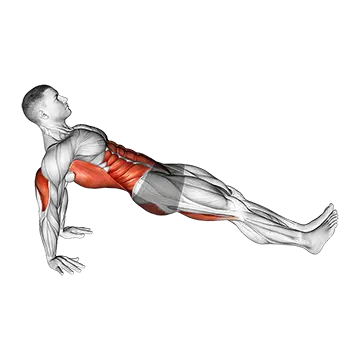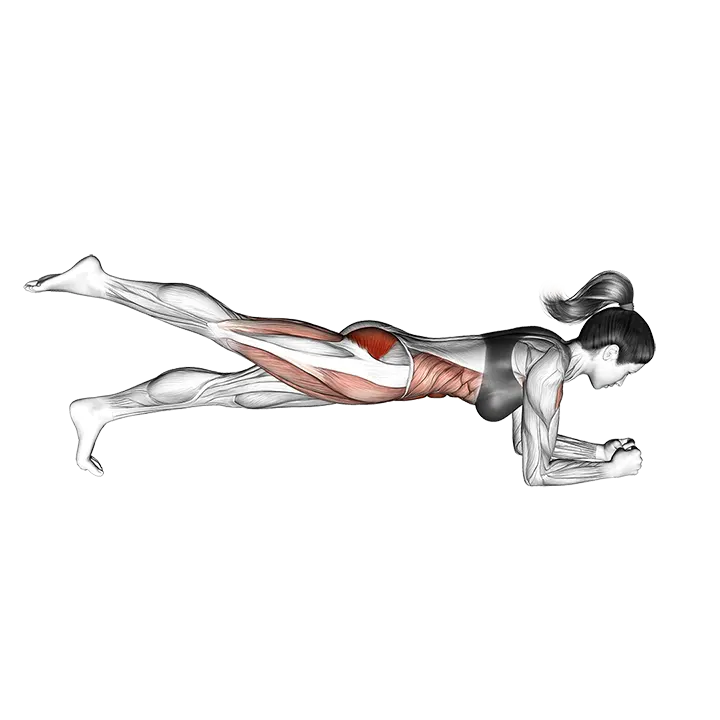
Einbeinige Brücke
- Zielmuskel
- Gluteus Maximus, Rectus Abdominis
- Synergistenmuskeln
- Deltoid Anterior, Hamstrings, Obliques, Serratus Anterior, Tensor Fasciae Latae
- Equipment
- Body weight
- Körperregion
- Hips
- Typ
- Strength
Die Einbeinige Brücke ist eine Körpergewichtsübung zur Kraftentwicklung, die den großen Gesäßmuskel (Gluteus maximus) und den geraden Bauchmuskel (Rectus abdominis) trainiert, indem du dein Becken stabil hältst und durch eine einzelne aufgestellte Ferse deine Hüften vom Boden hebst. Die einseitige Belastung beansprucht auch die Ischiokruralmuskulatur (Hamstrings), die schrägen Bauchmuskeln und den Spanner der Oberschenkelbinde (Tensor fasciae latae), um ein Absinken und Drehen des Beckens zu verhindern. Sie ist eine effektive Übung zum Aufbau einseitiger Hüftstabilität, zur Korrektur von Gesäßmuskel-Ungleichgewichten und zur Verbesserung der Rumpfkontrolle.
Einbeinige Brücke: So führst du sie aus
- 1Lege dich auf den Rücken, beuge die Knie und stelle die Füße hüftbreit auseinander flach auf den Boden.
- 2Strecke ein Bein gerade aus und halte es in einer Linie mit dem gebeugten Knie, sodass beide Oberschenkel parallel sind.
- 3Lege deine Arme flach neben deinem Körper ab, Handflächen nach unten, zur Unterstützung.
- 4Spanne deine Rumpfmuskulatur an und drücke deine Gesäßmuskeln zusammen, bevor du die Bewegung startest.
- 5Drücke fest durch die Ferse deines aufgestellten Fußes und hebe deine Hüften, bis dein Körper von den Schultern bis zum angehobenen Knie eine gerade Linie bildet.
- 6Halte die obere Position für ein bis zwei Sekunden und halte das gestreckte Bein auf gleicher Höhe mit deinem Oberkörper.
- 7Senke deine Hüften langsam und kontrolliert zurück auf den Boden.
- 8Beende alle Wiederholungen auf einer Seite, bevor du zum anderen Bein wechselst.
Technik-Tipps
- Positioniere die aufgestellte Ferse etwa eine Handbreit von deinen Gesäßmuskeln entfernt. Näher daran verlagert die Arbeit zu den Quadrizeps; weiter weg verlagert sie zu den Ischiokruralmuskulatoren.
- Ziehe deine Rippen hinein und kippe dein Becken vor der ersten Wiederholung leicht zu deinem Gesicht — der Start aus dieser Position lässt den Gesäßmuskel die Bewegung ausführen, statt der Lendenwirbelsäule.
- Drücke die Rückseite deiner Arme und Schultern beim Heben in den Boden; dieser Ankerpunkt gibt dem vorderen Deltamuskel und dem vorderen Sägemuskel etwas zum Stabilisieren, damit sich dein Oberkörper nicht dreht.
- Wenn die Ischiokruralmuskulatur des arbeitenden Beins zu verkrampfen beginnt, bewege diesen Fuß etwas näher an deine Hüften und initiiere das Heben mit einem bewussten Gesäßmuskel-Squeeze.
- Gleiche dein Tempo von Seite zu Seite ab — nutze die gleiche Hebungs-, Halte- und Senkungsgeschwindigkeit auf dem schwächeren Bein, damit die stärkere Seite das Ungleichgewicht, das du trainierst zu beheben, nicht verdeckt.
Häufige Fehler
- Zulassen, dass die Hüfte auf der Seite des gestreckten Beins unter die arbeitende Hüfte absinkt — dies beseitigt die Spannung vom Gluteus maximus und belastet den unteren Rücken asymmetrisch.
- Überstreckung der Lendenwirbelsäule oben, statt die Hüfte wirklich zu strecken, was den unteren Rücken statt der Gesäßmuskeln belastet.
- Druck durch die Zehen statt durch die Ferse, was die Beanspruchung von Ischiokruralmuskulatur und Gesäßmuskel verringert und Stress auf das Knie verlagert.
- Hastige Wiederholungen ohne kontrolliertes Absenken — eine schnelle, unkontrollierte Senkungsphase eliminiert die exzentrische Belastung und erhöht das Verletzungsrisiko.
- Das Anhalten des Atems während des gesamten Satzes, was den intraabdominalen Druck unnötig erhöht; ausatmen beim Heben, einatmen beim Senken.
Häufig gestellte Fragen
Welche Muskeln trainiert die Einbeinige Brücke?
Die Einbeinige Brücke trainiert in erster Linie den Gluteus maximus und den Rectus abdominis. Die Ischiokruralmuskulatur (Hamstrings), die schrägen Bauchmuskeln und der Tensor fasciae latae unterstützen die Hüftstreckung und halten das Becken stabil, während der vordere Deltamuskel und der vordere Sägemuskel Stabilisierung des Oberkörpers gegen den Boden bieten.
Was ist der Unterschied zwischen einer Einbeinigen Brücke und einer normalen Gesäßmuskel-Brücke?
Eine normale Gesäßmuskel-Brücke nutzt beide Füße aufgestellt und verteilt die Last gleichmäßig auf beide Seiten. Die Einbeinige Brücke entfernt einen Stützpunkt, was die Anforderung an den arbeitenden Gesäßmuskel erhöht und den Rumpf zwingt — besonders die schrägen Bauchmuskeln und den Rectus abdominis — um Beckenneigung und Rotation zu verhindern. Dies macht sie effektiver, um einseitige Kraftungleichgewichte zu identifizieren und zu korrigieren.
Wie viele Wiederholungen sollte ich bei der Einbeinigen Brücke machen?
Ein typischer Startbereich ist 8–12 Wiederholungen pro Bein für 2–3 Sätze mit einer Haltezeit von 1–2 Sekunden oben bei jeder Wiederholung. Konzentriere dich auf Qualität statt Quantität — reduziere Wiederholungen, wenn deine Hüfte absinkt oder dein unterer Rücken vor Abschluss des Satzes übernimmt.
Kann ich die Einbeinige Brücke jeden Tag machen?
Ja, da sie nur Körpergewicht nutzt und gelenkschonend ist, können die meisten Menschen sie täglich als Teil eines Aufwärm- oder Aktivierungstrainings ohne nennenswerte Erholungskosten durchführen. Wenn du sie schwer belastest oder als primäre Kraftübung nutzt, erlaube 48 Stunden Erholung zwischen den Trainingseinheiten.
Warum spüre ich die Einbeinige Brücke im unteren Rücken statt in meinen Gesäßmuskeln?
Unterer-Rücken-Dominanz bedeutet normalerweise, dass die Gesäßmuskeln nicht richtig aktivieren oder du die Wirbelsäule überstreckst, um Höhe zu gewinnen. Versuche, den Gesäßmuskel des arbeitenden Beins vor dem Heben zu drücken, halte die Bewegungsamplitude in dem, was deine Hüfte wirklich strecken kann, und drücke durch die Ferse statt durch den unteren Rücken zu wölben.