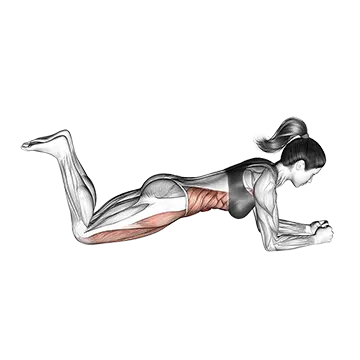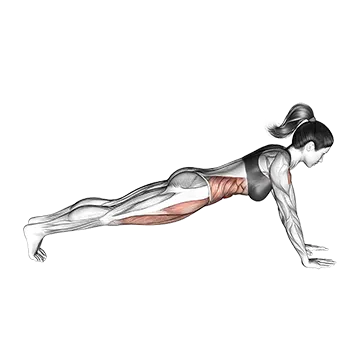
Curl-up
- Músculo objetivo
- Rectus Abdominis
- Músculos sinergistas
- Obliques
- Equipamiento
- Body weight
- Parte del cuerpo
- Waist
- Tipo
- Strength
The curl-up is a bodyweight core exercise that primarily targets the rectus abdominis (the front abs), with the obliques assisting to keep the trunk stable. Performed lying on your back with one knee bent and your hands supporting your lower back, it trains controlled abdominal flexion while sparing the spine, making it a popular core-strength and back-friendly choice.
Cómo hacer el Curl-up
- 1Lie flat on your back with one knee bent and that foot planted on the floor. Keep the other leg straight along the ground.
- 2Slide both hands palms-down under the natural arch of your lower back to support your spine and keep it in a neutral position.
- 3Set your head and neck in line with your spine, looking toward the ceiling rather than tucking your chin to your chest.
- 4Brace your abs gently, then lift your head, neck, and shoulder blades a short distance off the floor as one rigid unit.
- 5Stop once your shoulder blades clear the floor — there is no need to come all the way up to a sitting position.
- 6Hold the top briefly while keeping your lower back pressed lightly into your hands.
- 7Lower your shoulders and head back to the floor under control, exhaling as you go.
- 8Complete your reps, then switch the bent and straight legs and repeat for the second side.
Consejos de técnica
- Move your upper body as a single rigid block — avoid bending or flexing through your neck to start the rep.
- Keep your lower back resting on your hands so your spine stays neutral instead of flattening into the floor.
- Use a slow, controlled tempo and a short range of motion; the goal is steady tension on the abs, not height.
- Breathe out as you curl up and in as you lower, keeping your core braced throughout the set.
- Switch the bent leg between sets so both sides get worked evenly.
Errores comunes
- Pulling your head up with your neck or chin, which strains the neck and takes tension off the abs.
- Curling all the way up into a full sit-up, which loads the hip flexors and bends the spine more than intended.
- Flattening your lower back hard into the floor instead of keeping it neutral on your hands, removing the spine-sparing benefit.
- Rushing the reps with momentum, which swaps controlled abdominal tension for a bouncing motion that does little for the muscle.
- Keeping both legs straight, which reduces stability and lets the lower back arch.
Preguntas frecuentes
What muscles does the curl-up work?
It primarily works the rectus abdominis (the front abs), with the obliques assisting to keep your trunk stable through the movement.
What's the difference between a curl-up and a sit-up?
A curl-up lifts only your head, neck, and shoulder blades a short distance while keeping your lower back neutral on your hands. A full sit-up brings your whole torso upright, which involves the hip flexors and bends the spine far more.
Is the curl-up good for beginners?
Yes. It uses only your body weight, needs no equipment or spotter, and the short, controlled range makes it easy to learn while keeping the lower back protected.
Why do I keep one knee bent?
Bending one knee with that foot planted stabilizes the pelvis and keeps your lower back in a neutral position, so the abs do the work instead of the spine arching.
How many sets and reps should I do?
Beginners can start with 2–3 sets of 8–12 controlled reps per side. Focus on a slow tempo and full bracing rather than chasing high rep counts.