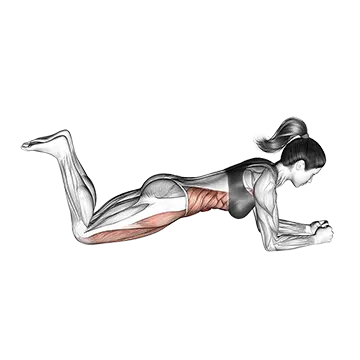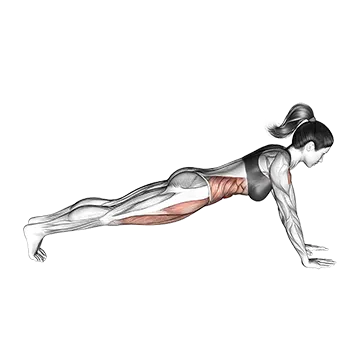
Decline Sit-up (arms straight)
- Músculo objetivo
- Rectus Abdominis
- Músculos sinergistas
- Obliques, Quadriceps, Sartorius, Tensor Fasciae Latae
- Equipamiento
- Body weight
- Parte del cuerpo
- Waist
- Tipo
- Strength
The decline sit-up with arms straight is a bodyweight core exercise that primarily targets the rectus abdominis, with the obliques, quadriceps, sartorius, and tensor fasciae latae assisting. Performed on a decline bench with your arms held extended rather than behind your head, it increases the range of motion and resistance over a flat sit-up while keeping the load on your abs instead of pulling on your neck.
Cómo hacer el Decline Sit-up (arms straight)
- 1Set the bench to a moderate decline and hook your feet securely under the foot pads or roller.
- 2Lie back with your lower back and hips on the pad, then extend your arms straight out, reaching toward your knees or holding them overhead.
- 3Brace your core and exhale as you curl your torso up, leading with your chest and keeping your arms straight throughout.
- 4Continue lifting until your torso is upright or near vertical, keeping the movement controlled rather than swinging.
- 5Pause briefly at the top while keeping tension on your abs.
- 6Inhale and lower your torso back down under control until your shoulders lightly touch the bench.
- 7Repeat for your target reps, then sit up and carefully unhook your feet to dismount.
Consejos de técnica
- Move slowly and deliberately on the way down so your abs do the work instead of dropping with gravity.
- Keep your arms locked straight the entire set — letting them bend turns it into a momentum swing.
- Initiate each rep by curling your spine forward rather than yanking from the hips.
- Start on a shallow decline and steepen it as you get stronger to add resistance gradually.
Errores comunes
- Swinging the torso up with momentum, which shifts work off the rectus abdominis and strains the lower back.
- Pulling on the neck or rounding the head forward, which can cause neck pain even with arms extended.
- Letting the lower back slam or hyperextend at the bottom instead of controlling the descent, risking strain.
- Choosing too steep a decline before you have the strength, forcing you to cheat with the hip flexors.
Preguntas frecuentes
What muscles does the decline sit-up with arms straight work?
It primarily works the rectus abdominis, with the obliques, quadriceps, sartorius, and tensor fasciae latae assisting as you curl your torso up against the decline.
Why hold the arms straight instead of behind the head?
Holding your arms extended stops you pulling on your neck and shifts more of the work onto your abs. Reaching overhead also lengthens the lever, making each rep harder than hands-behind-the-head.
Is the decline sit-up good for beginners?
Yes, if you start with a shallow decline. Set a gentle angle and keep the reps slow and controlled, then increase the decline as your core strength improves.
How many sets and reps should I do?
For most lifters, 3 sets of 10–20 controlled reps works well. Focus on full range and steady tempo rather than rushing through high numbers.