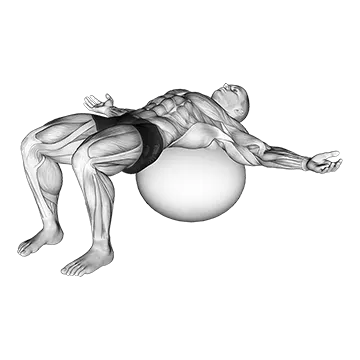
Exercise Ball Pike Push up
- Músculo objetivo
- Iliopsoas, Pectoralis Major Sternal Head, Rectus Abdominis
- Músculos sinergistas
- Deltoid Anterior, Pectoralis Major Clavicular Head, Triceps Brachii
- Equipamiento
- Stability ball
- Parte del cuerpo
- Chest
- Tipo
- Strength
The exercise ball pike push up is an advanced bodyweight movement that builds the chest (pectoralis major, sternal head) and abs (rectus abdominis) while challenging the hip flexors (iliopsoas) to hold your pike position. With your feet on a stability ball and your hips piked high, the front shoulders, upper chest, and triceps drive the press, making it a strong shoulder-and-core exercise.
Cómo hacer el Exercise Ball Pike Push up
- 1Start in a push-up position with your hands under your shoulders and your shins or feet resting on top of a stability ball.
- 2Brace your core and roll the ball toward your hands by lifting your hips, piking your body into an inverted V with hips high and head pointing toward the floor.
- 3Set your hands slightly wider than shoulder-width with fingers spread for a stable base.
- 4Bend your elbows and lower the crown of your head toward the floor between your hands, keeping your hips stacked over your shoulders.
- 5Stop when your head is just short of the floor, keeping your elbows tracking over your wrists.
- 6Press firmly through your hands to extend your arms and drive your body back up to the piked start.
- 7Keep your hips high and your abs engaged throughout so the ball stays steady under your feet.
- 8Complete your reps, then roll the ball back out and lower your knees to finish.
Consejos de técnica
- Keep your hips piked high so the press loads the upper chest and front shoulders rather than turning into a flat push-up.
- Spread your fingers and grip the floor to keep your wrists stable on the narrow pressing base.
- Move slowly and under control — the ball is unstable, so rushing reps makes it roll out from under you.
- Brace your rectus abdominis and hip flexors hard to hold the pike; let the core do the work of stabilizing the ball.
- Set up near a wall or with a partner the first few times so you have support if the ball shifts unexpectedly.
Errores comunes
- Letting your hips drop and turning the movement into a flat push-up, which removes the shoulder and upper-chest emphasis the pike is built for.
- Lowering only a few inches instead of bringing your head toward the floor, cutting the range of motion and the work for the chest and shoulders.
- Flaring the elbows straight out to the sides, which strains the shoulder joint and reduces pressing power.
- Rushing through reps so the ball rolls or wobbles, costing you tension and risking a fall.
- Holding your breath and losing core brace, which makes the pike collapse and destabilizes the ball under your feet.
Preguntas frecuentes
What muscles does the exercise ball pike push up work?
It targets the chest (pectoralis major, sternal head), the abs (rectus abdominis), and the hip flexors (iliopsoas), with the front deltoids, upper chest (clavicular head), and triceps assisting the press.
Is the exercise ball pike push up good for beginners?
It is an advanced movement. If the unstable ball feels like too much, start with a feet-elevated pike push-up on a sturdy bench or box, then progress to the ball once your shoulders and core are stronger.
Why are my hips supposed to stay high?
Keeping your hips piked high places your shoulders under your hands so the press loads the upper chest and front delts. If your hips sink, the angle flattens and it becomes a regular push-up instead.
How many sets and reps should I do?
Because it is challenging and balance-intensive, start with 3 sets of 5–8 controlled reps. Add reps before adding difficulty, and stop the set once your hips start dropping or the ball gets shaky.
What's a good alternative to the exercise ball pike push up?
A feet-elevated pike push-up on a box or bench gives a similar shoulder and upper-chest emphasis with a stable surface, making it a solid regression or alternative.