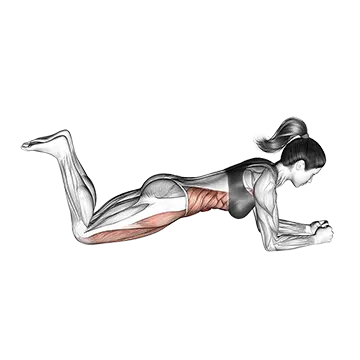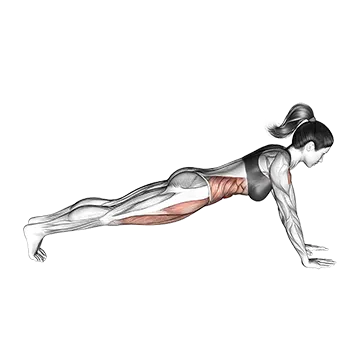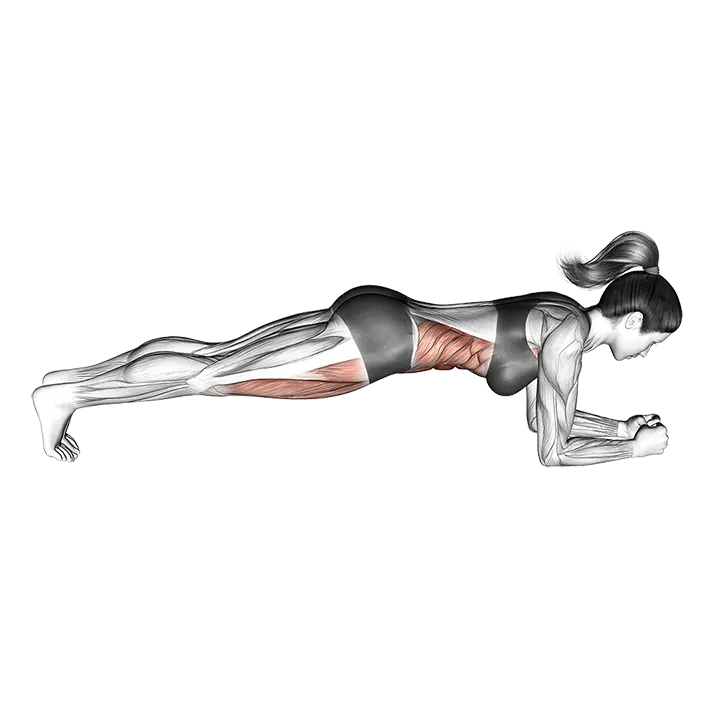
Front Plank
- Músculo objetivo
- Rectus Abdominis
- Músculos sinergistas
- Obliques, Quadriceps, Serratus Anterior, Tensor Fasciae Latae
- Equipamiento
- Body weight
- Parte del cuerpo
- Waist
- Tipo
- Strength
The front plank is an isometric bodyweight core hold that primarily targets the rectus abdominis, with the obliques, quadriceps, serratus anterior, and tensor fasciae latae working to keep your body rigid. Held on your forearms in a straight line from head to heels, it builds core stability and anti-extension strength with no equipment required.
Cómo hacer el Front Plank
- 1Kneel down and place your forearms on the floor, with your elbows directly under your shoulders and your forearms parallel to each other.
- 2Extend your legs straight back behind you, tucking your toes under so the balls of your feet are on the floor.
- 3Lift your hips off the ground so your body forms a straight line from your head through your heels.
- 4Brace your abs as if bracing for a punch, squeeze your glutes, and pull your belly button toward your spine.
- 5Keep your neck neutral by gazing at the floor a few inches in front of your hands, and breathe steadily.
- 6Hold this rigid position for 20–60 seconds, resisting any sag in your hips or arch in your lower back.
- 7Lower your knees to the floor under control to finish the rep, rest, and repeat as needed.
Consejos de técnica
- Squeeze your glutes and quads throughout the hold to lock the pelvis in place and protect your lower back.
- Push the floor away through your forearms to engage the serratus anterior and keep your upper back from collapsing.
- Breathe in a slow, controlled rhythm rather than holding your breath, which lets you keep tension longer.
- Stop the set when your form breaks down rather than chasing the clock with a sagging hip position.
- Build duration gradually with shorter, high-quality holds before extending the time under tension.
Errores comunes
- Letting the hips sag toward the floor, which arches the lower back and shifts load off the abs onto the spine.
- Piking the hips up high, which makes the hold easier and takes tension off the rectus abdominis.
- Dropping or craning the head, which strains the neck and breaks the straight head-to-heel line.
- Holding your breath to brace, which spikes pressure and forces an early end to the set.
- Placing the elbows too far forward instead of under the shoulders, reducing shoulder stability.
Preguntas frecuentes
What muscles does the front plank work?
It primarily works the rectus abdominis, with the obliques, quadriceps, serratus anterior, and tensor fasciae latae acting as synergists to keep your body rigid and aligned.
How long should I hold a front plank?
Aim for 20–60 seconds per hold with strict form. Quality matters more than duration, so stop the set once your hips start to sag rather than pushing for a longer but sloppy time.
Is the front plank good for beginners?
Yes. It needs no equipment and is easy to scale: drop to your knees for an easier version or shorten the hold, then progress to a full forearm plank as your core strengthens.
Where should I feel the front plank?
You should feel it mainly in your abs as they work to keep your torso from sagging, with your glutes and quads helping. If you feel it mostly in your lower back, your hips are dropping and you should re-brace.
What's a good alternative to the front plank?
A knee plank is an easier regression, while a side plank shifts the emphasis onto the obliques. All are bodyweight isometric holds that build core stability.