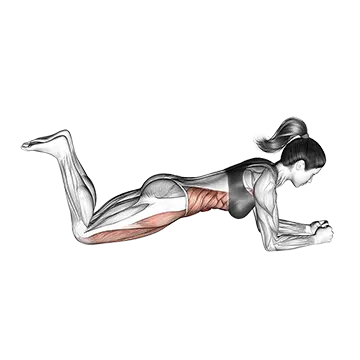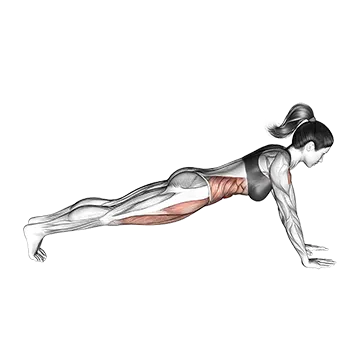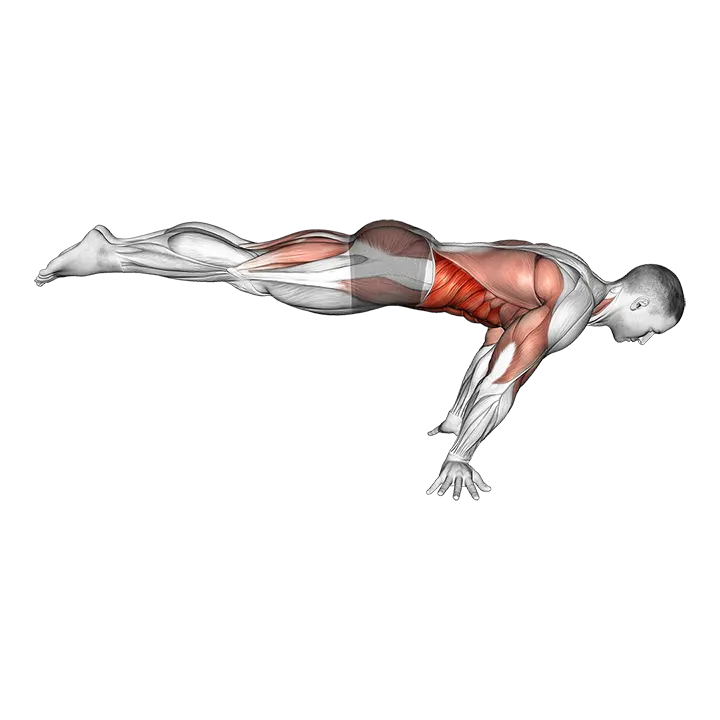
Full Planche
- Músculo objetivo
- Rectus Abdominis
- Músculos sinergistas
- Gluteus Maximus, Hamstrings, Latissimus Dorsi, Obliques, Pectoralis Major Clavicular Head, Pectoralis Major Sternal Head, Serratus Anterior, Teres Major, Triceps Brachii
- Equipamiento
- Body weight
- Parte del cuerpo
- Waist
- Tipo
- Stretching
The full planche is an advanced bodyweight isometric hold where you balance your entire body horizontal to the floor, parallel and supported only on your hands. It demands extreme strength from the rectus abdominis and obliques to keep the body rigid, while the shoulders, chest (pectoralis major), serratus anterior, triceps, lats, teres major, glutes and hamstrings work to hold the line. It is a benchmark of straight-arm pushing and core strength in gymnastics and calisthenics.
Cómo hacer el Full Planche
- 1Set your hands flat on the floor (or on parallettes) shoulder-width apart with fingers pointing forward or slightly out, and lock your elbows fully straight.
- 2Lean your shoulders well forward past your hands so your weight shifts onto your wrists, and strongly protract your shoulder blades by pushing the floor away to round the upper back.
- 3Brace your core hard, squeezing the rectus abdominis and obliques, and tighten your glutes to lock the hips and torso into one rigid line.
- 4Lift both feet off the floor and extend your legs straight back, pointing your toes, while keeping your hips from sagging or piking.
- 5Continue leaning forward until your shoulders, hips, and feet rise into a straight horizontal line parallel to the ground, balanced entirely on your hands.
- 6Hold the position with arms locked and scapulae protracted, breathing in shallow, controlled breaths without letting the body pike or arch.
- 7Hold for your target time, then lower your feet back under control and stand up to rest before the next attempt.
Consejos de técnica
- Keep your elbows fully locked and rotate the inside of your elbows forward (slight external rotation) to protect the joint under the straight-arm load.
- Drive the protraction hard — actively push the floor away so your upper back rounds; a flat or retracted back collapses the hold.
- Build to the full planche through progressions (tuck, advanced tuck, straddle, then full) over months, only adding leg length once you can hold the easier shape for 10+ seconds.
- Train wrist mobility and warm up the wrists thoroughly, since the forward lean loads them heavily; parallettes ease the wrist angle if needed.
- Keep total hold volume low and stop a rep the moment your hips start to sag — quality straight-line holds build the strength, grinding broken ones does not.
Errores comunes
- Letting the hips sag or pike instead of holding a straight line, which means the core and glutes aren't bracing hard enough and turns the hold into a different, easier position.
- Bending the elbows to cheat the lean, which removes the straight-arm demand the planche is built on and puts the elbow joint at risk.
- Retracting or flattening the shoulder blades instead of protracting, which kills the shoulder leverage and makes the horizontal balance impossible to hold.
- Skipping progressions and forcing the full straddle or full planche too early, which overloads cold wrists, elbows and shoulders and invites strain.
- Holding your breath for the whole set, which spikes pressure and shortens the hold — use shallow, steady breaths while keeping the core tight.
Preguntas frecuentes
What muscles does the full planche work?
It primarily works the rectus abdominis to keep the body rigid and horizontal, with the obliques, glutes, hamstrings, lats, teres major, serratus anterior, both heads of the pectoralis major, and triceps all working as synergists to hold the straight-arm line.
How long should I hold the full planche?
A clean 2–5 second hold is a strong result for this skill; many athletes work toward 10+ seconds. Quality matters more than time — a 3-second straight-line hold beats a 10-second one with sagging hips.
Is the full planche good for beginners?
No — it is an advanced gymnastics isometric. Beginners should start with the planche lean and tuck planche, then progress through advanced tuck and straddle over months before attempting the full version.
What is a good progression toward the full planche?
Work in order: planche lean, tuck planche, advanced tuck planche, then straddle planche, and finally the full planche. Hold each shape for 10+ seconds with locked arms and protracted shoulders before moving to the next.
Why do my shoulders need to lean so far forward?
Leaning your shoulders past your hands shifts your center of mass over the support point so the body can balance horizontally. Combined with hard scapular protraction, that lean is what makes the straight-arm hold possible.