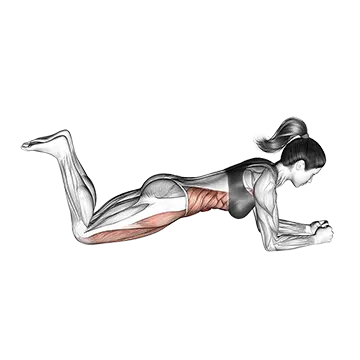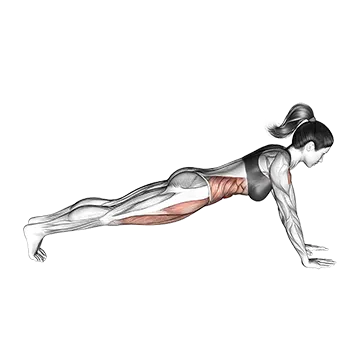
Hanging Straight Leg Hip Raise
- Músculo objetivo
- Rectus Abdominis
- Músculos sinergistas
- Adductor Brevis, Adductor Longus, Iliopsoas, Obliques, Quadriceps, Sartorius
- Equipamiento
- Body weight
- Parte del cuerpo
- Waist
- Tipo
- Strength

The hanging straight leg hip raise is an advanced bodyweight core exercise that primarily targets the rectus abdominis, with strong help from the obliques and hip flexors (iliopsoas, sartorius). Hanging from a bar with straight legs, you curl your pelvis upward to train the lower abs and overall trunk control.
Cómo hacer el Hanging Straight Leg Hip Raise
- 1Hang from a pull-up bar with an overhand grip slightly wider than shoulder-width, arms fully extended and legs straight beneath you.
- 2Engage your shoulders by pulling them down away from your ears, and brace your core to stop your body from swinging.
- 3Keeping your legs straight and together, raise them in front of you until they are roughly parallel to the floor.
- 4From there, curl your pelvis up toward your ribs, lifting your hips and rounding your lower back at the top of the movement.
- 5Squeeze your abs hard at the top, where your legs and hips are highest.
- 6Lower your hips and then your legs back down under control, resisting the urge to drop them quickly.
- 7Return to a full dead hang with straight legs, then repeat for the desired number of reps.
Consejos de técnica
- Drive the movement from your pelvis, not your legs — the goal is to roll your hips upward, which is what shifts the work onto the lower abs.
- Keep your legs straight and squeezed together to increase the lever length and make the rectus abdominis work harder.
- Move slowly and avoid using momentum or a kipping swing, so the abs do the lifting rather than the hip flexors and bodyweight bounce.
- Exhale and crunch as you raise the hips, then inhale as you lower under control.
- If your grip fails before your abs, use lifting straps so you can train the core to failure.
Errores comunes
- Swinging the body to fling the legs up, which uses momentum instead of muscle and removes tension from the abs.
- Only raising the legs without curling the pelvis, which keeps the work on the hip flexors and skips the lower-ab contraction.
- Bending the knees to make the rep easier, which shortens the lever and reduces the load on the rectus abdominis (this is then a different, easier variation).
- Dropping the legs and hips quickly on the way down, wasting the lowering phase and risking a hard pull on the lower back.
Preguntas frecuentes
What muscles does the hanging straight leg hip raise work?
It primarily works the rectus abdominis, especially the lower abs, with the obliques, iliopsoas, sartorius, quadriceps, and hip adductors (adductor longus and brevis) acting as synergists.
What is the difference between a straight leg raise and a hip raise?
A straight leg raise lifts the legs using mainly the hip flexors, while the hip raise adds a pelvic curl at the top that rolls your hips toward your ribs — that curl is what targets the rectus abdominis.
Is the hanging straight leg hip raise good for beginners?
It is an advanced move. Beginners should start with hanging knee raises or lying leg raises first, then progress to straight legs once their core and grip can control the movement.
How many sets and reps should I do?
Aim for 3 to 4 sets of 8 to 15 controlled reps. Stop the set once you can no longer curl your pelvis without swinging or bending your knees.
How do I stop swinging on the bar?
Pull your shoulders down, brace your core before the first rep, and move slowly. Pausing briefly at the bottom of each rep also kills the swing so the abs stay in control.