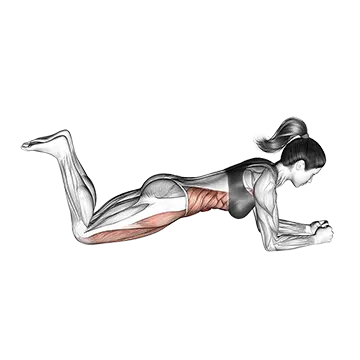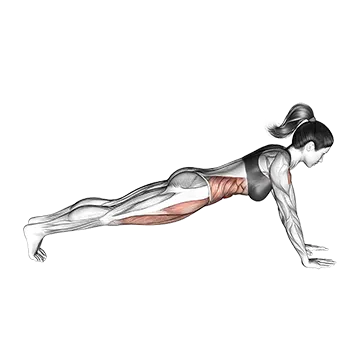
Kneeling Abdominal Draw In
- Músculo objetivo
- Rectus Abdominis
- Equipamiento
- Body weight
- Parte del cuerpo
- Waist
- Tipo
- Strength
The Kneeling Abdominal Draw In is a bodyweight core exercise that targets the rectus abdominis by training you to draw the navel toward the spine and maintain that tension. It builds foundational core control and is particularly useful for developing the mind-muscle connection in the abdominal wall before progressing to more demanding core work.
Cómo hacer el Kneeling Abdominal Draw In
- 1Kneel on a mat with your knees hip-width apart and your hips stacked directly over your knees.
- 2Place your hands on your thighs or let them rest at your sides — keep your torso upright and your spine in a neutral position.
- 3Take a relaxed breath in through your nose, allowing your belly to expand naturally.
- 4As you exhale through your mouth, slowly draw your navel in toward your spine without rounding your lower back or tilting your pelvis.
- 5Hold the drawn-in position for 5–10 seconds while continuing to breathe in shallow breaths — do not hold your breath.
- 6Keep your shoulders relaxed and your chest open throughout the hold.
- 7After the hold, release the contraction fully and allow your abdomen to relax before the next repetition.
- 8Repeat for the prescribed number of repetitions or time.
Consejos de técnica
- Think of pulling your belly button away from your waistband rather than sucking in your chest — the movement comes from the lower abdomen.
- Keep breathing during the hold; shallow nasal breathing lets you maintain the contraction without breaking it.
- Maintain a neutral spine throughout — neither arching nor flexing the lower back.
- Progress the hold duration gradually; start at 5 seconds per rep and work toward 10–15 seconds as control improves.
Errores comunes
- Holding the breath during the contraction: this spikes intra-abdominal pressure and defeats the purpose of the controlled draw-in drill.
- Rounding the lower back: posterior pelvic tilt reduces the effectiveness of the exercise and can reinforce poor posture patterns.
- Pulling in only the upper abdomen: the draw-in should originate below the navel; engaging only the upper belly means the deep core is not being recruited.
- Releasing too quickly: letting go of the contraction immediately removes the time-under-tension needed to develop core endurance and control.
- Shrugging or tensing the shoulders: unnecessary upper-body tension distracts from the abdominal focus and should be consciously relaxed.
Preguntas frecuentes
What muscles does the Kneeling Abdominal Draw In work?
The exercise primarily targets the rectus abdominis while also engaging the deep stabilizing muscles of the core. The kneeling position removes lower-body momentum and keeps the focus on the abdominal wall.
Is the abdominal draw in exercise good for beginners?
Yes. It requires no equipment, uses a stable kneeling position, and teaches the fundamental skill of activating the core without spinal flexion, making it an appropriate starting point for those new to core training.
How many reps and sets should I do?
A common starting point is 2–3 sets of 8–10 repetitions with a 5–10 second hold each. As your control improves, increase the hold duration before adding more sets.
Can the Kneeling Abdominal Draw In help with lower back pain?
Improving core control through exercises like this can support lumbar stability, which may reduce the risk of lower back discomfort. However, if you have existing back pain you should consult a healthcare professional before starting.
How is the draw in maneuver different from a plank or crunch?
The draw in focuses on activating and controlling the abdominal muscles isometrically without any spinal movement, whereas a crunch involves spinal flexion and a plank requires full-body stability. It is a more targeted and controlled drill rather than a global core endurance exercise.