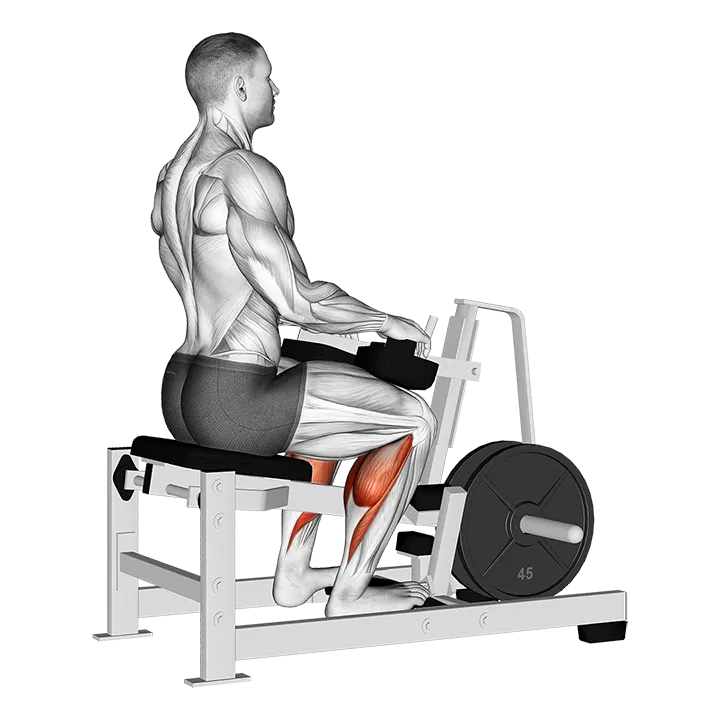
Lever Calf Stretch (plate loaded) Isometric
- Músculo objetivo

- Gastrocnemius, Soleus
- Equipamiento
- Leverage machine
- Parte del cuerpo
- Calves
- Tipo
- Stretching
The Lever Calf Stretch (plate loaded) Isometric uses a plate-loaded leverage machine to apply sustained load to the calves while you hold a fixed, static position. It targets the gastrocnemius and soleus simultaneously, making it an effective tool for improving ankle dorsiflexion, reducing post-training tightness, and increasing calf flexibility under controlled resistance.
Cómo hacer el Lever Calf Stretch (plate loaded) Isometric
- 1Load the machine with an appropriate amount of weight — start light, as even modest loads create significant stretch tension on the calves.
- 2Sit or stand in the machine according to its design, and position the balls of your feet on the edge of the footplate with your heels hanging freely off the bottom.
- 3Extend your legs so the machine is supporting the load, then allow your ankles to dorsiflex fully — heels dropping as far down as your range of motion allows.
- 4Keep your knees straight (to emphasize the gastrocnemius) or slightly bent (to emphasize the soleus), depending on which part of the calf you want to target.
- 5Maintain a neutral spine and a relaxed upper body throughout the hold — do not grip or brace aggressively.
- 6Hold the stretched position for the desired duration, typically 20–60 seconds, breathing steadily and allowing the muscles to relax into the stretch.
- 7When the hold is complete, plantarflex slightly to release the tension before unloading the machine and stepping off safely.
Consejos de técnica
- Breathe slowly and continuously throughout the hold — exhaling during the deepest part of the stretch helps the gastrocnemius and soleus release further.
- Start with a very light load; the leverage machine amplifies the stretch considerably, and too much weight too soon can strain the Achilles tendon.
- Alternate between a straight knee and a slightly bent knee during separate sets to ensure both the gastrocnemius and soleus are fully stretched.
- Let gravity and the load do the work — actively pushing the heel down defeats the isometric nature of the exercise and can cause cramping.
Errores comunes
- Loading too much weight too soon, which overwhelms the Achilles tendon and surrounding connective tissue rather than producing a productive calf stretch.
- Bouncing or pulsing the heels instead of maintaining a true static hold, which prevents the muscles from relaxing and reduces the effectiveness of the stretch.
- Bending the knees excessively when targeting the gastrocnemius, which reduces the stretch on the larger calf muscle by slackening it at the knee.
- Holding the breath during the hold, which increases systemic tension and prevents the gastrocnemius and soleus from fully releasing into the stretch.
- Rushing off the machine without gradually releasing tension, which can cause a sudden jolt to the Achilles tendon and ankle joint.
Preguntas frecuentes
What muscles does the Lever Calf Stretch (plate loaded) Isometric target?
It targets the gastrocnemius and soleus — the two primary muscles of the calf. Keeping the knee straight biases the gastrocnemius, while a slight knee bend shifts the emphasis to the soleus.
How long should I hold the isometric calf stretch?
Aim for 20–60 seconds per hold. Shorter holds (20–30 s) work well mid-session, while longer holds (45–60 s) are ideal post-workout when the muscles are warm and more pliable.
How much weight should I use on the leverage machine?
Start very light — even a small plate creates significant stretch tension on the calves. Increase load only once you can hold the full stretch comfortably and with proper form.
Is this exercise safe for people with Achilles tendon issues?
Use caution. The combination of load and deep dorsiflexion places real stress on the Achilles tendon. If you have a history of tendon pain or injury, consult a physiotherapist before adding plate-loaded stretching.
When is the best time to do this stretch — before or after training?
After training is generally preferred. Warm muscles stretch more safely and effectively, and post-workout isometric stretching can aid recovery and long-term flexibility gains.