
Potty Squat
- Músculo objetivo
- Rectus Abdominis
- Músculos sinergistas
- Obliques
- Equipamiento
- Body weight
- Parte del cuerpo
- Waist
- Tipo
- Strength

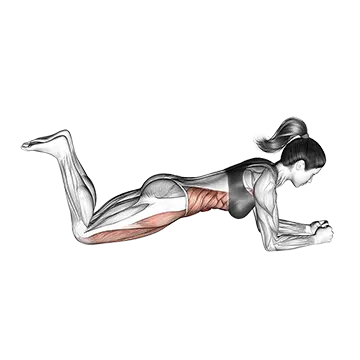
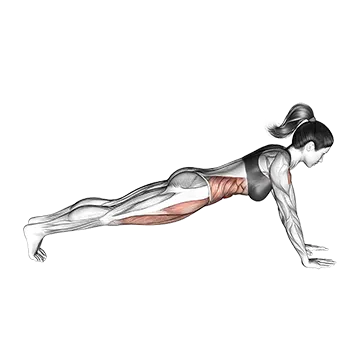

The Potty Squat is a bodyweight deep-squat variation performed with a wide stance and toes angled outward, lowering the hips well below the knees. It primarily challenges the rectus abdominis, with the obliques working as synergists to stabilize the trunk in the deep position. The movement builds core endurance and improves lower-body mobility without any equipment.
Cómo hacer el Potty Squat
- 1Stand with your feet roughly 1.5 times shoulder-width apart and toes turned out 30–45 degrees.
- 2Extend your arms in front of you at shoulder height, or press your palms together at chest level, to help maintain balance.
- 3Inhale and brace your core by drawing your navel toward your spine before you begin to descend.
- 4Push your knees outward so they track over your toes, then lower your hips straight down.
- 5Continue descending until your hips drop clearly below your knees into a full deep squat.
- 6Keep your torso as upright as possible and your heels flat on the floor throughout the descent.
- 7Hold the bottom position for one to two seconds while maintaining core tension.
- 8Drive through your heels and press your knees outward to return to the starting position.
- 9Exhale at the top, reset your brace, and repeat for the target number of repetitions.
Consejos de técnica
- If your heels rise off the floor, place a small plate or wedge under them until ankle mobility improves.
- Keep your chest lifted throughout the movement; letting it drop forward reduces trunk tension and shifts the load away from the rectus abdominis.
- Actively contract the rectus abdominis during both the descent and the hold at the bottom to maximize core engagement.
- Breathe in and brace before each descent, hold during the lowest position, then exhale as you drive back up.
- Work on ankle and hip flexibility in separate sessions to gradually progress toward a full flat-footed deep squat.
Errores comunes
- Allowing the heels to rise off the floor — shifts weight onto the toes, destabilizes the position, and reduces the demand on the rectus abdominis.
- Letting the knees collapse inward — removes the outward tracking required by the wide stance and places excessive stress on the knee joints.
- Rounding the lower back at the bottom of the squat — reduces trunk tension and increases the risk of lumbar strain.
- Rushing through the descent — shortens time under tension for the rectus abdominis and obliques and increases the risk of losing balance.
- Holding the breath for multiple consecutive repetitions — limits sustained core activation and can cause a sharp rise in blood pressure during extended sets.
Preguntas frecuentes
What muscles does the Potty Squat work?
The Potty Squat targets the rectus abdominis as the primary muscle. The obliques function as synergists, helping to stabilize the trunk throughout the deep squat position.
Why is the rectus abdominis the primary muscle in a squat movement?
In a deep squat the trunk must flex and brace continuously to keep the torso upright and the spine neutral. That sustained isometric and stabilizing demand places the rectus abdominis at the center of the movement, making it the primary target in this variation.
Is the Potty Squat suitable for beginners?
It can be, though beginners often lack the ankle mobility needed to keep the heels flat in a full deep squat. Elevating the heels on a small plate and working through a reduced range of motion allows beginners to build toward the full movement safely.
How wide should my stance be for the Potty Squat?
Start with your feet roughly 1.5 times shoulder-width apart and toes pointed out 30–45 degrees. Adjust the exact angle to match your hip structure — your knees should track naturally over your toes without forcing them inward or outward.
How many sets and reps should I do?
Two to four sets of 8–15 repetitions is a practical starting range for building core endurance. You can also hold the bottom position for time — 20–45 seconds per set — to increase the sustained demand on the rectus abdominis and obliques.