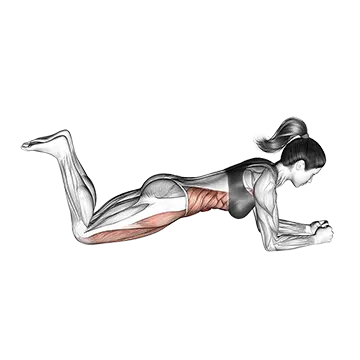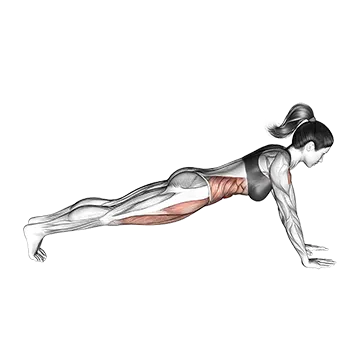
Sit-Up
- Músculo objetivo
- Rectus Abdominis
- Músculos sinergistas
- Iliopsoas, Obliques
- Equipamiento
- Body weight
- Parte del cuerpo
- Waist
- Tipo
- Strength
The sit-up is a classic bodyweight core exercise that directly targets the rectus abdominis, with the iliopsoas and obliques contributing throughout the movement. Performed on the floor without any equipment, it trains trunk flexion through a full range of motion and is widely used to build core strength and endurance.
Cómo hacer el Sit-Up
- 1Lie on your back with your knees bent to roughly 90° and your feet flat on the floor, hip-width apart.
- 2Cross your arms over your chest or place your fingertips lightly behind your ears — avoid pulling on your neck.
- 3Brace your core and press your lower back gently into the floor to set your starting position.
- 4Exhale and curl your torso upward, leading with your chest and bringing your upper body toward your thighs.
- 5Continue rising until your torso is roughly perpendicular to the floor — or until your elbows reach your knees.
- 6Pause briefly at the top without collapsing forward.
- 7Inhale and slowly lower your torso back down in a controlled manner, vertebra by vertebra, until your back is flat on the floor.
- 8Reset your brace before beginning the next repetition.
Consejos de técnica
- Exhale forcefully on the way up to naturally increase intra-abdominal pressure and engage the rectus abdominis more effectively.
- Keep your chin slightly tucked and your neck neutral throughout — avoid jutting your chin toward the ceiling as you rise.
- Control the descent; lowering slowly increases time under tension and builds more core strength than dropping back down.
- Anchor your feet only if needed for stability — performing the exercise with unanchored feet increases demand on the hip flexors (iliopsoas) and obliques.
Errores comunes
- Pulling on the neck with your hands, which strains the cervical spine and reduces tension on the abs.
- Using momentum to swing up instead of curling the spine, which takes work away from the rectus abdominis.
- Holding your breath throughout the rep, which increases blood pressure and reduces core activation.
- Dropping back to the floor too quickly on the way down, losing the eccentric benefit and risking lower-back strain.
- Keeping the lower back excessively arched at the start instead of gently bracing and flattening it, which reduces abdominal engagement.
Preguntas frecuentes
What muscles does the sit-up work?
The sit-up primarily works the rectus abdominis — the muscle responsible for trunk flexion. The iliopsoas and obliques act as synergists, assisting with the movement.
What is the difference between a sit-up and a crunch?
A crunch only lifts your shoulder blades off the floor and keeps the lumbar spine relatively still, isolating the rectus abdominis over a short range. A sit-up takes your torso all the way up, bringing the hip flexors (iliopsoas) more actively into the movement.
Should I anchor my feet when doing sit-ups?
It depends on your goal. Anchoring your feet makes the movement easier and allows you to complete more reps, but it also increases iliopsoas involvement. Leaving your feet unanchored demands greater balance and core control.
How many sit-ups should I do per set?
For general core strength, 3 sets of 10–20 reps is a solid starting range. As you get stronger, increase reps, slow down the tempo, or add a pause at the top rather than chasing very high rep counts with poor form.
Are sit-ups safe for my lower back?
Sit-ups are safe for most people when performed with controlled technique — a neutral spine at the start, a smooth curl on the way up, and a slow lowering phase. If you have existing lower-back issues, consult a healthcare professional before including them in your routine.