
Weighted Reduction Triangle
- Músculo objetivo
- Gluteus Maximus, Hamstrings
- Músculos sinergistas
- Deltoid Anterior, Deltoid Lateral, Pectoralis Major Clavicular Head, Triceps Brachii
- Equipamiento
- Stability ball
- Parte del cuerpo
- Thighs
- Tipo
- Strength


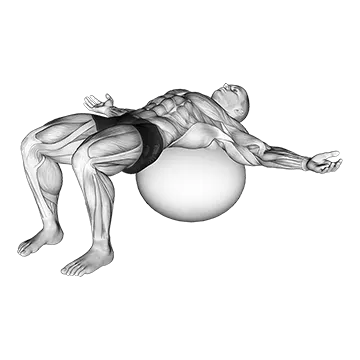

The Weighted Reduction Triangle is a stability ball strength exercise that primarily targets the gluteus maximus and hamstrings while recruiting the front and lateral deltoids, upper chest (pectoralis major clavicular head), and triceps as synergists. By elevating your feet on a stability ball and placing your hands in a close triangle position, you challenge lower-body stability and upper-body pressing strength in a single movement.
Cómo hacer el Weighted Reduction Triangle
- 1Place a stability ball on the floor and kneel behind it. Roll your shins and feet onto the top of the ball until your body forms a straight line from shoulders to ankles in a push-up plank position.
- 2Walk your hands inward so your thumbs and index fingers touch, forming a triangle shape directly beneath your chest. Keep your wrists stacked under your shoulders.
- 3Brace your core, squeeze your glutes, and drive your heels lightly into the ball to stabilize your hips at the same height as your shoulders.
- 4Inhale and lower your chest toward the floor by bending your elbows back and close to your sides at roughly 45°, keeping the triangle hand position throughout the descent.
- 5Stop when your chest is 2–3 cm above the floor and your elbows reach approximately 90°. Do not let your hips sag or pike upward.
- 6Exhale and press through your palms to extend your arms and return to the starting position. Keep the ball steady by maintaining tension in your glutes and hamstrings.
- 7Complete all reps, then carefully walk your hands back toward the ball and step off before releasing the position.
Consejos de técnica
- Keep your hips perfectly level throughout the set — any sagging shifts load off the glutes and hamstrings and stresses the lower back.
- Press your shins actively into the ball rather than just resting on it; this constant engagement is what drives glute and hamstring activation.
- Breathe in on the way down and out on the way up to keep your core braced without holding your breath.
- If the ball rolls during the press, reduce range of motion first and prioritize control before adding reps or external load.
Errores comunes
- Letting the hips sag toward the floor, which unloads the glutes and hamstrings and compresses the lumbar spine under the chest press.
- Piking the hips upward to compensate for weak core stability, turning the movement into a partial decline and reducing the glute and hamstring demand.
- Placing the hands too far apart so they no longer form a triangle, which shifts the load away from the upper chest and triceps and loses the unique mechanical advantage of the position.
- Rushing the descent, which reduces time under tension on the target muscles and increases the chance of losing ball control.
- Neglecting to stabilize the ball before lowering — an uncontrolled ball can slide, creating a sudden collapse and shoulder or wrist injury risk.
Preguntas frecuentes
What muscles does the Weighted Reduction Triangle work?
The primary muscles are the gluteus maximus and hamstrings, which work isometrically to keep your legs stable on the ball. The front and lateral deltoids, pectoralis major clavicular head (upper chest), and triceps act as synergists during the push-up press.
Is the Weighted Reduction Triangle suitable for beginners?
It is better suited to intermediate exercisers who can already perform stable standard push-ups and have some experience with stability ball exercises. Beginners should build core stability and glute strength with floor-based movements first before adding the ball elevation.
What does the triangle hand position do compared to a regular push-up?
Placing your hands in a triangle (index fingers and thumbs touching) brings your elbows closer to your sides, which increases recruitment of the triceps brachii and the clavicular head of the pectoralis major compared to a standard shoulder-width grip.
How many sets and reps should I do for the Weighted Reduction Triangle?
Three to four sets of 8–12 controlled reps works well for strength and muscle development. Prioritize a steady, wobble-free tempo over high rep counts, especially when first learning the exercise on the stability ball.
What is a good progression for this exercise?
Once you can perform 12 clean reps without the ball shifting, slow the lowering phase to a 3-second count and add a one-second pause with your chest just above the floor. Both raise the difficulty on the same muscles using the same stability ball setup.