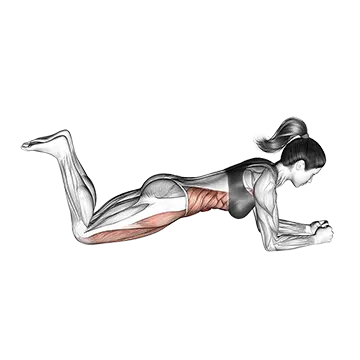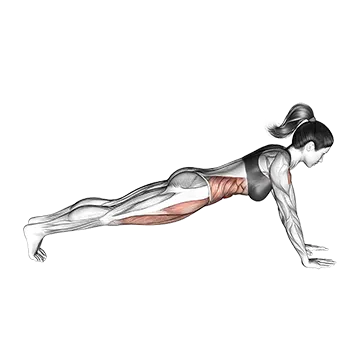
3-4 Sit-up
- Target muscle
- Rectus Abdominis
- Synergist muscles
- Obliques
- Equipment
- Body weight
- Body part
- Waist
- Type
- Strength




The 3-4 sit-up is a bodyweight core exercise that targets the rectus abdominis, with the obliques assisting to stabilize and rotate the trunk. It uses a partial, three-quarter range of motion that keeps constant tension on the abs and reduces hip-flexor takeover, making it a controlled way to build midsection strength.
How to do the 3-4 Sit-up
- 1Lie on your back on the floor or a mat with your knees bent and feet flat, roughly hip-width apart.
- 2Cross your arms over your chest or rest your fingertips lightly at the sides of your head without pulling on your neck.
- 3Brace your core and press your lower back gently into the floor to remove any slack.
- 4Curl your torso up smoothly, leading with your chest and lifting through your abs rather than yanking your head forward.
- 5Rise to roughly three-quarters of a full sit-up, until your torso is at about a 45–60° angle and your abs are fully contracted.
- 6Pause briefly at the top and squeeze your abdominals without letting your lower back round excessively.
- 7Lower under control back toward the floor, stopping just before your shoulder blades fully relax to keep tension on the abs.
- 8Complete your reps, then rest your back flat on the floor.
Form tips
- Move slowly on the way down — the lowering phase is where much of the ab tension is built.
- Keep your chin a fist's width from your chest so your neck stays neutral and your abs do the work.
- Exhale as you curl up and inhale as you lower to help brace the core.
- Keep your feet flat and stable; if they lift, tuck them under a stable object rather than swinging your legs.
- Stop the rep at three-quarters rather than sitting all the way up to keep load on the abs instead of the hip flexors.
Common mistakes
- Pulling on the back of your head or neck to lift, which strains the cervical spine and shifts work away from the abs.
- Using momentum to swing up, which removes tension from the rectus abdominis and reduces the training effect.
- Sitting all the way upright every rep, which hands much of the work to the hip flexors instead of the abs.
- Letting the lower back arch off the floor on the way down, which loses core bracing and can stress the spine.
Frequently asked questions
What muscles does the 3-4 sit-up work?
It primarily works the rectus abdominis, the muscle that flexes the trunk, with the obliques assisting to stabilize and control the movement.
How is the 3-4 sit-up different from a full sit-up?
The 3-4 sit-up stops at about three-quarters of the range, near a 45–60° torso angle, instead of sitting fully upright. That keeps constant tension on the abs and reduces hip-flexor takeover at the top.
Is the 3-4 sit-up good for beginners?
Yes. It uses only body weight and a shorter, controlled range, so it is easier on the lower back and neck than a full sit-up while still building core strength.
How many sets and reps should I do?
For most lifters, 3 sets of 12–20 controlled reps works well. Focus on smooth tempo and full ab contraction rather than rushing through high numbers.