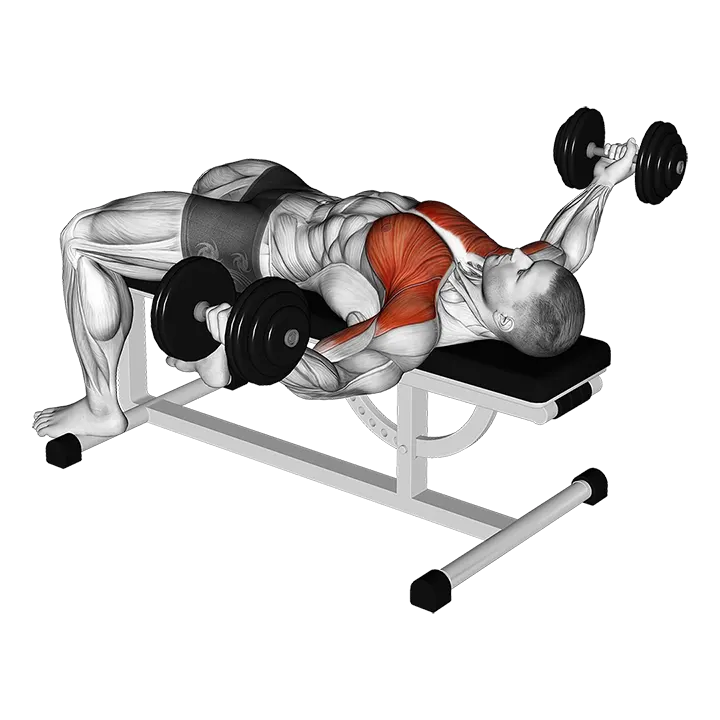
Dumbbell Flat Flye Hold Isometric
- Target muscle
- Biceps Brachii, Deltoid Anterior, Pectoralis Major Clavicular Head, Pectoralis Major Sternal Head
- Equipment
- Dumbbell
- Body part
- Chest
- Type
- Stretching
The dumbbell flat flye hold is an isometric stretching exercise that targets the chest (pectoralis major, both the clavicular upper and sternal lower heads), with the front deltoids and biceps helping stabilize the load. Lying on a flat bench, you hold the dumbbells in the open, stretched flye position and keep them static, building time under tension and a strong mind-muscle connection across the chest.
How to do the Dumbbell Flat Flye Hold Isometric
- 1Sit on a flat bench with a light-to-moderate dumbbell in each hand resting on your thighs.
- 2Lie back and press the dumbbells up over your chest with your palms facing each other and a slight, fixed bend in your elbows.
- 3Pull your shoulder blades down and together against the bench and plant your feet firmly on the floor.

- 4Lower the dumbbells out to the sides in a wide arc until you feel a strong, comfortable stretch across your chest, keeping that slight elbow bend locked.
- 5Stop at the open stretched position with the dumbbells roughly level with the bench and hold completely still.
- 6Maintain the static hold for your target time, breathing steadily and keeping constant tension in the chest.
- 7When the hold is finished, raise the dumbbells back over your chest under control.
- 8Lower the dumbbells to your thighs, then sit up to set them down safely.
Form tips
- Keep the slight elbow bend fixed throughout the hold — straightening or re-bending mid-hold turns the static effort into a partial rep and dumps tension.
- Aim for a deliberate time under tension, such as 20–45 seconds, rather than going for depth alone.
- Keep your shoulder blades retracted and pinned to the bench so the chest takes the load instead of the front of the shoulder.
- Start with lighter dumbbells than you would use for repping flyes, since holding the bottom position is the hardest part of the movement.
- Use a spotter or train near a rack when you hold heavier dumbbells, as fatigue at the stretched position can be hard to recover from.
Common mistakes
- Holding so deep that the shoulders roll forward off the bench, which shifts strain to the shoulder joint and risks injury.
- Letting the elbows straighten during the hold, which turns the move into a near-bench-press position and removes the chest stretch.
- Holding your breath through the set, which spikes blood pressure and cuts your hold short.
- Choosing too heavy a weight, so the dumbbells drift down and you lose the controlled, static position.
- Letting the shoulder blades loosen and round forward, which lets the chest go slack and kills the tension you are trying to hold.
Frequently asked questions
What muscles does the dumbbell flat flye hold work?
It targets the chest — both the upper (clavicular) and lower (sternal) heads of the pectoralis major — while the front deltoids and biceps work isometrically to stabilize the dumbbells in the stretched position.
How long should I hold the position?
Aim for 20–45 seconds per hold with a weight you can keep static and controlled. Stop the hold once you can no longer maintain the slight elbow bend and a strong chest stretch.
Is the dumbbell flat flye hold good for beginners?
Yes, as long as you use light dumbbells and keep a slight elbow bend. The isometric hold is easier to control than full repping flyes and is a good way to learn to feel the chest stretch.
How is this different from a regular dumbbell flye?
A regular flye reps the dumbbells up and down through a full arc. This version stops in the open, stretched position and holds it static, so the chest works under constant tension instead of moving the weight.