
Kneeling Hip Flexor Stretch
- Target muscle
- Gluteus Maximus
- Equipment
- Body weight
- Body part
- Hips
- Type
- Stretching
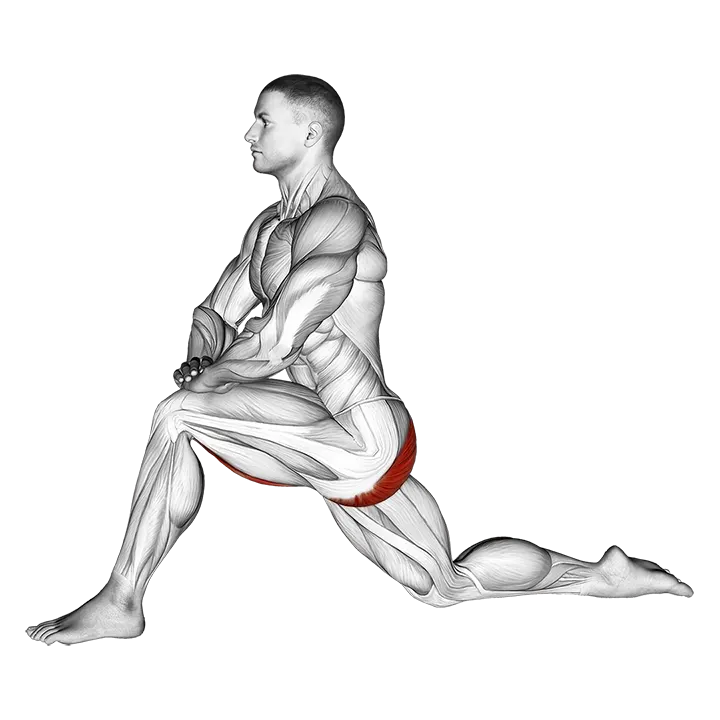
The kneeling hip flexor stretch is a foundational lower-body mobility exercise that targets the gluteus maximus and opens the hips. Performed in a half-kneeling position, it counteracts the effects of prolonged sitting and is well suited for warm-ups, cool-downs, and general hip mobility work.
How to do the Kneeling Hip Flexor Stretch
- 1Place a mat on the floor and kneel on your right knee, positioning your right shin directly behind you. Step your left foot forward so your left knee is directly above your left ankle.
- 2Keep your torso upright with your chest tall and your core lightly braced.
- 3Tuck your hips under slightly by performing a gentle posterior pelvic tilt — imagine trying to flatten the arch in your lower back.
- 4Shift your weight forward slowly until you feel a stretch in the front of your right hip and the right gluteus maximus.
- 5Hold the stretched position for 20–45 seconds, breathing steadily and relaxing deeper into the stretch with each exhale.
- 6Return your hips to the starting position, switch legs, and repeat on the opposite side.
- 7Complete 2–3 holds per side.
Form tips
- Perform the posterior pelvic tilt before shifting forward — without it, most of the stretch moves into the lower back rather than the hip.
- Keep your front knee tracking over your second toe throughout the hold to protect the knee joint.
- Place a folded towel or extra mat pad under your back knee if you feel discomfort on the hard floor.
- Avoid leaning forward at the chest; staying tall ensures the hip flexor and glute receive the stretch rather than the lumbar spine.
Common mistakes
- Skipping the pelvic tilt before shifting forward, which causes the lower back to arch and reduces the stretch on the target muscles.
- Letting the front knee drift past the toes or collapse inward, which places unnecessary stress on the knee joint.
- Holding the breath during the stretch, which increases muscular tension and prevents the hips from relaxing into a deeper range.
- Rushing through the hold in under 10 seconds, which is too brief for the nervous system to release muscular tension and allow meaningful mobility gains.
- Leaning the torso forward instead of keeping it upright, which shifts the stretch away from the hips and into the hip crease.
Frequently asked questions
What muscles does the kneeling hip flexor stretch target?
The primary target is the gluteus maximus. The kneeling position also places a passive stretch on the hip flexor muscles of the trailing leg, making it effective for improving overall hip mobility.
How long should I hold the kneeling hip flexor stretch?
Hold each side for 20–45 seconds. Research on static stretching suggests this range is sufficient to begin reducing muscular tension. Repeat for 2–3 sets per side for the best results.
When is the best time to do this stretch — before or after a workout?
It works well both as part of a dynamic warm-up (shorter holds of 15–20 seconds) and as a cool-down stretch after training (longer holds of 30–45 seconds). Avoid long static holds immediately before explosive or strength work, as they can temporarily reduce muscle activation.
My knee hurts when kneeling — what can I do?
Place a folded towel, yoga block, or extra mat under your back knee to cushion the contact point. If discomfort persists, try performing a standing hip flexor stretch against a wall as an alternative.
How often should I do the kneeling hip flexor stretch?
Daily practice yields the most consistent improvement in hip mobility, especially if you sit for long periods. Including it 3–5 times per week as part of a warm-up or cool-down routine is a practical minimum.