
Lying Hip Flexor Stretch
- Target muscle
- Gluteus Maximus
- Equipment
- Body weight
- Body part
- Hips
- Type
- Stretching
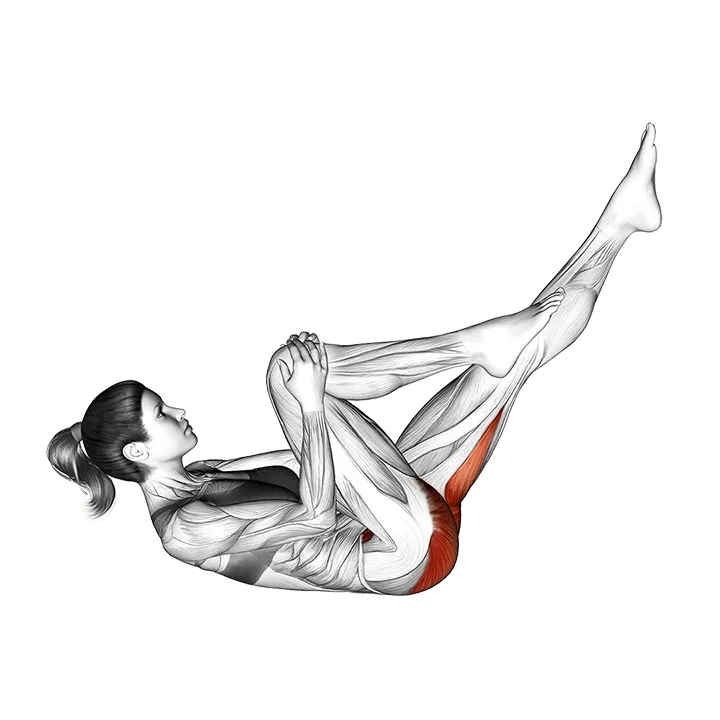
The lying hip flexor stretch is a floor-based bodyweight stretch that targets the gluteus maximus and relieves tightness through the hips. Performed on your back, it is well-suited for post-workout recovery, easing lower back tension, and improving hip flexion range of motion.
How to do the Lying Hip Flexor Stretch
- 1Lie flat on your back on the floor with your legs extended and your arms resting at your sides.
- 2Draw one knee toward your chest, clasping your hands around your shin or the back of your thigh.
- 3Gently pull the knee in until you feel a stretch through the back of your hip and gluteus maximus on that side.
- 4Keep your opposite leg fully extended and relaxed on the floor, pressing the back of that thigh down to deepen the stretch.
- 5Keep your head, shoulders, and lower back in contact with the floor throughout the hold.
- 6Hold the position for 20 to 45 seconds, breathing slowly and allowing the muscles to release with each exhale.
- 7Slowly lower the leg back to the starting position and repeat on the other side.
- 8Complete 2 to 3 holds per side.
Form tips
- Pull the knee toward the same-side shoulder rather than straight up toward the ceiling to better target the gluteus maximus.
- If your lower back rounds up off the floor, bend the extended leg and plant that foot flat on the ground until you can hold the position with a neutral spine.
- Clasp your hands behind the thigh rather than over the top of the shin if your knee is sensitive to compression — the stretch comes from the hip, not the knee.
- Relax your neck and jaw — unnecessary tension elsewhere limits how fully the target muscle can release.
Common mistakes
- Letting the hips rotate to one side during the pull, which shifts tension away from the gluteus maximus and can strain the lower back.
- Pulling the knee too forcefully or bouncing it toward the chest, which triggers a protective muscle reflex and reduces the stretch.
- Allowing the extended leg to float off the floor, which reduces stability and lessens the stretch on the hip.
- Holding the breath, which increases muscular tension and makes it harder for the target muscle to lengthen.
- Holding for too short a duration — less than 15 seconds does not give connective tissue enough time to respond.
Frequently asked questions
What does the lying hip flexor stretch target?
Despite its name, this floor variation primarily stretches the gluteus maximus — the large muscle of the buttock — by pulling the knee to the chest while lying on your back. The hip flexors on the opposite side get a mild passive stretch when the extended leg is kept flat on the floor.
How long should I hold the lying hip flexor stretch?
Hold each side for 20 to 45 seconds. Research on static stretching suggests that holding for at least 15 to 30 seconds is needed to produce meaningful increases in range of motion. Two to three holds per side per session is a practical starting point.
Can I do this stretch if I have lower back pain?
Many people with mild lower back tightness find this stretch helpful, since releasing the gluteus maximus can reduce tension around the pelvis. However, if pulling the knee toward the chest increases your pain or causes any nerve-like symptoms down the leg, stop and consult a healthcare professional before continuing.
When is the best time to do this stretch?
This stretch is best performed after a workout when muscles are warm, or as part of a dedicated mobility or cool-down routine. Stretching cold, tight muscles first thing in the morning is less effective and carries a slightly higher risk of discomfort.
How is the lying hip flexor stretch different from a standing hip flexor stretch?
The lying version removes the need to balance and keeps the spine supported, making it easier to fully relax the target muscle. It also places more direct emphasis on the gluteus maximus, whereas standing variations like a kneeling lunge stretch focus more on the hip flexors at the front of the hip.