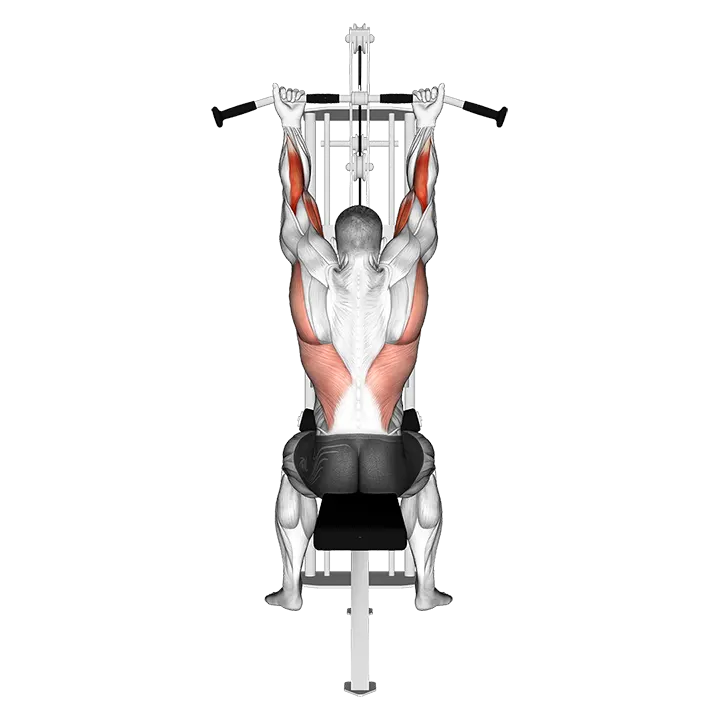

Suspension In Pulley Machine In Supination Stretch
- Target muscle
- —
- Equipment
- Cable
- Body part
- Upper Arms
- Type
- Stretching
The Suspension In Pulley Machine In Supination Stretch is a cable-assisted mobility exercise that targets the upper arm by gripping a cable handle in full supination (palm facing up) and leaning away from the machine to suspend your bodyweight against the cable's tension. The combination of supination and cable-loaded suspension places a deep, controlled stretch on the biceps brachii and forearm supinator muscles, making it a useful addition to upper-arm recovery and flexibility work.
How to do the Suspension In Pulley Machine In Supination Stretch
- 1Set the pulley to a low-to-mid height — roughly hip to chest level — and attach a single handle or loop grip.
- 2Stand facing the cable machine and grip the handle with one or both hands in full supination: palm or palms turned up toward the ceiling.
- 3Step back from the machine and shift your weight away from it so the cable pulls taut and begins to support a portion of your bodyweight.
- 4Allow your arm or arms to extend forward and slightly downward, keeping your elbow soft but close to straight so the cable tension is directed through the biceps and forearm.
- 5Lean your torso back gradually, loading more of your bodyweight into the cable until you feel a clear stretch running through the front of the upper arm and outer forearm.
- 6Hold the supinated grip firmly and let gravity and the cable tension deepen the stretch — do not force additional rotation at the elbow.
- 7Breathe slowly and steadily, relaxing the target muscles further with each exhale.
- 8Hold the stretched position for 20–40 seconds, or as long as you can maintain controlled supination and stable footing.
- 9Shift your weight back toward the machine to unload the cable, then return to an upright position before releasing the handle.
Form tips
- Maintain full supination throughout the hold — any tendency for the palm to rotate inward reduces tension on the biceps and supinator and shortens the stretch.
- Control how far you lean back: small adjustments in body angle produce large changes in cable tension, so increase the lean gradually rather than dropping into it all at once.
- Keep your shoulder in a neutral, depressed position throughout the stretch — shrugging or letting the shoulder roll forward shifts stress to the joint and away from the target muscles.
- Exhale slowly and deliberately during the hold to allow the muscles to relax into the stretch rather than resisting it.
- Use a weight setting just heavy enough to support the lean and maintain taut cable tension — this is a mobility exercise, not a loading exercise, so heavier is not better.
Common mistakes
- Allowing the elbow to bend significantly during the stretch, which shortens the biceps and reduces tensile force through the muscle, limiting the effectiveness of the exercise.
- Rotating out of supination mid-hold — as discomfort builds, the forearm tends to pronate back to neutral, which dissipates the stretch on the biceps and supinator.
- Leaning too far back too quickly, creating excessive cable tension before the muscle is ready, which can stress the elbow and shoulder joint rather than producing a controlled stretch.
- Setting the pulley too high, which changes the direction of pull to more overhead and shifts load to the shoulder rather than stretching the front of the upper arm.
- Holding the breath during the stretch, which increases overall muscular tension and prevents the biceps and forearm muscles from relaxing and accepting the stretch.
Frequently asked questions
What muscles does the Suspension In Pulley Machine In Supination Stretch target?
The stretch targets the biceps brachii and the supinator muscle of the forearm, both of which are actively lengthened when the palm is rotated upward (supinated) and the arm is loaded under tension. Secondary tension may also be felt in the anterior forearm and the connective tissue around the elbow.
How is this different from the Supination Bar Suspension Stretch?
The bar version has you hang from an overhead bar and rotate the forearms into supination, so the stretch is driven primarily by gravity acting on your full bodyweight. The pulley-machine version allows you to dial in the exact amount of cable tension by adjusting how far you lean back, giving you more precise control over stretch intensity — making it accessible for people who cannot support their full bodyweight in a hang.
Where should I set the pulley height for this stretch?
Start with the pulley at roughly hip-to-chest height. This angle directs the cable pull along the line of the upper arm when you lean back, keeping the tension focused on the biceps and supinator. A pulley set very high changes the pull toward overhead and loads the shoulder instead.
How long should I hold the stretch and how often should I do it?
Aim for 20–40 seconds per hold and perform 2–3 repetitions per session. Include it as part of a post-workout cool-down or active recovery day when the tissue is already warm. Avoid performing a deep stretch on completely cold muscles.
Can this stretch help with elbow tightness or limited forearm rotation?
Yes. Because the biceps brachii and supinator both cross the elbow joint, stretching them under load can gradually improve elbow range of motion and relieve tightness associated with repeated pronation-heavy activities such as typing, rowing, or pressing movements.
Related exercises
 Alternate Lateral PulldownBack
 Cable 45 degrees Reverse FlyShoulders
 Cable 45 degrees Reverse Grip Reverse FlyShoulders
 Cable 45 degrees Single Arm Reverse FlyShoulders
 Cable 45 degrees Single Arm Reverse Grip Reverse FlyShoulders
 Cable 90 degrees Internal Rotation CatchChest
 Cable Alternate Shoulder PressShoulders
 Cable Alternate Triceps ExtensionUpper Arms