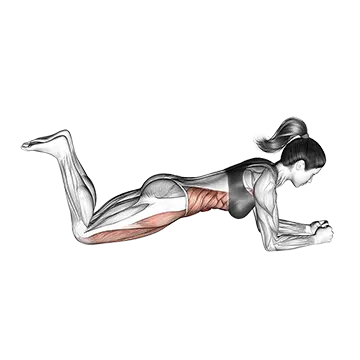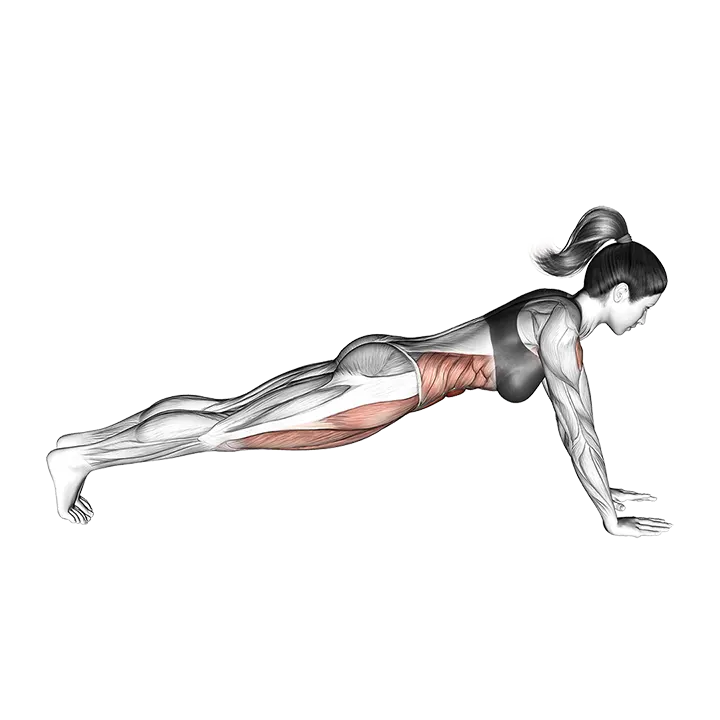
Brücke (gestreckte Arme)
- Zielmuskel
- Rectus Abdominis
- Synergistenmuskeln
- Deltoid Anterior, Obliques, Quadriceps, Serratus Anterior, Tensor Fasciae Latae
- Equipment
- Body weight
- Körperregion
- Waist
- Typ
- Strength
Die Brücke mit gestreckten Armen ist eine Körpergewichts-Halteübung zur Kernstabilität, die in erster Linie den geraden Bauchmuskel (Rectus abdominis) herausfordert, während vorderer Deltamuskel, schräge Bauchmuskeln, Quadrizeps, Serratus anterior und Tensor fasciae latae deinen Körper in einer geraden Linie stabilisieren. Die Übung benötigt keine Geräte und ist eine einfache Methode zum Aufbau von Rumpfkraft und Gesamtkörperstabilisierung.
Brücke (gestreckte Arme): So führst du sie aus
- 1Beginne auf dem Boden auf Händen und Knien, wobei deine Hände direkt unter deinen Schultern positioniert sind und deine Finger spreizen, um eine stabile Basis zu schaffen.
- 2Strecke beide Arme vollständig, sodass deine Ellbogen gestreckt aber nicht überextendiert sind, und drücke den Boden weg, um deine Schulterblätter zu spreizen.
- 3Stelle deine Füße nacheinander zurück, bis dein Körper eine gerade Linie vom Kopf bis zu den Fersen bildet, wobei du auf den Vorfußballen ruhst.
- 4Spanne deine Bauchmuskeln an, als würdest du dich auf einen leichten Schlag vorbereiten, und drücke deine Oberschenkel und Gesäßmuskeln zusammen, um deine Hüften auf gleicher Höhe mit deinen Schultern zu halten.
- 5Halte deinen Nacken gestreckt und deinen Blick gerade vor deinen Händen, damit dein Kopf mit deiner Wirbelsäule ausgerichtet bleibt.
- 6Halte diese Position und atme gleichmäßig, während du gegen das Durchhängen der Hüften oder eine Rundung des oberen Rückens ankämpfst.
- 7Halte die Position für deine angestrebte Zeit, senke dann deine Knie kontrolliert zum Boden ab, um die Übung zu beenden.
Technik-Tipps
- Spanne deine Bauchmuskeln, Gesäßmuskeln und Oberschenkel zusammen an, damit dein gesamter Körper starr wie ein Plank bleibt, anstatt von deinen Schultern zu hängen.
- Drücke aktiv den Boden durch deine Hände weg, um den Serratus anterior zu aktivieren und zu verhindern, dass dein oberer Rücken zwischen den Schulterblättern zusammenbricht.
- Kippe dein Becken leicht an, damit dein unterer Rücken flach bleibt, anstatt zum Boden hin zu wölben.
- Erhöhe die Haltezeit schrittweise, während sich deine Kernkraft verbessert; die Qualität der Position ist wichtiger als die Dauer.
Häufige Fehler
- Die Hüften zum Boden hin durchhängen lassen, was den unteren Rücken wölbt und die Last von den Bauchmuskeln auf die Wirbelsäule verlagert.
- Die Hüften zu hoch anheben, was die Halteposition in eine Ruheposition verwandelt und die Spannung aus dem geraden Bauchmuskel nimmt.
- Den Kopf fallen lassen oder den Nacken zu weit nach oben ziehen, was die Halswirbelsäule belastet und die gerade Linie des Körpers unterbricht.
- Den Atem anhalten, um straff zu bleiben, was den Druck erhöht und dich zwingt, die Halteposition vorzeitig zu beenden, anstatt gleichmäßig zu atmen.
Häufig gestellte Fragen
Welche Muskeln trainiert die Brücke mit gestreckten Armen?
Sie trainiert in erster Linie den geraden Bauchmuskel (Rectus abdominis), während vorderer Deltamuskel, schräge Bauchmuskeln, Quadrizeps, Serratus anterior und Tensor fasciae latae unterstützen, um deinen Körper in einer geraden, stabilen Linie zu halten.
Ist die Brücke mit gestreckten Armen gut für Anfänger?
Ja. Die Übung nutzt nur dein Körpergewicht und ist einfach zu skalieren: Gehe auf die Knie, um den Hebel zu verkürzen, oder erhöhe die Haltezeit schrittweise, wenn deine Kernkraft stärker wird.
Wie lange sollte ich die Brücke mit gestreckten Armen halten?
Beginne mit 20–30 Sekunden langen Haltepositionen für 2–3 Sätze und füge Zeit hinzu, wenn deine Form stabil bleibt. Beende den Satz, sobald deine Hüften anfangen durchzuhängen, da eine saubere Position wichtiger ist als eine lange, schlampige.
Wo sollte ich die Brücke mit gestreckten Armen spüren?
Du solltest sie hauptsächlich in deinen Bauchmuskeln spüren, während sie deinen Körper stabil halten, unterstützt durch deine Schultern, Oberschenkel und die Seiten deines Rumpfes. Ein starkes Unbehagen im unteren Rücken bedeutet, dass deine Hüften durchhängen und du dich neu stabilisieren musst.