
Glute Ham Raise (VERSION 2)

- Zielmuskel
- Hamstrings
- Synergistenmuskeln
- Gastrocnemius, Gluteus Maximus
- Equipment
- Body weight
- Körperregion
- Thighs
- Typ
- Strength



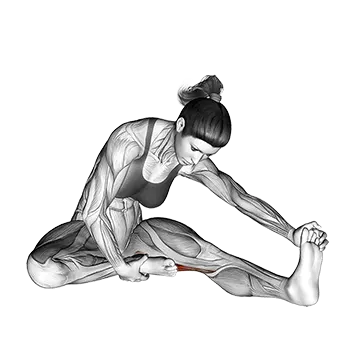
The Glute Ham Raise (Version 2) is a bodyweight posterior-chain exercise that primarily targets the hamstrings, with the gluteus maximus and the calves (gastrocnemius) assisting. With your knees anchored, you lower your torso forward and pull it back up using hamstring and glute strength, building eccentric control and knee-flexion power.
Glute Ham Raise (VERSION 2): So führst du sie aus
- 1Anchor your lower legs so your ankles are pinned and your knees rest just behind a padded support, with your thighs roughly vertical.
- 2Set your knees on the pad and brace your core, keeping your body straight from knees to head and your hips fully extended.
- 3Cross your arms over your chest or hold them out in front, and take a breath to brace before you descend.
- 4Lower your torso forward by extending at the knees, keeping the movement slow and controlled while your hamstrings and glutes resist the descent.
- 5Continue down until your body is roughly parallel to the floor or until you reach the limit of your control, keeping your hips locked straight.
- 6Drive back up by pulling through your hamstrings and squeezing your glutes, flexing the knees to return your torso to upright.
- 7Keep a straight line from knees to head throughout, then exhale as you finish each rep and reset before the next one.
Technik-Tipps
- Keep your hips fully extended and your glutes squeezed throughout so the work stays in the hamstrings instead of folding at the waist.
- Control the lowering phase for two to three seconds — the eccentric is where most of the strength and muscle is built.
- Push the balls of your feet into the anchor to engage the calves (gastrocnemius) and add stability through the rep.
- If you can't pull yourself back up unassisted, give a light push off the floor with your hands or use a band to share the load until you build strength.
Häufige Fehler
- Bending at the hips and folding forward instead of extending at the knees, which turns the rep into a back movement and takes tension off the hamstrings.
- Dropping too fast on the way down, which removes muscular tension and risks a hamstring strain near the bottom.
- Letting the hips sag or pike rather than holding a straight knee-to-head line, which cheats the range and loads the lower back.
- Going to full depth before you have the strength, leaving you unable to control the descent or pull back up safely.
Häufig gestellte Fragen
What muscles does the glute ham raise work?
It primarily works the hamstrings, with the gluteus maximus and the calves (gastrocnemius) assisting as you lower and pull your torso back up.
Is the bodyweight glute ham raise good for beginners?
It is demanding, so beginners often start with assistance — push lightly off the floor with your hands, use a band, or only lower partway and control the eccentric until you can complete full reps.
How is this different from a Nordic curl?
Both anchor the knees and use the hamstrings to control the body. The glute ham raise emphasizes a straight knee-to-head line with the glutes locked in, training knee flexion through a controlled range.
How many sets and reps should I do?
Because it is a hard bodyweight movement, 3 to 4 sets of 5 to 10 controlled reps is a sensible target. Lower the reps and focus on the eccentric if you can't yet pull back up unassisted.
Where should I feel this exercise?
You should feel it mainly in the back of your thighs (hamstrings) and your glutes, with some involvement in the calves. If you feel it in your lower back, you're likely bending at the hips instead of the knees.