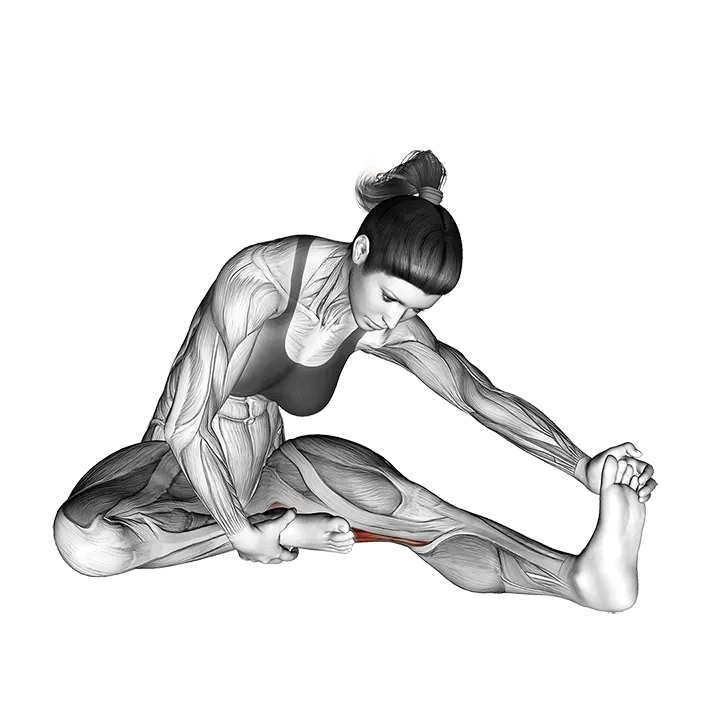
Einbeinige Dehnung der Beinrückseite im Sitzen
- Zielmuskel
- Hamstrings
- Equipment
- Body weight
- Körperregion
- Thighs
- Typ
- Stretching
Die einbeinige Dehnung der Beinrückseite im Sitzen ist eine Übung mit dem eigenen Körpergewicht, die gezielt die Hamstrings (Beinrückseite) eines Beins dehnt, während das andere Bein entspannt bleibt. In sitzender Position auf dem Boden ermöglicht sie eine kontrollierte, progressive Dehnung, die ideal für das Cool-down nach dem Training, aktive Erholung oder allgemeines Flexibilitätstraining geeignet ist.
Einbeinige Dehnung der Beinrückseite im Sitzen: So führst du sie aus
- 1Setze dich mit beiden Beinen gestreckt vor dir auf den Boden.
- 2Beuge dein linkes Knie und platziere die Fußsohle deines linken Fußes an der Innenseite des rechten Oberschenkels, sodass das linke Knie bequem auf dem Boden ruhen kann.
- 3Sitze aufrecht mit neutraler Wirbelsчина: vermeide es, den unteren Rücken vor Beginn der Dehnung abzurunden.
- 4Atme ein, um deinen Oberkörper zu strecken, atme dann aus und beuge dich aus der Hüfte nach vorne, während du mit beiden Händen in Richtung deines rechten Fußes oder Schienbeins reichst.
- 5Halte dein rechtes Bein gestreckt und ziehe den rechten Fuß an (Flex), wobei die Zehen zur Decke zeigen.
- 6Stoppe, sobald du eine deutliche, aber angenehme Dehnung an der Rückseite des rechten Oberschenkels spürst – erzwinge keine Bewegungsamplitude.
- 7Halte die Position für 20–40 Sekunden, atme ruhig und erlaube der Beinrückseite, mit jedem Ausatmen weiter zu entspannen.
- 8Atme ein und kehre langsam in die aufrechte Ausgangsposition zurück.
- 9Wiederhole das Ganze auf der anderen Seite, indem du das linke Bein streckst und das rechte Knie beugst.
Technik-Tipps
- Beuge dich aus der Hüfte statt den Rücken zu runden – wenn du die Brust nach vorne führst, bleibt die Dehnung in der Beinrückseite und reduziert die Belastung der Lendenwirbelsäule.
- Halte den Fuß des gestreckten Beins während der gesamten Haltezeit angezogen (Flex); dies erhöht die Spannung im gesamten Komplex aus Beinrückseite und Wadenmuskulatur.
- Nutze dein Ausatmen, um dich schrittweise tiefer in die Dehnung zu bewegen, anstatt die Endposition mit einer einzigen Bewegung zu erzwingen.
- Falls du deinen Fuß nicht bequem erreichen kannst, lege ein Handtuch oder ein Widerstandsband um den Ballen des gestreckten Fußes und halte beide Enden fest.
- Halte deine Schultern entspannt und fern von den Ohren, um unnötige Verspannungen im oberen Rücken während der Dehnung zu vermeiden.
Häufige Fehler
- Runden des unteren Rückens statt Beugen aus der Hüfte: Eine Flexion der Lendenwirbelsäule verlagert die Dehnung weg von der Beinrückseite und erzeugt Kompressionsdruck auf die Bandscheiben. Konzentriere dich darauf, die Brust nach vorne zu schieben und den unteren Rücken in einer neutralen Kurve zu halten.
- Wippen oder Pulsieren während des Haltens: Ballistische Bewegungen lösen den Dehnreflex aus, was dazu führt, dass sich die Beinrückseite eher anspannt als dehnt und das Risiko einer Zerrung erhöht. Halte die Position ruhig.
- Beugen des Knies des gestreckten Beins: Ein gebeugtes Knie verkürzt die Beinrückseite und reduziert den Dehnreiz massiv. Drücke die Kniekehle sanft Richtung Boden, um eine vollständige Streckung zu gewährleisten.
- Kraftvolles Ziehen am Fuß: Ein ruckartiges Heranziehen des Beins umgeht den natürlichen Dehnungsprozess der Beinrückseite und kann zu Zerrungen führen. Nutze die Hände oder ein Band nur zur Positionierung, nicht um die Tiefe zu erzwingen.
- Anhalten des Atems: Pressatmung erzeugt systemische Spannung, die verhindert, dass sich der Muskel in die Dehnung hinein entspannt. Atme während der gesamten Haltezeit langsam und rhythmisch.
Häufig gestellte Fragen
Welche Muskeln werden beim einbeinigen Hamstring-Stretch im Sitzen beansprucht?
Das primär beanspruchte Muskelwerk ist die Gruppe der Beinrückseite (Hamstrings) des gestraken Beins, bestehend aus dem Musculus biceps femoris, Musculus semimembranosus und Musculus semitendinosus. Auch die Wadenmuskulatur – insbesondere der Musculus gastrocnemius – kann sich bei angezogenem Fuß gedehnt fühlen.
Wie lange sollte ich die einbeinige Dehnung der Beinrückseite im Sitzen halten?
Ein Halten von 20–40 Sekunden pro Seite ist effektiv, um die Flexibilität zu verbessern. Studien zum statischen Dehnen legen nahe, dass eine Dauer von mindestens 30 Sekunden langfristig signifikante Fortschritte bringt. 2–4 Wiederholungen pro Seite nach dem Training oder in einer speziellen Dehneinheit sind ein gängiger Ansatz.
Wann ist der beste Zeitpunkt für diese Dehnung?
Diese Dehnung ist am effektivsten beim Cool-down nach dem Training oder in einer gezielten Flexibilitätseinheit, wenn die Muskeln bereits warm sind. Das Dehnen kalter Muskeln vor intensiver Aktivität ist weniger effektiv und birgt ein leicht höheres Verletzungsrisiko. Ein kurzes Aufwärmen durch Gehen oder leichte Bewegung reicht aus, falls du zu anderen Tageszeiten dehnst.
Was ist der Unterschied zwischen dem einbeinigen Hamstring-Stretch im Sitzen und einer stehenden Dehnung?
Die sitzende Position macht die Balance überflüssig und erlaubt es dir, dich voll auf die Dehnung zu konzentrieren, ohne Stabilisierungsmuskeln im Standbein einzusetzen. Zudem ist es einfacher, eine neutrale Wirbelsäule zu halten und die Tiefe der Vorbeuge zu kontrollieren, was sie ideal für Anfänger oder Personen mit Gleichgewichtseinschränkungen macht.
Können verkürzte Beinrückseiten Rückenschmerzen verursachen und hilft diese Dehnung?
Ja, chronisch verkürzte Beinrückseiten können durch ein nach hinten kippendes Becken (Posterior Pelvic Tilt) zu Rückenschmerzen beitragen, was die Lendenwirbelsäule belastet. Regelmäßiges Dehnen der Beinrückseite kann helfen, die Beckenausrichtung wiederherzustellen und damit verbundene Rückenschmerzen zu lindern. Wenn du bereits unter Rückenschmerzen leidest, konsultiere einen Arzt, bevor du diese oder andere Dehnübungen in dein Programm aufnimmst.