Rear Delt Fly with Bed Sheet


- Zielmuskel
- Deltoid Posterior
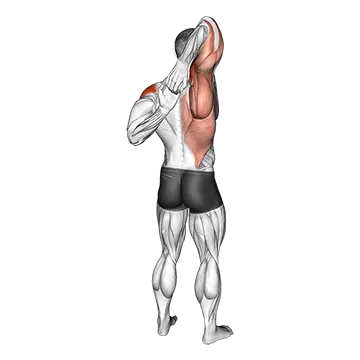
- Synergistenmuskeln
- Deltoid Lateral, Infraspinatus, Teres Minor, Trapezius Lower Fibers, Trapezius Middle Fibers
- Equipment
- Body weight
- Körperregion
- Shoulders
- Typ
- Strength

The rear delt fly with a bed sheet is a bodyweight pulling exercise that targets the posterior deltoid while engaging the lateral deltoid, infraspinatus, teres minor, and trapezius as synergists. By anchoring a sheet in a door and leaning back for tension, you perform a fly motion that isolates the often-neglected rear shoulder — ideal for improving posture and shoulder balance at home.
Rear Delt Fly with Bed Sheet: So führst du sie aus
- 1Fold a bed sheet lengthwise and tie a secure knot near the middle, then close it in a sturdy door at roughly chest height so equal lengths hang on your side.
- 2Grip one end of the sheet in each hand with a neutral grip (palms facing each other), standing close to the door.
- 3Step back until your arms are extended in front of you and the sheet is taut, then lean your torso back slightly so your body forms a diagonal line — the farther you step back, the harder the exercise.
- 4Brace your core and keep your feet hip-width apart for a stable base throughout the set.
- 5With a slight bend in your elbows, begin pulling both arms out to your sides in a wide arc, leading with your elbows and keeping them at shoulder height.
- 6Continue the fly motion until your arms are roughly parallel to the floor and your hands are in line with your shoulders, squeezing the rear delts and mid-traps at the top.
- 7Pause for one second at the peak contraction, feeling the muscles between and behind your shoulder blades engage.
- 8Slowly return your arms back to the starting position in front of you, maintaining control against the sheet's tension — do not let it snap you forward.
- 9Complete all reps, then step forward to release tension before setting the sheet down.
Technik-Tipps
- Keep your elbows at or just below shoulder height throughout the arc — dropping them too low shifts stress onto the lats rather than the rear delts.
- Initiate each rep by pulling the shoulder blades apart first, then drive the arms outward; this cues the correct muscles and prevents shrugging.
- Control your body angle: the more you lean back, the greater the resistance. Beginners should start nearly upright and progress by stepping farther from the door.
- Avoid shrugging your shoulders toward your ears — keep them packed down and away from your neck to protect the trapezius and cervical spine.
- Use a slow, deliberate tempo (2 seconds out, 1-second hold, 2 seconds back) to maximize time under tension without momentum taking over.
Häufige Fehler
- Using too much body swing to complete the rep — swinging the hips or straightening up steals tension from the posterior deltoid and turns the movement into a row, reducing rear-delt activation.
- Bending the elbows excessively and pulling the hands toward the chest — this converts the fly into a pulling/rowing pattern that loads the biceps and lats instead of isolating the rear delts.
- Allowing the shoulders to shrug upward during the pull — elevated shoulders load the upper trapezius and neck, increasing injury risk and taking the targeted muscles out of the movement.
- Using a sheet length that is too short, forcing you to stand too close and reducing the lean angle — without sufficient lean, there is little resistance and the exercise loses effectiveness.
- Rushing the eccentric (return) phase by letting the arms snap back — controlled lowering is where much of the muscle-building stimulus occurs; releasing tension too quickly wastes it.
Häufig gestellte Fragen
What muscles does the rear delt fly with a bed sheet work?
The primary target is the posterior deltoid (rear shoulder). The lateral deltoid, infraspinatus, teres minor, and both the lower and middle fibers of the trapezius act as synergists, making it an effective exercise for overall rear-shoulder and upper-back health.
Can I use a towel instead of a bed sheet?
Yes. A thick bath towel folded lengthwise and knotted in a door works just as well. Make sure it is long enough to allow you to lean back at an angle with arms extended, and check that the knot and door frame can bear your bodyweight before starting.
How do I make this exercise harder or easier?
To increase difficulty, step farther from the door to increase your lean angle, which raises the percentage of bodyweight acting as resistance. To make it easier, step closer to the door so your body stays more upright. You can also slow the tempo or add a longer pause at peak contraction to increase intensity without changing your position.
How does this compare to cable rear-delt flys?
The movement pattern is nearly identical — both involve a horizontal abduction fly with the arms at shoulder height. The sheet version provides a form of linear variable resistance tied to your body angle rather than a weight stack, making it a solid at-home substitute. Cable machines allow more precise load selection, but the sheet version trains the same muscles effectively.
How many sets and reps should I do?
For muscle development, aim for 3–4 sets of 12–20 reps. The rear deltoid responds well to moderate-to-high rep ranges. Rest 60–90 seconds between sets. Because load is limited by body angle, prioritize a full range of motion and a strong squeeze at the top over speed.