Shoulder Stretch Behind the Back
- Zielmuskel

- Deltoid Posterior
- Synergistenmuskeln
- Infraspinatus, Latissimus Dorsi, Teres Major, Teres Minor, Trapezius Lower Fibers, Trapezius Middle Fibers, Triceps Brachii
- Equipment
- Body weight
- Körperregion
- Shoulders
- Typ
- Stretching
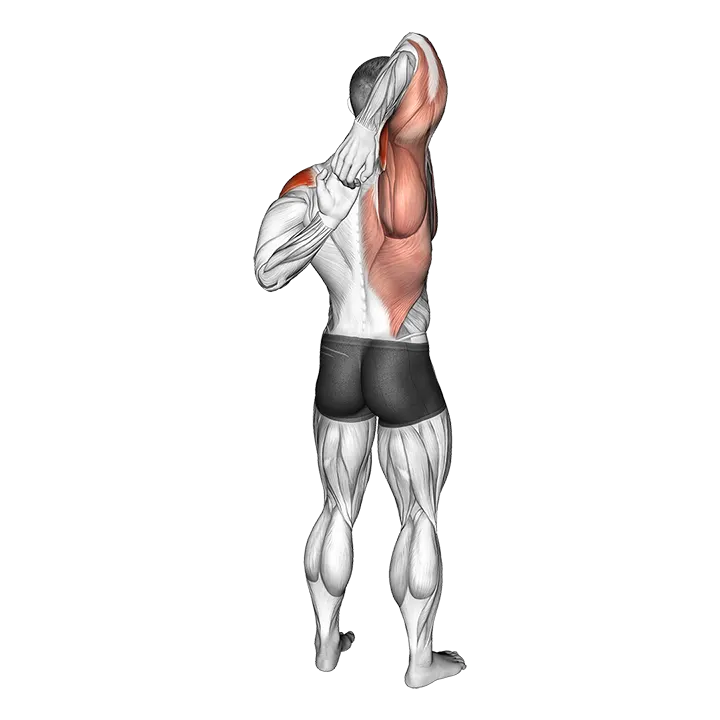
The shoulder stretch behind the back is a bodyweight stretch that targets the posterior deltoid, with the infraspinatus, teres minor, teres major, latissimus dorsi, trapezius, and triceps brachii all contributing to the stretch. By clasping the hands behind the body and pressing the arms away from the torso, it opens the back of the shoulder and upper back, making it ideal for improving shoulder mobility and relieving tightness from pressing or overhead work.
Shoulder Stretch Behind the Back: So führst du sie aus
- 1Stand tall with your feet hip-width apart and your spine in a neutral position.
- 2Reach both arms behind your back and clasp your hands together, interlacing your fingers.
- 3Straighten your arms as much as your shoulder mobility allows, keeping your elbows as extended as possible.
- 4Gently squeeze your shoulder blades together and then press your clasped hands away from your body and slightly downward.
- 5Hold your chest up and avoid rounding your upper back or pushing your head forward.
- 6Breathe deeply and hold the stretch for 20–30 seconds, feeling the pull across the back of your shoulders and upper back.
- 7Release slowly, bring your arms back to your sides, and repeat for the desired number of sets.
Technik-Tipps
- If your hands cannot clasp together, hold a towel or resistance band between them and walk your hands closer over time as flexibility improves.
- Keep your core lightly braced so you do not compensate by arching the lower back as you press your arms back.
- Breathe steadily throughout the hold — exhaling on each breath can help you gently deepen the stretch.
- Aim for a comfortable pulling sensation across the rear deltoid and upper back, never sharp or pinching pain in the joint.
- Perform this stretch after upper-body training when the muscles are warm for the greatest range of motion.
Häufige Fehler
- Rounding the upper back and dropping the chest, which reduces the stretch on the posterior deltoid and shifts load onto the spine rather than the shoulder.
- Forcing the hands together by shrugging the shoulders up, which engages the upper trapezius and reduces the effectiveness of the stretch on the targeted rear shoulder muscles.
- Holding the breath, which increases muscle tension and prevents the posterior deltoid and synergists from releasing into the stretch.
- Jerking or bouncing the arms to increase range, which can strain the shoulder capsule and connective tissue rather than safely lengthening the muscle.
- Letting the elbows bend and the hands drift up toward the lower back, which shortens the lever so the arms travel back without the shoulder actually reaching end range — you feel far less of the stretch.
Häufig gestellte Fragen
What muscles does the shoulder stretch behind the back target?
It primarily targets the posterior deltoid, with the infraspinatus, teres minor, teres major, latissimus dorsi, lower and middle trapezius, and triceps brachii acting as synergists that are also lengthened during the stretch.
Can I do this stretch if I cannot clasp my hands behind my back?
Yes. Hold a towel, resistance band, or strap between your hands and grip as close together as your current mobility allows. Over time, gradually walk your hands closer until you can clasp them.
When is the best time to do the shoulder stretch behind the back?
It works best as part of a post-workout cool-down when the shoulder muscles are warm, or during a dedicated mobility session. Stretching cold muscle is less effective and carries a slightly higher risk of strain.
How long should I hold the shoulder stretch behind the back?
Hold each repetition for 20–30 seconds to allow the posterior deltoid and synergist muscles to relax and lengthen. Perform 2–3 repetitions per session for a meaningful improvement in shoulder mobility over time.
Will this stretch help with shoulder pain from sitting at a desk all day?
It can relieve the tightness that builds up through the shoulders, upper back, and lats during long hours at a desk, and the tall-chest position counters a slumped, forward-head posture. Use it as a regular movement break, and consult a healthcare professional for persistent pain.