
Seitstütz mit Hüftabduktion
- Zielmuskel

- Gluteus Medius, Tensor Fasciae Latae
- Synergistenmuskeln
- Iliopsoas, Obliques
- Equipment
- Body weight
- Körperregion
- Hips
- Typ
- Strength
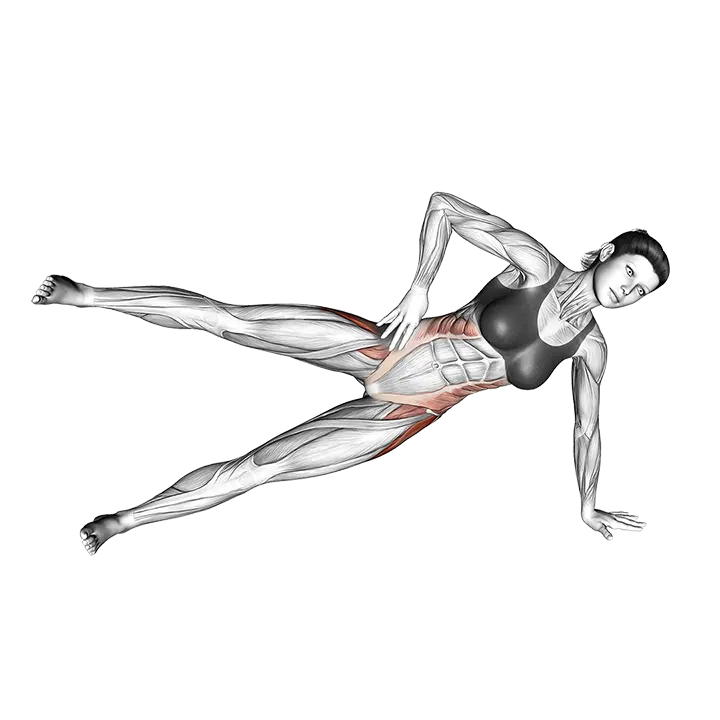
Der Seitstütz mit Hüftabduktion ist eine Körpergewichtsübung, die einen seitlichen Plank-Halt mit einer Beinheben-Bewegung kombiniert und gezielt den Glutaeus medius (Gluteus medius) und Tensor fasciae latae trainiert. Die schrägen Bauchmuskeln (Obliques) und der Iliopsoas arbeiten, um die Brückenstabilität zu gewährleisten. Du führst die Übung aus einer unterarmgestützten seitlichen Liegeposition durch und stärkst damit die seitliche Hüftkraft, Beckenstabilität und Balance.
Seitstütz mit Hüftabduktion: So führst du sie aus
- 1Lege dich auf die Seite auf eine feste Oberfläche, dein Unterarm ist auf dem Boden, der Ellbogen direkt unter deiner Schulter, und deine Füße sind übereinander gestapelt.
- 2Spanne deine Bauchmuskulatur an und hebe deine Hüfte vom Boden, um eine gerade Linie vom Kopf bis zu den Fersen zu bilden und in die Seitstütz-Position zu gehen.
- 3Halte deine tragende Schulter nach unten weg von deinem Ohr und deine Hüften gerade — lasse sie nicht absinken oder nach vorne drehen.
- 4Richte deinen Blick nach vorne und atme während der gesamten Bewegung gleichmäßig.
- 5Hebe dein oberes Bein mit Kontrolle zur Decke, führe mit der Ferse und halte deinen Fuß gebeugt. Hebe bis dein Bein etwa 30–45° über der Horizontalen ist.
- 6Halte kurz oben an, spanne deine Glutaeus medius und deinen Tensor fasciae latae an, ohne deine Hüften sinken zu lassen oder zu verdrehen.
- 7Senke dein oberes Bein langsam zurück in die gestapelte Position, während du die Brücke die ganze Zeit über hältst.
- 8Beende alle Wiederholungen auf einer Seite, senke dann vorsichtig deine Hüften, wechsle die Seite und wiederhole.
Technik-Tipps
- Halte deine obere Hüfte die ganze Zeit direkt über deiner unteren Hüfte — das Drehen des Beckens nach vorne ist die häufigste Ausgleichsbewegung und reduziert die Aktivierung des Glutaeus medius.
- Führe jedes Heben mit deiner Ferse anstatt mit den Zehen, um deine Hüfte neutral zu halten und die Zielmuskeln zu aktivieren.
- Denke daran, den Boden mit deinem Unterarm und Fuß wegzudrücken, um deine Brückenhöhe konstant zu halten, wenn die Ermüdung einsetzt.
- Beginne mit einer kontrollierten, moderaten Bewegungsamplitude; das Bein zu hoch zu heben verursacht typischerweise, dass der untere Rücken übernimmt und die Hüften rotieren.
- Wenn deine tragende Schulter oder dein Handgelenk zuerst ermüdet, überprüfe, dass dein Ellbogen genau unter deiner Schulter ist und dein Unterarm senkrecht zu deinem Körper steht.
Häufige Fehler
- Die Hüften während der Bewegung absinken lassen — das bricht die Brücke zusammen und reduziert die Spannung in den schrägen Bauchmuskeln und dem Glutaeus medius, was die Übung zu einem einfachen Beinheben am Boden macht.
- Das obere Becken nach vorne drehen (das Becken aufwölben), um mehr Bewegungsumfang zu erreichen, was die Last vom Glutaeus medius auf die Hüftbeuger verlagert.
- Die Zehen nach oben zeigen lassen, anstatt den Fuß gebeugt zu halten und die Ferse zu führen, was den Oberschenkelknochen intern rotiert und die Aktivierung von Tensor fasciae latae und Glutaeus medius reduziert.
- Das Bein zu schnell heben und Schwung verwenden, was die Zeit unter Spannung verkürzt und die Kraftanpassung in den Zielmuskeln begrenzt.
- Den Ellbogen zu weit vor oder hinter der Schulter positionieren, was Instabilität in der tragenden Schulter erzeugt und es schwieriger macht, die Brücke beim Heben zu halten.
Häufig gestellte Fragen
Welche Muskeln trainiert der Seitstütz mit Hüftabduktion?
Die primären Muskeln sind der Glutaeus medius und der Tensor fasciae latae, die das Beinheben antreiben. Die schrägen Bauchmuskeln (Obliques) und der Iliopsoas fungieren als Synergisten und stabilisieren das Becken und die Wirbelsäule während des Brückenhaltens.
Worin unterscheidet sich dies von einer normalen seitlichen Hüftabduktion im Liegen?
Bei einer normalen seitlichen Abduktion liegst du vollständig auf dem Boden, was die Stabilitätsanforderung aufhebt. Die Seitstütz-Version zwingt die schrägen Bauchmuskeln und den Glutaeus medius, gleichzeitig zu arbeiten — einer, um den Plank zu halten, der andere, um das Bein zu heben — was es erheblich schwieriger macht.
Wie viele Wiederholungen und Sätze sollte ich machen?
Zwei bis drei Sätze mit 10–15 kontrollierten Wiederholungen pro Seite funktioniert gut für die meisten Menschen. Priorisiere Form über Wiederholungszahl — ein langsames, stabiles Heben ist viel effektiver als ein hochfrequenter Satz mit einer zusammenbrechenden Brücke.
Kann ich diese Übung machen, wenn ich Hüftschmerzen habe?
Leichte seitliche Hüftbeschwerden verbessern sich manchmal durch das Stärken des Glutaeus medius, aber wenn du eine diagnostizierte Hüftpathologie hast oder während der Bewegung scharfe Schmerzen verspürst, konsultiere einen Physiotherapeuten, bevor du diese Übung zu deinem Programm hinzufügst.
Wie mache ich die Übung schwieriger, wenn ich fortschreite?
Sobald du 15 saubere Wiederholungen pro Seite ohne dass die Brücke zusammenbricht absolvieren kannst, füge ein leichtes Widerstandsband knapp über den Knien oder Knöcheln hinzu, um die Last auf den Glutaeus medius und den Tensor fasciae latae zu erhöhen.