Hüftabduktion im Stehen
- Zielmuskel

- Gluteus Medius, Tensor Fasciae Latae
- Equipment
- Body weight
- Körperregion
- Hips
- Typ
- Strength

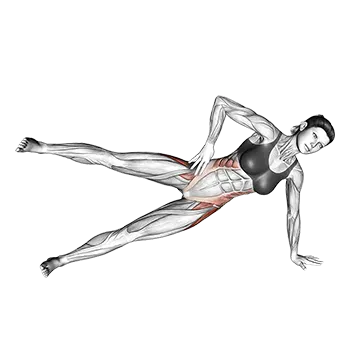


Die Hüftabduktion im Stehen ist eine Eigengewichtsübung zur Kräftigung, die den mittleren Gesäßmuskel (gluteus medius) und den Musculus tensor fasciae latae isoliert, indem ein Bein gegen die Schwerkraft zur Seite gehoben wird, während du auf dem anderen Bein balancierst. Sie zielt direkt auf die Hüftabduktoren ab, die für die laterale Hüftstabilität und Beckenkontrolle beim Gehen, Laufen und bei einbeinigen Bewegungen verantwortlich sind. Es ist eine praktische Übung zum Aufbau von Hüftkraft, zur Korrektur eines Beckenabsinkens und zur Rehabilitation der lateralen Hüfte.
Hüftabduktion im Stehen: So führst du sie aus
- 1Stehe aufrecht neben einer Wand, einer Stuhllehne oder einer anderen stabilen Stütze und platziere eine Hand leicht zur Balance darauf.
- 2Verlagere dein Gewicht auf das Standbein und entriegle das Knie leicht – strecke es nicht durch.
- 3Spanne deine Körpermitte sanft an und halte das Becken gerade. Vermeide es, deine Hüften vor Beginn der Bewegung zu einer Seite zu neigen.
- 4Halte das angehobene Bein gestreckt und die Zehen nach vorne gerichtet – nicht zur Decke rotiert – und hebe es in einem fließenden Bogen zur Seite an. Ziel ist ein Winkel von etwa 30–45 Grad zur Körpermitte.
- 5Halte die Bewegung am höchsten Punkt kurz inne, während das Bein vollständig abduziert ist und das Becken sowie der Oberkörper aufrecht bleiben.
- 6Senke das Bein kontrolliert in die Ausgangspaktition zurück – lass es nicht fallen oder schwingen.
- 7Schließe alle Wiederholungen einer Seite ab, bevor du die Seite wechselst. Halte das Becken und den Oberkörper während jeder Wiederholung stabil.
Technik-Tipps
- Nutze die Stütze nur als leichte Hilfe zur Balance – wenn du dein volles Gewicht auf die Wand oder den Stuhl verlagerst, verringerst du die Stabilisationsanforderung an den Gesäßmuskel des Standbeins und schränkst den Trainingseffekt ein.
- Lege deine freie Hand auf die Außenseite deiner arbeitenden Hüfte, damit du die Kontraktion des mittleren Gesäßmuskels (gluteus medius) spüren kannst. Die Anstrengung sollte an der Seite der Hüfte spürbar sein, nicht im unteren Rücken oder an der Vorderseite deines Omiterschenkels.
- Atme beim Anheben aus und beim Absenken ein, während du deinen Core sanft angespannt hältst, damit das Becken zwischen den Wiederholungen ruhig bleibt.
- Bestimme deinen Bewegungsradius nach Gefühl, nicht nach Höhe: Hebe das Bein nur so weit an, wie du es kannst, ohne dass Becken und Oberkörper wackeln, und nutze diesen Punkt als Ende der Wiederholung.
- Überprüfe deine Form von vorne in einem Spiegel oder filme einen Satz – ein leichtes Absinken der Hüfte oder Neigen des Rumpfes ist rein gefühlt schwer zu bemerken, aber auf Video deutlich sichtbar.
Häufige Fehler
- Das Hochziehen des Beckens des Standbeins – dies nutzt den Lendenquadratmuskel (quadratus lumborum) anstatt des mittleren Gesäßmuskels (gluteus medius), um das Bein zu heben, was die Aktivierung der Hüftabduktoren reduziert und ein Kompensationsmuster verstärkt. Halte das Becken so gerade, als würdest du ein Tablett mit Wasser darauf balancieren.
- Außenrotation des arbeitenden Beins, sodass die Zehen zur Decke zeigen – dies verlagert die Hauptlast vom mittleren Gesäßmuskel (gluteus medius) auf die Hüftbeuger und reduziert die Herausforderung für die laterale Hüfte. Halte die Zehen während des gesamten Bogens nach vorne gerichtet.
- Neigen des Oberkörpers weg vom arbeitenden Bein – ein seitliches Beugen des Rumpfes ist eine Kompensation, die die Bewegung leichter erscheinen lässt, ohne die Hüftabduktoren richtig zu trainieren. Ein aufrechter Oberkörper ist für eine echte Belastung des mittleren Gesäßmuskels (gluteus medius) erforderlich.
- Nutzung von Schwung statt kontrollierter Muskelkontraktion – Schwingen reduziert die Zeit unter Spannung und trainiert das Gleichgewicht anstatt der Kraft der Hüftabduktoren. Hebe und senke das Bein bei jeder Wiederholung bewusst ab.
- Ein zu großer Bewegungsradius – das Anheben des Beins über 45 Grad hinaus führt meist dazu, dass das Becken absinkt oder der Oberkörper zur Seite neigt, wodurch die Übung eher zu einer Rumpfneigung als zu einer Hüftabduktion wird. Stoppe dort, wo das Becken stabil bleibt, und verringere den Radius bei Bedarf.
Häufig gestellte Fragen
Welche Muskeln werden bei der Hüftabduktion im Stehen trainiert?
Die Hüftabduktion im Stehen zielt primär auf den mittleren Gesäßmuskel (gluteus medius) und den Musculus tensor fasciae latae ab. Diese Muskeln liegen an der lateralen Hüfte und sind dafür verantwortlich, das Bein von der Körpermitte wegzubewegen und das Becken beim Einbeinstand zu stabilisieren. Bei der Standard-Eigengewichtsversion werden keine signifikanten Synergisten beansprucht.
Was ist der Unterschied zwischen der Hüftabduktion im Stehen und der seitlichen Hüftabduktion?
Beide Übungen trainieren dieselben Primärmuskeln – den mittleren Gesäßmuskel (gluteus medius) und den Musculus tensor fasciae latae –, aber die stehende Version erhöht die Anforderungen an das Gleichgewicht und die Stabilisation des Standbeins. Die seitliche Variante reduziert den Einfluss der Schwerkraft auf die Beckenstabilisierung, was es einfacher macht, die Abduktoren ohne Kompensation zu isolieren. Die stehende Version ist funktioneller und lässt sich besser auf Gehen, Laufen und einbeinige Aktivitäten übertragen, während die seitliche Variante in der frühen Rehabilitation oder bei Gleichgewichtsproblemen nützlich ist.
Kann die Hüftabduktion im Stehen bei Knieschmerzen helfen?
Schwache Hüftabduktoren – insbesondere der mittlere Gesäßmuskel (gluteus medius) – werden mit einem nach innen kollabierenden Knie (Valgus-Stellung) beim Gehen und Laufen in Verbindung gebracht, was häufig zu patellofemoralen Schmerzen und IT-Band-Problemen führt. Die Stärkung des mittleren Gesäßmuskels (gluteus medius) durch Übungen wie die Hüftabduktion im Stehen kann die Becken- und Hüftstabilität verbessern, was die Innenrotation reduziert, die das Knie belastet. Knieschmerzen sollten jedoch vor Beginn eines Rehabilitationsprogramms von einem Arzt untersucht werden, da nicht alle Knieschmerzen dieselbe Ursache haben.
Wie viele Wiederholungen und Sätze sollte ich machen?
Für allgemeine Kraft und Stabilität ist ein Bereich von 2–3 Sätzen mit 12–20 Wiederholungen pro Seite ein praktischer Einstieg. Da der mittlere Gesäßmuskel (gluteus medius) ein Stabilisierungsmuskel ist, der gut auf höhere Wiederholungszahlen und Zeit unter Spannung reagiert, ist ein Bereich von 15–20 Wiederholungen mit kontrolliertem Tempo oft effektiver als schwere Belastungen mit wenigen Wiederholungen.
Wie mache ich die Übung schwerer, wenn das Eigengewicht zu leicht ist?
Verlangsame zuerst das Tempo – ein zweitaktiges Anheben, eine Pause am höchsten Punkt und ein zweitaktiges Absenken macht jede Wiederholung ohne Geräte deutlich schwerer. Danach kannst du die Stütze weglassen, sodass das Standbein dich alleine stabilisieren muss, und die Wiederholungen pro Satz erhöhen. Alle drei Progressionsarten halten die Belastung auf dem mittleren Gesäßmuskel (gluteus medius) und dem Musculus tensor fasciae latae, anstatt sie zu verlagern.