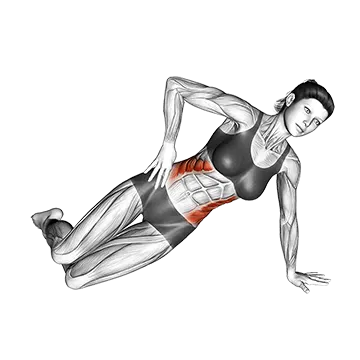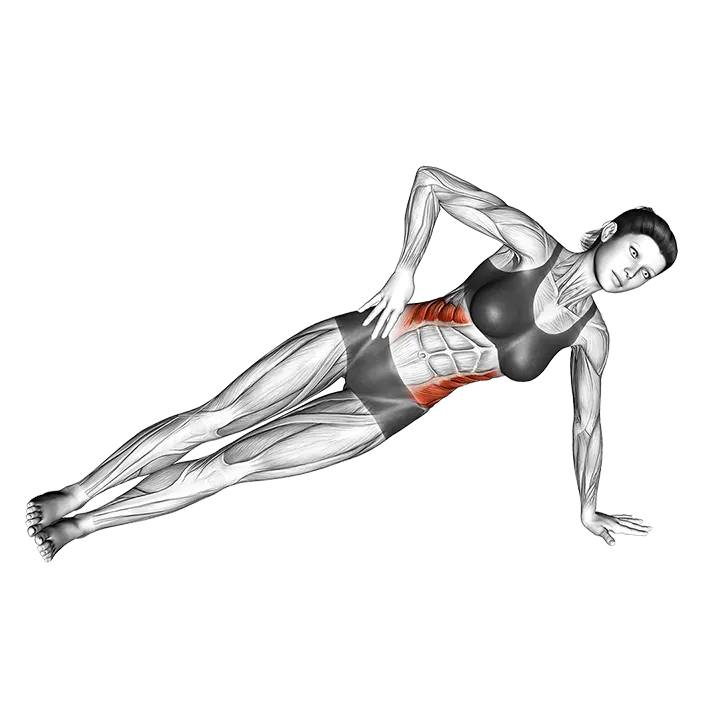
Seitenstütz (Version 2)
- Zielmuskel
- Obliques
- Equipment
- Body weight
- Körperregion
- Waist
- Typ
- Strength
Der Seitenstütz (Version 2) ist eine Körpergewicht-Kernübung, die deine schiefen Bauchmuskeln (Obliquen) durch laterale Stabilität mit vollständig ausgestrecktem Stützarm trainiert – ein längerer Hebel als die Unterarm-Version und eine größere Herausforderung für deine Stützschulter und -hüfte. Mit vollständig ausgestrecktem Arm und gestapelten Beinen trainierst du Anti-Lateral-Flexions-Kraft und Wirbelsäulenstabilität ohne Ausrüstung. Er funktioniert perfekt als Core-Finisher oder Stabilitätsübung in einem Krafttrainingsprogramm.
Seitenstütz (Version 2): So führst du sie aus
- 1Leg dich seitlich auf den Boden mit geraden, übereinander gestapelten Beinen – Füße übereinander oder leicht versetzt für Balance.
- 2Platziere deine Stützhand flach auf dem Boden direkt unter deiner Schulter, Finger von deinem Körper weg.
- 3Spanne deine Kernmuskulatur an und drücke über deine Handfläche, um deine Hüfte vom Boden zu heben, bis dein Körper eine gerade Linie von Kopf bis Füßen bildet.
- 4Halte deine Hüfte level und vollständig gestreckt – lass sie nicht zum Boden sinken oder nach oben wölben.
- 5Strecke deinen freien Arm zur Decke oder leg ihn entlang deiner Seite an, je nachdem was dir hilft, stabil und ausgewogen zu bleiben.
- 6Halte die Position, während du gleichmäßig atmest – atme durch deine Nase ein, durch deinen Mund aus – und halte deine schiefen Bauchmuskeln aktiv angespannt.
- 7Senke deine Hüfte kontrolliert zum Boden, um den Satz zu beenden, dann wechsle die Seite und wiederhole.
Technik-Tipps
- Halte dein Stützhandgelenk direkt unter deiner Schulter – wenn du es nach vorne oder hinten verschiebst, belastet das dein Handgelenk unnötig.
- Drücke aktiv den Boden mit deiner Handfläche weg, um deine Stützschulter zu aktivieren und zu verhindern, dass sie nach innen zusammenfällt.
- Spanne deine Gesäßmuskeln und inneren Oberschenkel zusammen – das hilft dir, eine straffe, gerade Linie durch Hüfte und Beine zu halten.
- Blick geradeaus oder leicht nach oben – wenn du dein Kinn senkst, lässt du deinen Kopf die Wirbelsäule aus der neutralen Position ziehen.
- Beginne mit 10–15 Sekunden pro Seite und steigere die Dauer allmählich – die Technik verschlechtert sich schnell, wenn deine schiefen Bauchmuskeln ermüden, und eine kürzere, qualitativ hochwertige Haltung ist besser als eine lange, schlecht ausgeführte.
Häufige Fehler
- Lass deine Hüfte nicht zum Boden sinken – das entfernt die Spannung von den schiefen Bauchmuskeln und belastet deine Lendenwirbelsäule, wodurch der Zweck der Übung verfehlt wird.
- Wölbe deine Hüfte nicht zu hoch nach oben – wenn du die Hüfte hochschiebst, verlagerst du die Arbeit weg von den schiefen Bauchmuskeln in die Schulter und reduzierst den lateralen Core-Reiz.
- Lass deine Stützschulter nicht hochzucken – das überbelastet dein Schultergelenk und zerstört die stabile Basis, die du brauchst, um die Position zu halten.
- Halte während der Position nicht den Atem an – das erhöht den intraabdominalen Druck und beschleunigt die Ermüdung – atme stattdessen gleichmäßig während der ganzen Haltung.
- Dreh deinen Oberkörper nicht zum Boden – halte stattdessen deine Brust und Schultern aufrecht: Diese Rotation lässt deine Hüfte hinter dir sinken und entfernt die Anti-Lateral-Flexions-Anforderung, gegen die deine schiefen Bauchmuskeln widerstehen sollen.
Häufig gestellte Fragen
Welche Muskeln trainiert der Seitenstütz (Version 2)?
Die Hauptzielmuskulatur sind deine schiefen Bauchmuskeln (innere und äußere Obliquen), die den lateralen Kollaps der Wirbelsäule widerstehen und deine Hüfte während der ganzen Position in Linie halten. Deine Stützschulter und -hüfte arbeiten isometrisch, um die Basis stabil zu halten, aber die schiefen Bauchmuskeln verrichten den Großteil der Anti-Lateral-Flexions-Arbeit.
Was ist der Unterschied zwischen dem Seitenstütz und dem Seitenstütz (Version 2)?
Der Standard-Seitenstütz wird auf dem Unterarm gehalten, was den Hebel zwischen deinem Stützpunkt und deiner Hüfte verkürzt und die Position leichter macht. Version 2 wird mit vollständig ausgestrecktem Arm und flacher Hand auf dem Boden gehalten, was den Hebel verlängert, mehr Schulterstabilität erfordert und eine höhere Belastung auf deine schiefen Bauchmuskeln erzeugt.
Ist der Seitenstütz (Version 2) gut für Anfänger?
Er ist anspruchsvoller als die Unterarm-Version, daher sollten echte Anfänger mit dem Unterarm-Seitenstütz beginnen, um grundlegende Kraft in den schiefen Bauchmuskeln aufzubauen. Sobald du die Unterarm-Version 30 Sekunden pro Seite mit guter Form halten kannst, kannst du zu Version 2 übergehen.
Wie lange sollte ich einen Seitenstütz halten?
Für die meisten Menschen sind 3 Sätze à 20–45 Sekunden pro Seite ein praktisches Ziel. Priorisiere Qualität über Dauer – wenn deine Hüfte sinkt oder deine Schulter sich hochzieht, bevor die Zeit um ist, stoppe und ruhe dich aus, anstatt mit schlechter Form zu kämpfen.
Was sind gute Alternativen zum Seitenstütz (Version 2)?
Der Unterarm-Seitenstütz ist die direkteste Regression. Weitere laterale Core-Alternativen sind der Seitenstütz mit Hüftdip (macht die Übung dynamischer), die Kopenhagener Planke (belastet auch deine Adduktoren) und die Pallof-Presse (trainiert Anti-Rotation neben Anti-Lateral-Flexion).