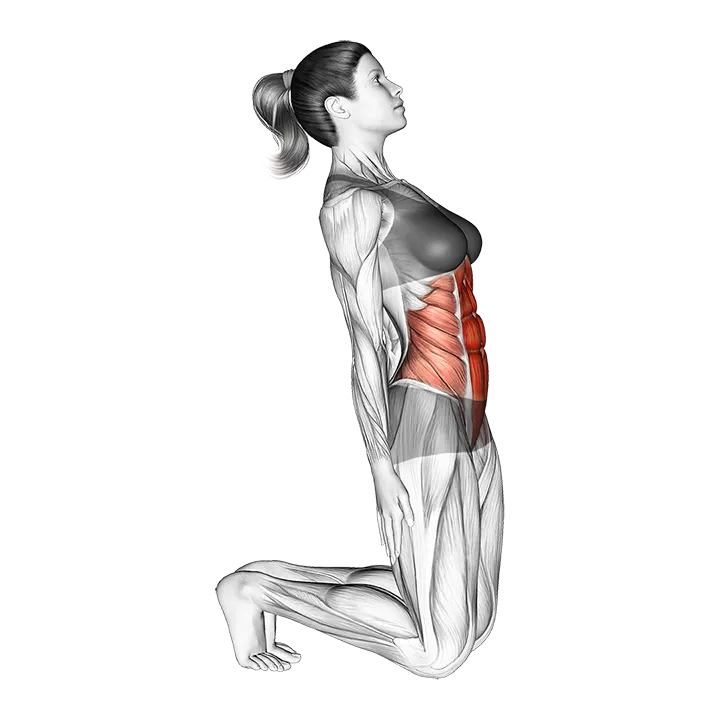
Kneeling Abdominal Stretch
- Músculo objetivo
- —
- Equipamiento
- Body weight
- Parte del cuerpo
- Waist
- Tipo
- Stretching
The Kneeling Abdominal Stretch is a bodyweight flexibility movement that lengthens the abdominal muscles and the soft tissue of the waist by extending the torso backward from a kneeling position. It helps improve spinal mobility and counteract the effects of prolonged sitting or forward-flexed postures.
Cómo hacer el Kneeling Abdominal Stretch
- 1Kneel on a mat with your knees hip-width apart and the tops of your feet flat on the floor.
- 2Place your hands on your lower back or hips with fingers pointing downward to support the lumbar region.
- 3Engage your core lightly and tuck your hips slightly forward to create a stable base.
- 4Begin to lean back slowly, initiating the movement from the upper thoracic spine rather than collapsing into the lower back.
- 5Allow your chest to lift and your shoulders to draw back as your torso arches into extension.
- 6If comfortable, raise your arms overhead or reach them behind you to deepen the stretch along the front of the torso.
- 7Breathe slowly and deeply into the belly, using each exhale to gently deepen the extension.
- 8Hold the end position for 20 to 45 seconds while maintaining steady breathing.
- 9To release, bring your hands back to your hips, contract your abdominals gently, and return upright in a controlled manner.
Consejos de técnica
- Keep the hips pushed forward throughout the stretch to prevent the pelvis from shifting backward and compressing the lumbar spine.
- Initiate the arch from the mid and upper back first — let the lower back follow naturally rather than forcing it.
- Breathe into the abdomen on each inhale to actively expand and lengthen the muscles being stretched.
- Relax the glutes and thighs so tension does not pull the hips out of alignment.
- Move into and out of the stretch slowly; avoid any sudden or jerky movements in the spine.
Errores comunes
- Collapsing into the lower back immediately — this compresses the lumbar vertebrae and shifts the stretch away from the abdominals where it belongs.
- Allowing the hips to drift backward — losing forward hip position reduces abdominal tension and places excessive stress on the knees and lower back.
- Holding the breath — breath-holding increases intra-abdominal pressure and prevents the muscles from releasing into the stretch.
- Overextending beyond a comfortable range — forcing the end range of the stretch can strain the lumbar facet joints or erector muscles.
- Skipping a surface or padding under the knees — kneeling on a hard floor creates discomfort that distracts from proper form and may cause knee pain.
Preguntas frecuentes
What does the kneeling abdominal stretch target?
The stretch primarily lengthens the abdominal muscles and the soft tissue along the front of the waist, including the rectus abdominis and the obliques. It also opens the chest and provides mild extension through the thoracic and lumbar spine.
When should I do this stretch?
It is best performed as part of a cool-down after core or strength training, or as a standalone flexibility exercise to counteract extended periods of sitting or forward-bending work. Avoid performing it as a cold first movement without any prior warm-up.
How long should I hold the kneeling abdominal stretch?
Aim to hold the stretched position for 20 to 45 seconds per repetition. Performing two to three repetitions with brief rest between each is sufficient to produce a meaningful flexibility response.
Is this stretch safe if I have lower back issues?
It depends on the nature of the issue. Spinal extension can aggravate certain conditions such as lumbar stenosis or spondylolisthesis. If you have a diagnosed lower back condition, consult a physiotherapist before attempting this stretch. Those who can tolerate it should focus on initiating the arch from the upper back and keeping the extension gentle.
Can I do this stretch daily?
Yes, daily stretching of the abdominals is generally well tolerated and can be beneficial for posture and flexibility. Listen to your body and reduce frequency if you experience any discomfort in the lumbar spine or knees.







