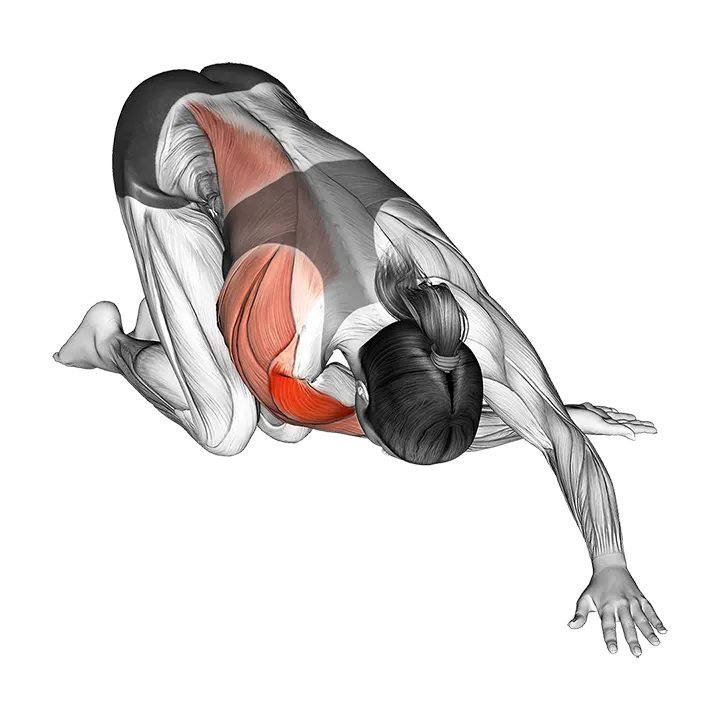
Kneeling One Arm Cross Body Stretch
- Músculo objetivo
- —
- Equipamiento
- Body weight
- Parte del cuerpo
- Shoulders
- Tipo
- Stretching
The Kneeling One Arm Cross Body Stretch is a bodyweight mobility exercise that targets the posterior shoulder and the back of the deltoid. By kneeling and drawing one arm across the chest, you isolate the rear shoulder capsule and improve range of motion. It is ideal for a warm-up, cool-down, or recovery routine to relieve shoulder tightness.
Cómo hacer el Kneeling One Arm Cross Body Stretch
- 1Kneel on both knees on a comfortable surface, sitting upright with your hips stacked directly over your knees.
- 2Extend your right arm straight out in front of you at shoulder height, parallel to the floor.
- 3Sweep the right arm horizontally across the front of your body toward your left shoulder.
- 4Hook your left forearm or hand under the right elbow and gently draw the arm closer to your chest.
- 5Keep your right elbow straight or very slightly soft — do not bend it sharply.
- 6Hold your shoulders down and back; avoid letting the right shoulder shrug upward toward your ear.
- 7Hold the stretched position for 20–30 seconds, breathing steadily and relaxing into the sensation.
- 8Slowly release the pressure and return the arm to the starting position.
- 9Repeat on the left arm, performing an equal number of holds on each side.
Consejos de técnica
- Keep your torso tall and avoid rotating your upper body in the direction of the stretch — rotating reduces tension on the target shoulder.
- Apply pressure with your forearm rather than your hand to create a longer lever and a gentler, more controlled stretch.
- Inhale to prepare, then exhale slowly as you draw the arm across — relaxing on the exhale lets you deepen the stretch naturally.
- Position the arm at true shoulder height; pulling it too high targets the upper trapezius while pulling it too low reduces posterior deltoid engagement.
- If balance on your knees is difficult, perform the stretch seated cross-legged or standing — the arm mechanics are identical.
Errores comunes
- Shrugging the shoulder of the stretching arm upward: this loads the upper trapezius instead of the posterior deltoid and reduces the effectiveness of the stretch.
- Bending the elbow sharply during the pull: a bent elbow shortens the lever and shifts tension away from the shoulder toward the triceps.
- Rotating the torso toward the stretching arm: twisting the trunk compensates for limited shoulder mobility and prevents the posterior capsule from being properly stretched.
- Pulling with too much force too quickly: aggressive yanking on the arm can strain the shoulder joint; always ease into the stretch gradually.
- Holding the breath: breath-holding increases muscle tension throughout the body, making it harder to relax into and deepen the stretch.
Preguntas frecuentes
What does the kneeling one arm cross body stretch work?
This stretch primarily targets the posterior deltoid and the rear shoulder capsule. It also provides mild relief for the upper back muscles that attach around the shoulder blade, making it useful for anyone who carries tension across the upper body.
How long should I hold the cross body shoulder stretch?
Hold each side for 20–30 seconds per repetition and aim for 2–3 repetitions per side. Research on static stretching suggests that holds in this range are sufficient to improve flexibility and reduce muscle tightness.
Why do I kneel instead of standing for this stretch?
Kneeling lowers your center of gravity and reduces the temptation to rotate the hips or torso, which helps you isolate the shoulder. It also makes the stretch more accessible for people who have difficulty balancing on one leg.
When is the best time to do the kneeling one arm cross body stretch?
This stretch is most effective after exercise when muscles are warm, making it a great cool-down movement after upper body or overhead workouts. It can also be performed after long periods of desk work or before overhead activities to improve shoulder mobility.
Can I do this stretch if I have shoulder pain?
Mild shoulder tightness is generally safe to stretch, but if you have a diagnosed shoulder injury, rotator cuff tear, or sharp pain during the movement, consult a physiotherapist before continuing. Stop immediately if the stretch produces pain rather than a gentle pulling sensation.







