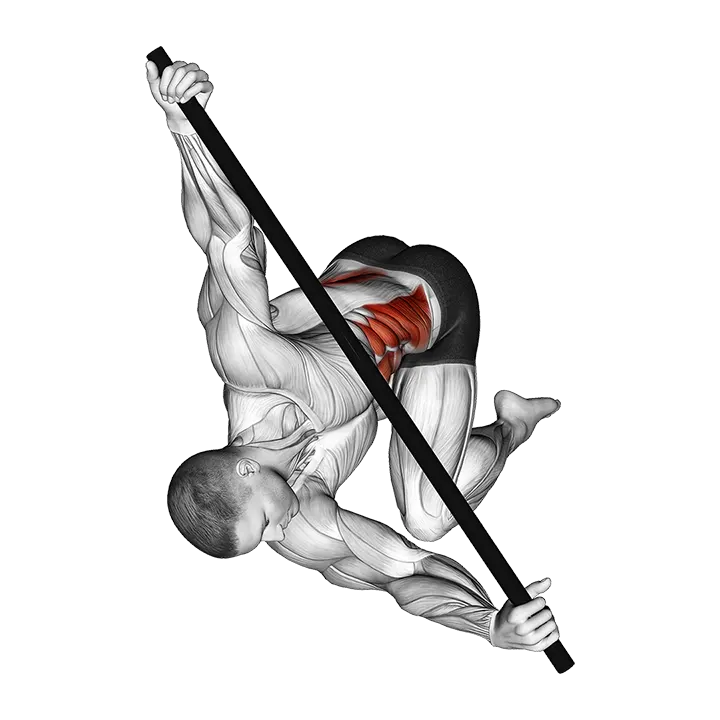
Kneeling T Spine Mobility
- Músculo objetivo
- —
- Equipamiento
- Body weight
- Parte del cuerpo
- Waist
- Tipo
- Stretching
The Kneeling T Spine Mobility drill targets the thoracic spine (mid-back) through rotation or extension while your hips are anchored in a kneeling position. By isolating movement to the upper and middle back, it helps restore thoracic range of motion that is commonly restricted from prolonged sitting or forward-loaded activities.
Cómo hacer el Kneeling T Spine Mobility
- 1Kneel on the floor with your hips over your knees and your shins flat on the ground. Place your hands lightly behind your head with your elbows wide.
- 2Brace your core gently and keep your lower back neutral — avoid letting your lumbar spine compensate for lack of thoracic movement.
- 3Take a breath in, and as you exhale, slowly rotate your upper body to the right, leading with your right elbow toward the ceiling.
- 4Rotate as far as your thoracic spine allows without your hips shifting or your lower back rounding.
- 5Pause for one to two seconds at the end of your comfortable range, feeling the stretch through the mid-back.
- 6Inhale and return your torso back to center in a controlled manner.
- 7Repeat on the left side, leading with the left elbow, for the same number of repetitions.
- 8Complete all prescribed reps on both sides, moving with a steady, deliberate tempo throughout.
Consejos de técnica
- Keep your hips directly over your knees and stationary throughout — letting the hips rotate or shift defeats the purpose of isolating the thoracic spine.
- Initiate the rotation from your mid-back, not your shoulders or neck. Think about rotating the ribcage rather than just turning your arm.
- Breathe out during the rotation phase; exhaling releases tension in the trunk and allows slightly more range of motion.
- If you feel tightness only in your neck or lower back and nothing in the mid-back, reduce the range and focus on a slower, more intentional movement.
Errores comunes
- Allowing the lower back to rotate or arch excessively, which shifts the work away from the thoracic spine and can cause lumbar strain.
- Rotating from the hips rather than keeping them square, which reduces the isolation of the thoracic vertebrae and limits the drill's effectiveness.
- Pulling the neck forward with the hands, which loads the cervical spine instead of mobilizing the thoracic region.
- Moving too fast through the range of motion, which prevents the joints and surrounding tissue from fully adapting to the new position.
- Holding the breath, which increases trunk stiffness and unnecessarily limits the available range of movement.
Preguntas frecuentes
What does T spine mobility mean?
T spine refers to the thoracic spine — the twelve vertebrae in your mid and upper back that connect to your ribs. Thoracic mobility drills work to restore or improve rotation, extension, and lateral movement in this region, which is frequently restricted by desk work and poor posture.
How many reps and sets should I do for kneeling T spine mobility?
A common starting point is 1–3 sets of 5–10 slow, controlled repetitions per side. Because this is a mobility drill rather than a strength exercise, quality of movement and reaching end range matter more than volume.
Can I do this drill every day?
Yes. Mobility drills like this are generally safe to perform daily and benefit from frequent practice. Including it in your warm-up or as a standalone daily movement routine is a practical approach.
Why is the kneeling position used instead of standing?
Kneeling anchors the hips and pelvis, reducing their tendency to compensate when the thoracic spine is stiff. This makes the kneeling variation more effective at isolating mid-back rotation compared to a standing version.
Will this help with upper back pain from sitting?
Improving thoracic mobility can reduce the stiffness and muscular tension that often accompanies prolonged sitting. However, if you have existing back pain or injury, consult a healthcare professional before adding this or any new movement to your routine.







