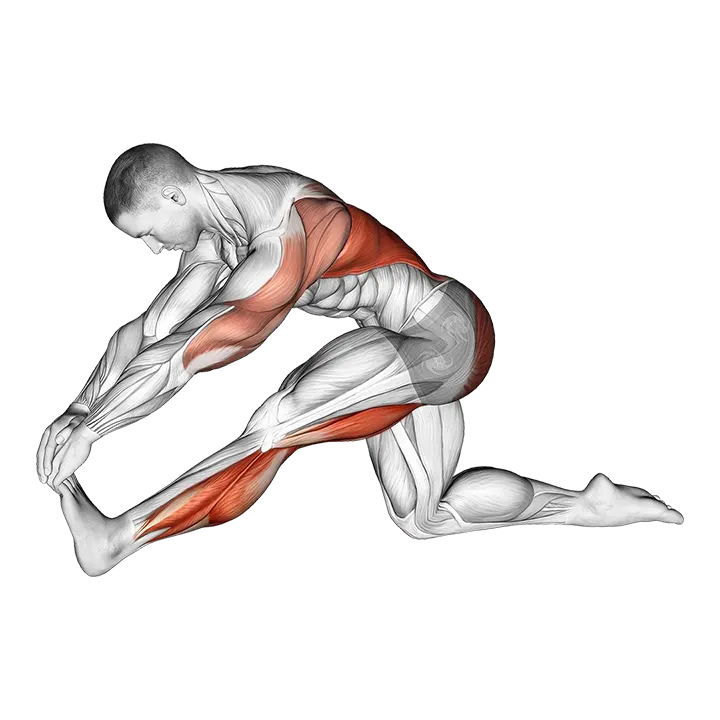
Kneeling Toe Up Hamstring Stretch
- Músculo objetivo
- —
- Equipamiento
- Body weight
- Parte del cuerpo
- Thighs
- Tipo
- Stretching
The kneeling toe-up hamstring stretch targets the hamstrings (back of the thigh) and, by dorsiflexing the ankle with the toes pulled up, adds a secondary stretch through the calf. Performed without equipment, it is an effective floor-based stretch for improving hamstring flexibility and reducing tightness after lower-body training.
Cómo hacer el Kneeling Toe Up Hamstring Stretch
- 1Kneel on the floor on your right knee, with your left leg extended straight in front of you and your heel on the ground.
- 2Flex your left foot so your toes point up toward the ceiling, pulling them back as far as comfortable.
- 3Place both hands on your left thigh for support or rest them lightly on the floor beside your hips.
- 4Sit tall and keep your back straight — do not round your lower back.
- 5Hinge forward slowly from your hips, not your waist, leaning your chest toward your extended left leg until you feel a stretch along the back of the thigh.
- 6Hold the stretched position for 20–30 seconds, breathing steadily throughout.
- 7Slowly return to the upright starting position.
- 8Switch sides: kneel on your left knee, extend your right leg, and repeat the stretch for the same duration.
Consejos de técnica
- Keep your back flat throughout the movement — the forward lean should come entirely from your hips, not from rounding your spine.
- Breathe out as you hinge forward and breathe slowly and steadily while holding; relaxing on each exhale can help you ease deeper into the stretch.
- Hold each side for at least 20 seconds; research supports holds of 20–30 seconds for meaningful flexibility improvement.
- Keep the toes of the extended leg pulled back firmly — releasing them reduces the stretch on the calf and lessens the overall effect.
- If the stretch feels too intense, reduce the forward lean rather than allowing the back to round.
Errores comunes
- Rounding the lower back: leaning forward by curving the spine shifts the stretch away from the hamstrings and can strain the lumbar region — always hinge from the hips.
- Letting the toes relax: if the foot drops flat instead of staying dorsiflexed, you lose the added stretch on the calf and reduce tension on the hamstrings.
- Bouncing into the stretch: pulsing or bouncing triggers the muscle's stretch reflex and increases injury risk — hold the position steadily.
- Rushing the hold: cutting the stretch short to under 10 seconds provides little lasting benefit; aim for 20–30 seconds per side.
- Placing the extended leg heel off the ground: if the heel lifts, the hamstring is not fully loaded — keep it in firm contact with the floor throughout.
Preguntas frecuentes
What muscles does the kneeling toe-up hamstring stretch work?
The stretch primarily targets the hamstrings at the back of the thigh. Pulling the toes up (dorsiflexion) also places the calf muscles under a light secondary stretch.
How long should I hold the kneeling toe-up hamstring stretch?
Hold each side for 20–30 seconds and repeat 2–3 times per leg. Consistent holds in this range are associated with meaningful improvements in hamstring flexibility over time.
When is the best time to do this stretch?
This stretch is best performed after a workout when the muscles are warm, or as part of a dedicated flexibility session. Avoid performing it cold as the primary warm-up activity.
Why does pointing the toes up increase the stretch?
Pulling the toes up (dorsiflexion) puts the calf and the connective tissue running along the back of the leg under tension. This extends the stretch beyond the hamstrings and increases the overall pull felt through the posterior chain.
Can I do this stretch if I have tight hamstrings?
Yes. If the stretch feels very intense, reduce how far you lean forward until your flexibility improves. Avoid forcing the position and never stretch to the point of sharp pain.







