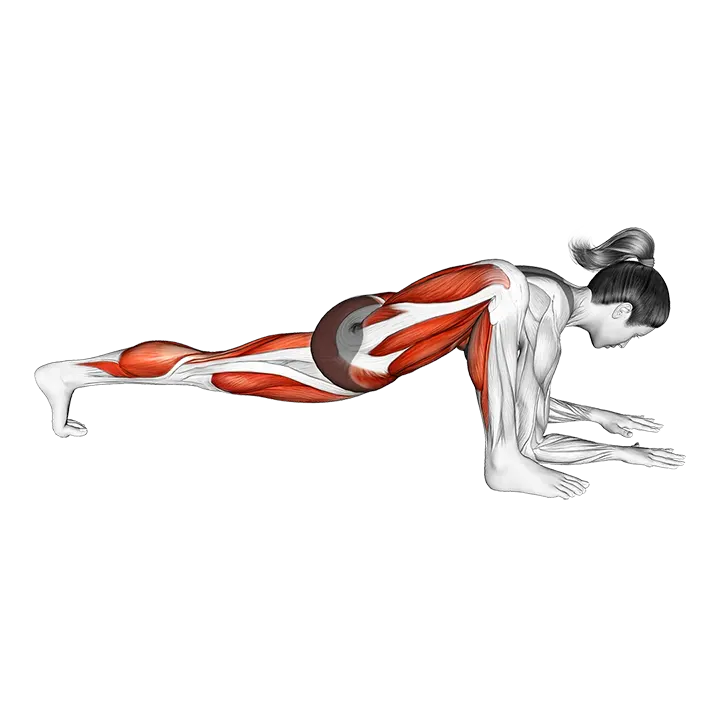
Lizard Pose
- Músculo objetivo
- —
- Equipamiento
- Body weight
- Parte del cuerpo
- Stretching
- Tipo
- Stretching
Lizard Pose is a yoga-derived hip-opening stretch that targets the hip flexors, hip adductors, and the groin region of the front leg. Performed from a deep lunge position with both hands on the ground, it is an effective way to improve hip mobility and release tightness accumulated from prolonged sitting or lower-body training.
Cómo hacer el Lizard Pose
- 1Start in a high plank position with your hands shoulder-width apart and your body in a straight line.
- 2Step your right foot forward and place it on the outside of your right hand, so your foot is flat on the floor and your knee is stacked directly above your ankle.
- 3Lower your left knee to the mat and let the top of your left foot rest on the ground behind you.
- 4Press your hands into the mat and lengthen your spine, avoiding rounding through the upper back.
- 5On an exhale, sink your hips forward and down toward the floor, deepening the stretch in the front hip and groin.
- 6Hold the position for 30–60 seconds, breathing steadily and allowing your hips to relax a little further with each exhale.
- 7To deepen the stretch, lower onto your forearms if your flexibility allows, keeping your spine long and your hips level.
- 8Press back through your hands to return to high plank and repeat on the opposite side by stepping your left foot forward.
Consejos de técnica
- Keep your hips square to the floor throughout the hold — letting one hip drop or rotate outward reduces the effectiveness of the stretch.
- Breathe slowly and consistently; use each exhale as an opportunity to ease slightly deeper into the position rather than forcing the range of motion.
- Place a folded blanket or mat under your back knee if you feel discomfort on a hard floor.
- Keep your front knee tracking over your second toe and avoid letting it cave inward.
- Move into the deeper forearm variation gradually — only lower down when you can do so without losing a neutral spine.
Errores comunes
- Placing the front foot too close to the midline so the knee caves inward, which stresses the knee joint and reduces the hip-opening effect.
- Rounding the lower back and collapsing through the spine, which shifts tension away from the hip flexors and can cause back discomfort.
- Holding the breath or tensing the shoulders, which prevents the hips from releasing into the stretch.
- Letting the hips tilt to one side rather than staying level, which creates an uneven stretch and can strain the lower back.
- Rushing into the forearm variation before the hips are ready, which forces the pelvis into a position it cannot comfortably sustain.
Preguntas frecuentes
What does Lizard Pose stretch?
It primarily stretches the hip flexors and the groin region of the front leg, and also opens the hip adductors. The back leg receives a stretch along the front of the thigh and hip as well.
How long should I hold Lizard Pose?
Aim for 30–60 seconds per side as a starting point. As your flexibility improves you can extend holds to 90 seconds or longer, provided you can maintain relaxed breathing and a neutral spine throughout.
Can I do Lizard Pose if I am a beginner?
Yes. Keep your back knee on the mat and stay on your hands rather than dropping to your forearms. This reduces the intensity and gives you more control over how deeply you enter the stretch.
When is the best time to do Lizard Pose?
It is most effective as part of a warm-down or dedicated mobility session after a workout, when your muscles are already warm. Avoid performing deep static stretches on completely cold muscles.







