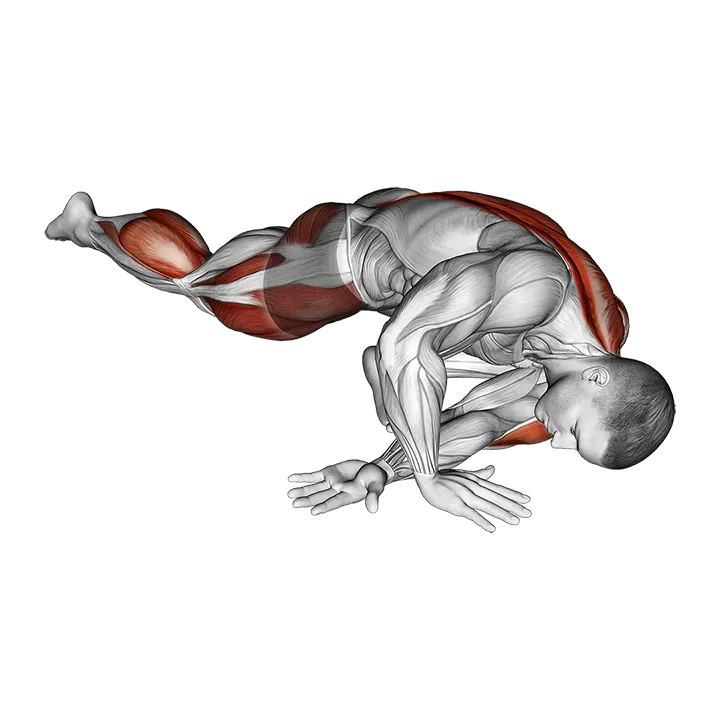
Lying Leg Tuck Hip Back to Right Stretch
- Músculo objetivo
- —
- Equipamiento
- Body weight
- Parte del cuerpo
- Back, Hips, Thighs
- Tipo
- Stretching
The Lying Leg Tuck Hip Back to Right Stretch is a bodyweight stretching exercise that targets the back, hips, and thighs through a rotational floor position. By tucking both knees and letting them fall to the right while keeping the upper back grounded, it gently opens the outer hip, releases tension along the lower back, and improves rotational flexibility in the spine and pelvis.
Cómo hacer el Lying Leg Tuck Hip Back to Right Stretch
- 1Lie on your back on a mat with your legs extended and arms resting at your sides or out to the sides at shoulder height for stability.
- 2Bend both knees and draw your feet toward your hips so your knees are pointing up and your feet are flat on the mat.
- 3Take a slow inhale to prepare, then exhale and let both knees fall together toward the right side, lowering them as close to the floor as is comfortable.
- 4Keep your left shoulder pressed down against the mat and allow your hips to rotate naturally with the movement.
- 5Rest your knees on the floor or allow them to hover if full range is not yet available.
- 6Hold the stretched position for 20–30 seconds, breathing slowly and deeply to encourage the hips and lower back to relax further with each exhale.
- 7On an inhale, engage your core lightly and draw both knees back up to the center.
- 8Repeat the movement on the opposite side, or return to the starting position and relax before performing additional sets.
Consejos de técnica
- Let gravity do the work — resist the urge to force the knees to the floor; allow the stretch to deepen passively over the hold duration.
- Press the opposite shoulder firmly into the mat throughout the hold to increase the rotational stretch through the back and outer hip.
- Breathe into the tight areas on each inhale, then consciously release tension as you exhale to gradually increase range of motion.
- Keep both knees and ankles together during the rotation so the hips stretch evenly rather than one side compensating.
- If the knees do not reach the floor comfortably, place a folded blanket or block under them to support the position without strain.
Errores comunes
- Lifting the opposite shoulder off the mat when lowering the knees, which reduces the rotational stretch on the back and hip and can cause neck strain.
- Forcing the knees to the ground by pushing with the hands, which can overload the lumbar joints and sacroiliac area rather than allowing a safe, gradual stretch.
- Holding the breath during the stretch, which causes the surrounding muscles to stay tense and prevents the back and hips from releasing fully.
- Separating the knees during rotation, which distributes the stretch unevenly and reduces the targeted opening of the outer hip on the working side.
- Rushing through the hold and releasing too early, which does not give connective tissue and muscle enough time to adapt and limits flexibility gains.
Preguntas frecuentes
What does the Lying Leg Tuck Hip Back to Right Stretch target?
It stretches the back, hips, and thighs by combining a gentle spinal rotation with hip flexion. The outer hip, lower back, and the front and inner thigh area are all loaded in the position.
How long should I hold the Lying Leg Tuck Hip Back to Right Stretch?
Hold each side for 20–30 seconds per repetition and aim for 2–3 repetitions per side. Longer holds of up to 60 seconds can be used for deeper flexibility work, especially after a workout.
When is the best time to do this stretch?
It works well as part of a cool-down after training, a morning mobility routine, or a standalone flexibility session. Avoid performing it as the very first movement of a cold session without some light general warm-up first.
Is this stretch safe for people with lower back pain?
Many people find rotational floor stretches helpful for relieving mild lower back tightness, but those with diagnosed disc or sacroiliac issues should consult a healthcare professional before adding rotation-based stretches to their routine.
Can I do this stretch every day?
Yes. As a low-load bodyweight stretch it can be performed daily. Consistent daily practice is one of the most effective ways to improve hip and lower back flexibility over time.







