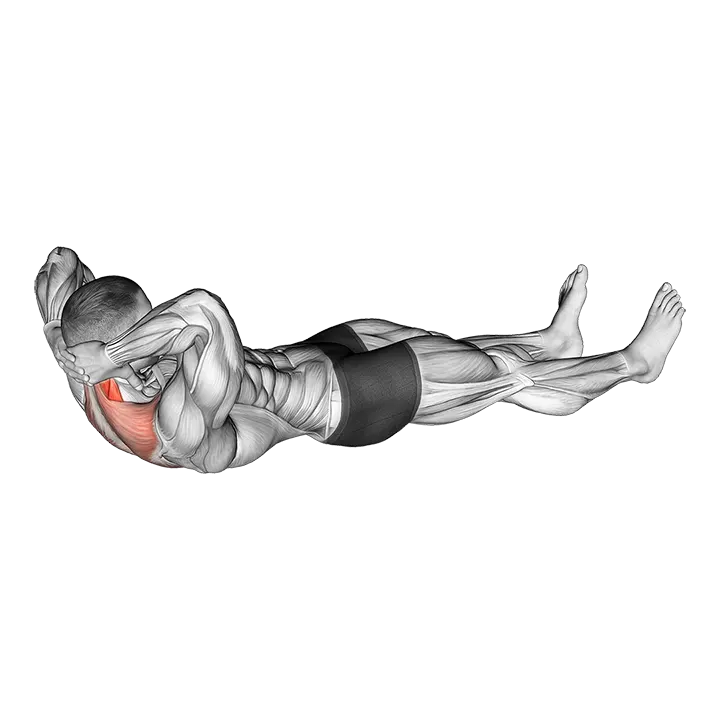
Lying Neck Extensor Stretch
- Músculo objetivo
- —
- Equipamiento
- Body weight
- Parte del cuerpo
- Neck
- Tipo
- Stretching
The Lying Neck Extensor Stretch is a gentle bodyweight movement that lengthens the muscles along the back of the neck and upper cervical region. Performed lying on your back, it uses the weight of the head and a light chin-to-chest motion to release tension in the neck extensors. It is commonly used to relieve stiffness from prolonged sitting, poor posture, or screen time.
Cómo hacer el Lying Neck Extensor Stretch
- 1Lie flat on your back on a mat with your legs extended and arms resting at your sides.
- 2Allow your head to rest naturally on the mat and take a slow, deep breath to relax your neck and shoulders.
- 3Gently tuck your chin toward your chest, lifting the back of your head slightly off the mat.
- 4Place both hands lightly on the back of your head — do not pull; use them only to add gentle, comfortable pressure.
- 5Hold the stretched position for 20–30 seconds, breathing steadily and letting the neck extensors release.
- 6Slowly lower your head back to the mat and remove your hands.
- 7Rest for a few seconds, then repeat for 2–3 more holds.
Consejos de técnica
- Keep your jaw relaxed and your face neutral throughout the stretch — avoid clenching your teeth.
- Use only the lightest hand pressure on the back of your head; gravity should do most of the work.
- Breathe slowly and steadily during the hold to encourage muscle relaxation and deepen the stretch.
- Keep your shoulders flat against the mat so the movement is isolated to the neck.
- If you feel any sharp pain, tingling, or dizziness, release immediately and consult a professional.
Errores comunes
- Pulling the head forcefully with the hands — applying too much force can strain cervical ligaments and compress spinal structures; use only gentle guiding pressure.
- Holding the breath during the stretch — breath-holding increases tension throughout the body and prevents the neck muscles from fully releasing.
- Lifting the shoulders off the mat — this transfers effort to the upper back and reduces the targeted stretch on the neck extensors.
- Rushing through the hold — cutting the hold time short prevents the muscles from fully lengthening; aim for at least 20 seconds per rep.
- Jutting the chin forward instead of tucking it — a forward chin position shortens the stretch and can compress the front of the cervical discs.
Preguntas frecuentes
What does the Lying Neck Extensor Stretch target?
This stretch targets the neck extensor muscles — the group of muscles running along the back of the neck and upper cervical spine. These muscles are responsible for extending (tilting back) the head, and they commonly accumulate tension from forward-head posture, desk work, and screen use.
Is the Lying Neck Extensor Stretch good for neck pain?
For general stiffness and tension-related neck pain, this stretch can provide meaningful relief by gently lengthening tight extensor muscles. However, if your neck pain is caused by an injury, disc issue, or nerve compression, consult a healthcare provider before attempting this or any cervical stretch.
How long should I hold the Lying Neck Extensor Stretch?
Hold each repetition for 20–30 seconds to allow the neck extensor muscles enough time to relax and lengthen. Perform 2–3 holds per session. For chronic tightness, you can work up to 45-second holds, provided there is no discomfort.
Can beginners do the Lying Neck Extensor Stretch?
Yes. This is one of the most beginner-friendly neck stretches available because the lying position removes gravitational load from the spine and makes it easy to control the degree of stretch. Beginners should start without any hand pressure and simply let the chin-tuck motion create the stretch.
What are good alternatives to the Lying Neck Extensor Stretch?
Good alternatives include the Seated Neck Flexion Stretch (chin to chest while seated), the Standing Neck Extensor Stretch, and the Cat-Cow movement which incorporates cervical flexion through a fuller range of motion. Any of these can substitute when lying down is not practical.







