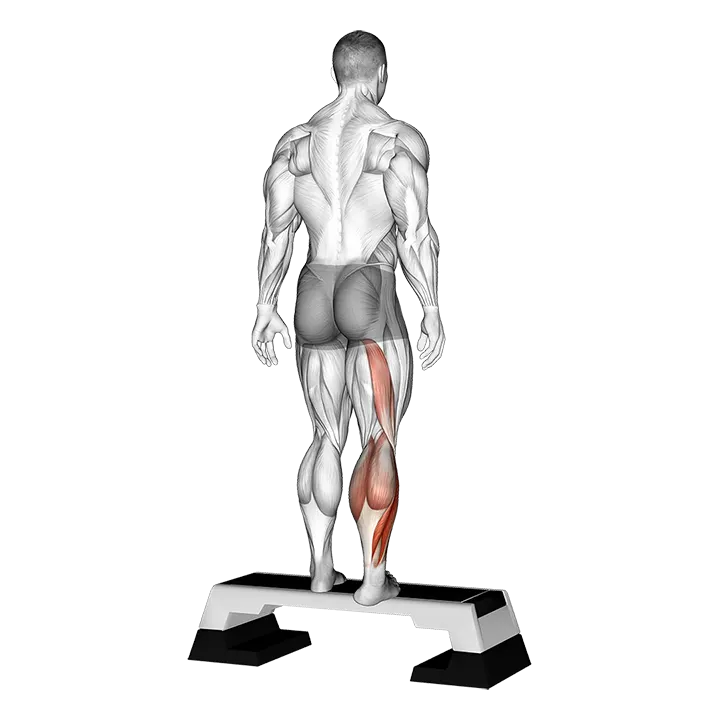
Plantar Flexor And Foot Everter Stretch
- Músculo objetivo
- —
- Equipamiento
- Body weight
- Parte del cuerpo
- Calves
- Tipo
- Stretching
The plantar flexor and foot everter stretch targets the calf muscles — gastrocnemius and soleus — along with the peroneus longus and brevis on the outer lower leg. By pulling the foot into dorsiflexion and inversion simultaneously, you lengthen both the plantar flexors and the lateral ankle muscles in a single hold. It is well suited for improving ankle mobility, relieving tightness after running or walking, and supporting lateral ankle stability.
Cómo hacer el Plantar Flexor And Foot Everter Stretch
- 1Sit on the floor with your legs extended in front of you, or on a chair with the foot to be stretched resting on the opposite knee.
- 2Grasp the top of your foot and toes with both hands, or loop a towel or resistance band around the ball of your foot.
- 3Gently pull your foot toward your shin (dorsiflexion) until you feel a stretch along the back of your calf.
- 4While maintaining that dorsiflexion, slowly turn the sole of your foot inward (inversion) so it faces slightly toward the midline of your body.
- 5Hold the combined dorsiflexion and inversion position until you feel a stretch along the outer lower leg and lateral ankle — the peroneal muscles.
- 6Breathe steadily and relax the foot and ankle muscles throughout the hold.
- 7Hold for 20–30 seconds, then slowly release the foot back to a neutral position.
- 8Repeat on the other side, performing 2–3 holds per foot.
Consejos de técnica
- Hold each stretch for at least 20–30 seconds to allow the muscle fibers time to relax and lengthen — shorter holds produce little lasting effect.
- Breathe slowly and continuously throughout the hold; exhaling fully helps release muscle tension and deepens the stretch.
- Apply the inversion gradually after you have already established the dorsiflexion pull — layering the two movements gives you more control over stretch intensity.
- Keep the stretch at a mild-to-moderate tension level, not pain; if you feel sharp discomfort, ease off the inversion slightly.
- Perform this stretch when your muscles are warm — after a walk, run, or light activity — to get the most benefit and reduce the risk of straining cold tissue.
Errores comunes
- Bouncing or pulsing the foot: Forcing the stretch with repeated jerks triggers the muscle stretch reflex, causing the calf and peroneals to tighten rather than lengthen, and increases the risk of a strain.
- Skipping the inversion component: Pulling the foot only into dorsiflexion misses the peroneal muscles entirely; without the inward rotation of the sole, the lateral lower-leg stretch does not occur.
- Overstretching to the point of pain: Pushing into sharp or stabbing discomfort signals tissue stress rather than a productive stretch — reduce the pull until tension feels moderate and tolerable.
- Holding for too short a time: Releasing after five or ten seconds does not give the viscoelastic tissue enough time to adapt; aim for a minimum of 20 seconds per hold.
- Letting the knee bend excessively: When seated with the leg extended, allowing the knee to flex shifts tension away from the gastrocnemius (which crosses the knee) and reduces the effectiveness of the calf portion of the stretch.
Preguntas frecuentes
What muscles does the plantar flexor and foot everter stretch target?
The stretch primarily lengthens the gastrocnemius and soleus (the two main calf muscles responsible for plantarflexion) and the peroneus longus and peroneus brevis (the muscles on the outer lower leg that evert, or roll outward, the foot). Pulling the foot into dorsiflexion loads the calf, while adding inversion puts tension on the peroneals.
When should I do this stretch?
It is most effective as part of a post-workout cool-down or after sustained walking, running, or hiking when the calf and peroneals are already warm. You can also use it as a daily mobility stretch if you carry persistent ankle or calf tightness. Avoid performing it as a cold static stretch immediately before high-intensity activity.
How long should I hold this stretch?
Hold each position for 20–30 seconds. Research on static stretching generally supports holds in this range for producing lasting increases in flexibility. Repeat 2–3 times per foot. If you are working on a specific tightness issue, you can extend holds to 45–60 seconds without harm, provided you stay within a comfortable tension range.
Is this stretch good for ankle sprains or lateral ankle issues?
It can be useful during the rehabilitation phase of a lateral ankle sprain once acute swelling and pain have subsided, as gentle peroneal lengthening and mobility work supports recovery. However, you should clear any ankle injury with a physiotherapist before stretching, since overstretching a recently sprained ligament can slow healing.
Can beginners do this stretch?
Yes. The seated version — with the foot resting on the opposite knee and hands guiding the position — is straightforward and requires no special equipment or flexibility. Start with gentle dorsiflexion before adding inversion, and only increase the range of motion to the point where you feel a mild pull, not pain.







